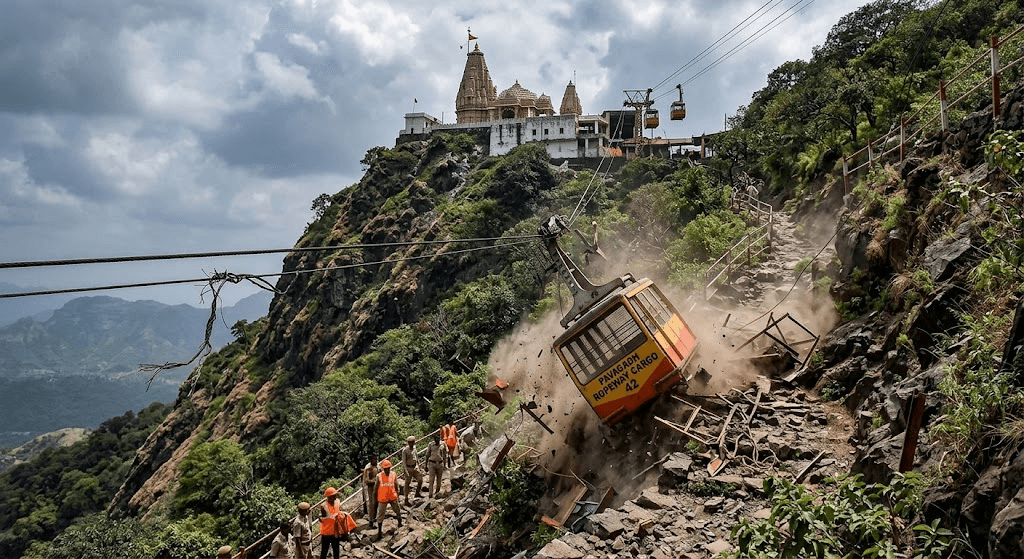
PAVAGADH, GUJARAT — Panic gripped devotees and locals at the famous Kalika Mata temple complex on Thursday, October 15, 2026 after a cargo ropeway trolley snapped and crashed down the slopes of Pavagadh Hill.
No casualties or injuries have been reported in connection with the incident. However, the unexpected crash immediately sent shockwaves through the thousands of pilgrims gathered at the prominent shrine.
The mishap triggered widespread alarm due to memories of a similar accident at the site. Just last year, a cargo ropeway cable failure resulted in six fatalities when a trolley transporting construction materials snapped and plunged down the hillside.
Thursday’s crash instantly raised renewed safety concerns among visitors, local authorities, and temple administrators, especially given the steep terrain and high foot traffic typical of the pilgrimage location. Preliminary reports indicate that the affected trolley was being used to haul goods and materials up the hill when the cable mechanism failed.
In the immediate aftermath of the crash, official investigations were launched to pinpoint the exact structural or mechanical breakdown that caused the cable to fail. Technical teams were quickly dispatched to the site to inspect the physical infrastructure, examine the tension cables, and secure the surrounding perimeter. As a precaution, maintenance personnel are now conducting comprehensive safety checks across all cable networks servicing the hill before standard freight transit can be safely restored.
Pavagadh Hill, home to the revered Mahakali / Kalika Mata Temple in Panchmahal district, is one of Western India's most frequented pilgrimage destinations, attracting tens of thousands of devotees daily—particularly during festival periods such as Navratri.
While tourist passenger ropeways operate separately from cargo lines, local community leaders are calling for stringent third-party safety audits across all transport systems operating on the hill to prevent further scares or potential tragedies.
In response to these growing concerns, local administrative officials confirmed that enhanced monitoring protocols and routine load-testing will be made mandatory for all high-altitude supply lines in the region. Authorities have assured the public that operations will only resume once full certification is granted by structural engineers, aiming to restore confidence among the thousands of pilgrims visiting the shrine daily.
Published by Banx Network. This article is part of the Banx decentralized media programme, powered by the BXE token on the XRP Ledger.