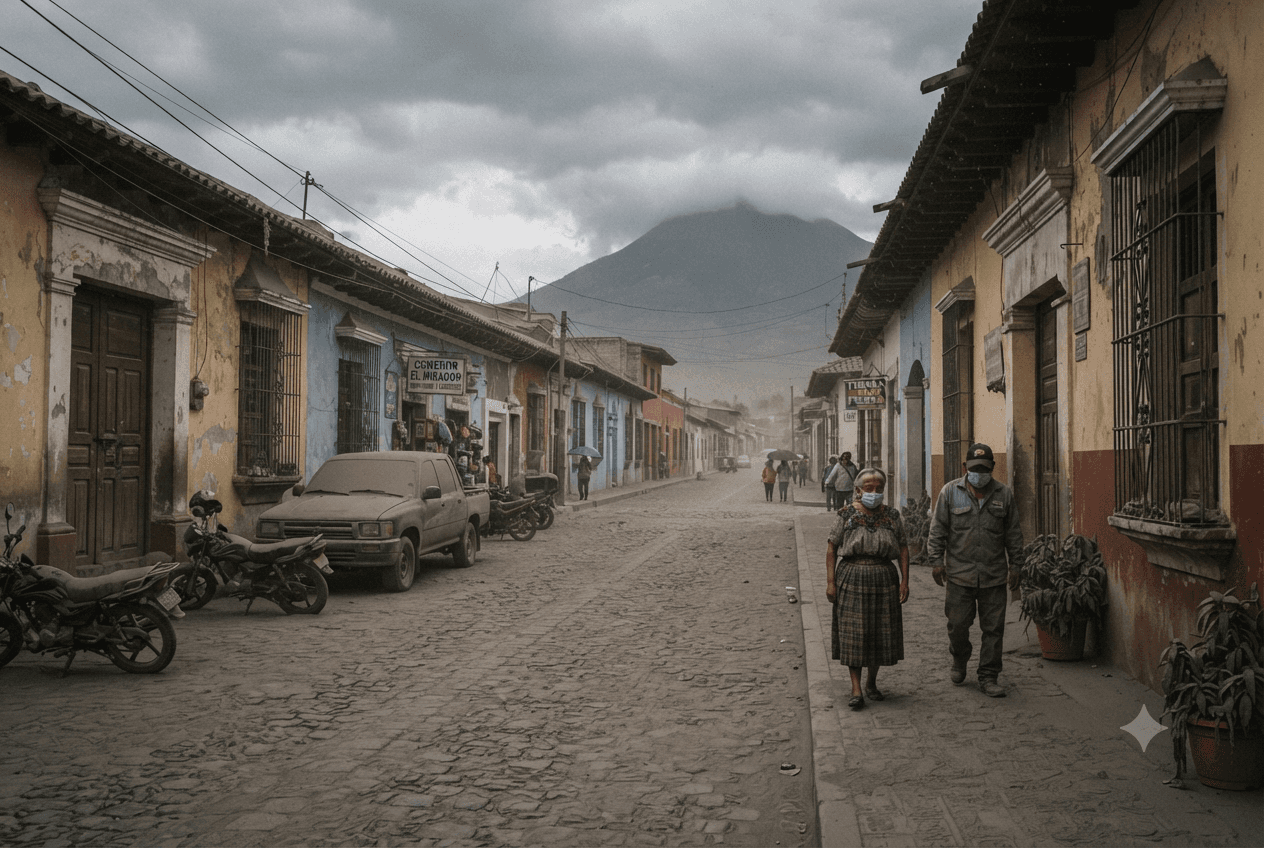
Antigua Guatemala, Guatemala—Thick clouds of abrasive volcanic ash choked rural settlements downwind from the active Fuego Volcano on Friday morning. The National Coordinator for Disaster Reduction reported a sharp spike in emergency room visits for acute respiratory distress. Clinic waiting rooms filled rapidly with elderly residents and children gasping for air amidst heavy particulate concentrations. Local medical personnel distributed surgical masks and saline eye washes to incoming patients showing signs of severe irritation.
The stratovolcano intensified its explosive phase overnight, propelling dark ash columns thousands of meters into the troposphere. Prevailing winds carried the dense particulate matter across agricultural fields and residential neighborhoods in the surrounding department. Farmers reported crops smothered under a gray layer of sulfurous dust, threatening local staple harvests and livestock grazing pastures. Civil protection agencies maintained an active orange alert, urging vulnerable citizens to remain indoors with windows sealed.
Municipal street-cleaning crews deployed water tanker trucks to wash down ash-covered asphalt roads and reduce airborne dust hazards. Public transport vehicles operated with reduced speeds as low visibility plagued regional highway networks surrounding the volcano base. Local authorities established makeshift mobile health clinics along primary evacuation routes to handle the influx of respiratory complaints. Environmental monitors measured particulate matter levels exceeding safe air quality thresholds by a factor of four.
Hospital administrators requested emergency transfers of supplemental oxygen tanks from the capital to replenish depleted local stocks. Doctors warned that prolonged exposure to the fine silicate ash could lead to permanent lung tissue damage among chronic asthma sufferers. Volcanologists monitoring seismic telemetry noted sustained internal pressure beneath the main crater dome, indicating ongoing explosive potential. Relief organizations mobilized drinking water distributions to prevent community dehydration caused by contaminated open cisterns.
The explosive cycle showed no signs of abating as afternoon wind patterns shifted the ash plume toward western agricultural valleys. Emergency committees remained on permanent standby ready to order mandatory evacuations if pyroclastic flows breach upper ravine walls. Local schools kept doors bolted shut while teachers distributed remote homework packets to housebound students. Medical staff braced for another wave of overnight emergency admissions as air quality metrics remained hazardous.
Published by Banx Network. This article is part of the Banx decentralized media programme, powered by the BXE token on the XRP Ledger.