
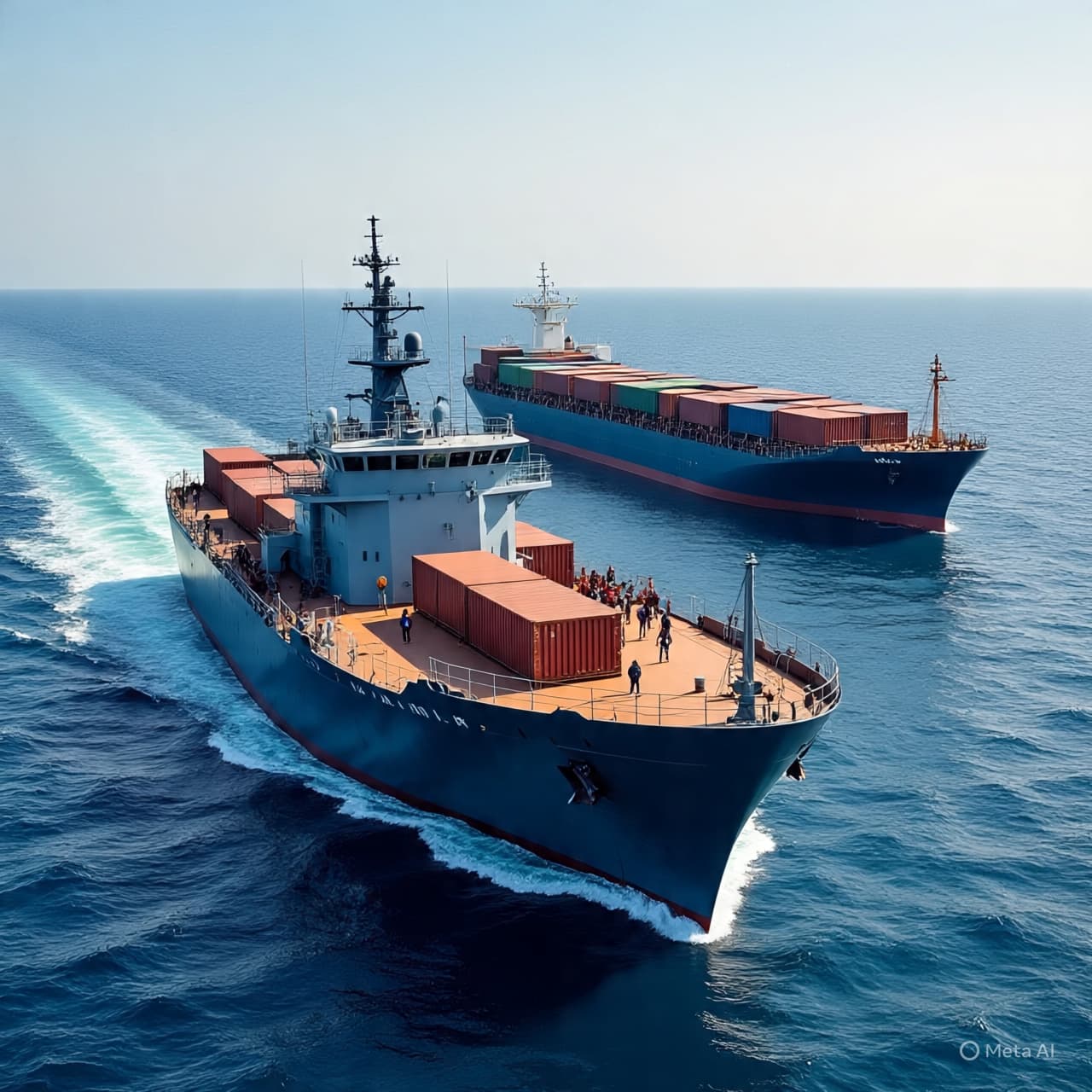
At the meeting point of continents, where the Red Sea narrows toward the Bab el-Mandeb strait, the movement of ships forms a steady rhythm of global commerce. Tankers, container vessels, and cargo carriers pass through these waters each day, carrying energy, grain, electronics, and countless goods that quietly sustain the modern economy.
But the calm appearance of these maritime routes often hides a deeper tension beneath the surface.
Against the backdrop of rising regional uncertainty linked to the conflict involving Iran, the prime minister of Greece, Kyriakos Mitsotakis, has urged fellow European governments to reinforce the European Union’s naval mission known as EUNAVFOR Aspides. His appeal reflects growing concern that the security of key maritime corridors may require a stronger collective presence from European navies.
The Aspides operation — its name derived from the Greek word for “shield” — was launched by the European Union in 2024 as a defensive maritime mission designed to protect commercial shipping and safeguard freedom of navigation in waters stretching from the Red Sea to the Gulf region. The operation focuses on escorting vessels and monitoring threats along vital sea lanes that connect Europe to Asia and the Middle East.
These waters carry enormous strategic importance. A significant share of global trade passes through nearby chokepoints such as the Bab el-Mandeb Strait and the Strait of Hormuz, making the stability of these routes essential not only for regional economies but also for the broader global supply chain.
In recent months, tensions around these maritime corridors have drawn renewed attention from European leaders. Security incidents and geopolitical frictions have underscored the vulnerability of commercial vessels traveling through the region. The Aspides mission has already provided escort protection to merchant ships and expanded maritime surveillance, but the scale of the operational area — stretching across several interconnected seas — presents ongoing challenges.
Greece, which hosts the operational headquarters of the mission in the city of Larissa, occupies a central role in the initiative. From there, European naval coordination extends outward across thousands of kilometers of sea routes. Yet the mission relies largely on voluntary contributions of ships and resources from EU member states, meaning the strength of its presence can fluctuate depending on national commitments.
Mitsotakis’ call for additional support reflects the belief that safeguarding these routes requires a broader European effort. Reinforcing the naval presence, he suggested, would help ensure that commercial vessels can continue to travel through the region with greater security.
For Europe, the question reaches beyond military strategy. The sea lanes under Aspides’ watch are arteries of global trade, linking energy exporters, manufacturing hubs, and consumer markets across continents.
When ships move safely through these waters, the world’s economic currents continue to flow.
And so the conversation now unfolding among European governments carries a quiet but significant weight. Whether through additional warships, expanded surveillance, or closer coordination, the future of the Aspides mission may shape how Europe protects the maritime routes that sustain its connection to the wider world.
For the moment, the ships already on patrol remain steady against the horizon — small guardians of a passage through which the global economy quietly sail
Published by Banx Network. This article is part of the Banx decentralized media programme, powered by the BXE token on the XRP Ledger.


