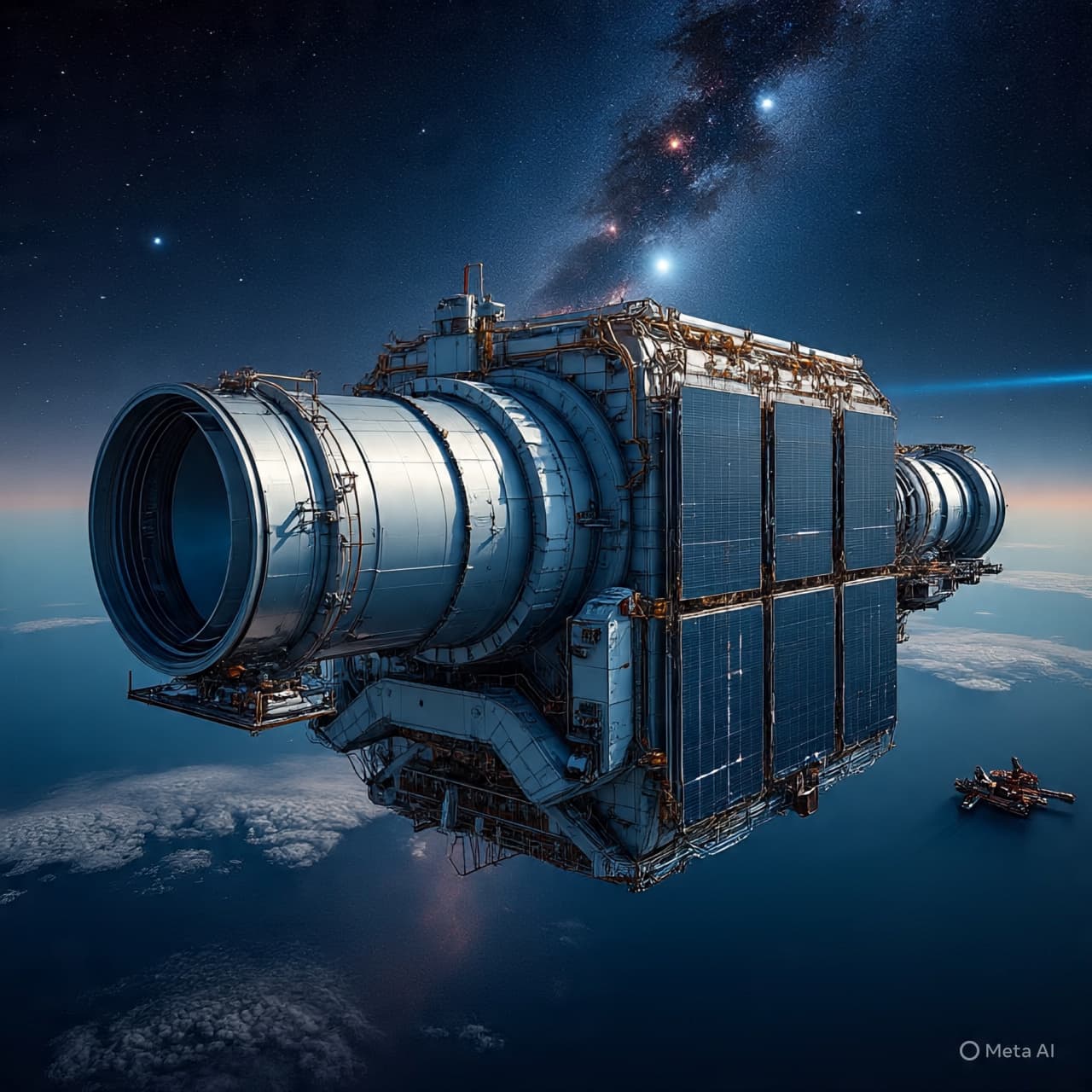
High above Earth, where satellites trace silent circuits and the fragile blue glow of atmosphere fades into the void, China’s Tiangong space station has taken another step in its evolution — not toward expansion, but toward protection. In recent weeks, taikonauts aboard the orbital outpost have walked outside, tools in hand and eyes on the horizon of risk, installing defensive countermeasures along the station’s exterior. This work, aimed at shielding the station from the constant threat of space debris, reflects how the realities of orbit increasingly shape human ambition beyond Earth’s gravity.
Space — once imagined as pristine and empty — is now crowded. Tens of thousands of pieces of human-made debris, from spent rocket stages to tiny fragments of metal, hurtle around the planet at speeds exceeding 28,000 km/h. At those velocities, even a speck of paint could punch through spacecraft shielding. For China’s space program, this hazard moved from abstract danger to immediate challenge earlier this year, when a small object struck the return module of the Shenzhou-20 spacecraft, prompting emergency adjustments to crew rotation and return plans aboard Tiangong.
In response, China’s astronauts — taikonauts — conducted spacewalks to install additional protective panels along the station’s hull, a defensive measure designed to absorb or deflect impacts from micrometeoroids and orbital debris. These installations extend a lineage of similar protective work performed during previous spacewalks, where crews positioned shielding around vulnerable areas of the station.
The timing underscores the fragility of life and hardware in orbit: Tiangong operates far from Earth’s magnetic cocoon and atmospheric hearth, where every external surface is exposed to the ceaseless ballet of cosmic hazards. Protective measures help preserve the station’s structural integrity and keep its inhabitants safe, even as global space traffic continues to grow.
But these defensive enhancements are about more than physical armor. They signal an awakening to the strategic importance of orbital infrastructure. As nations expand their presence above Earth — with satellites, research platforms, and commercial constellations — the question of how to protect these assets becomes paramount. In this theater above the clouds, the line between civilian space activity and geopolitical signaling often blurs. China’s additions to Tiangong’s defenses may thus resonate broadly, prompting reflection among other spacefaring nations on how best to safeguard their own outposts and interests in orbit.
For the taikonauts who floated outside and fastened each panel in place, the work was meticulous and deliberate, a reminder that mastery of space requires not just exploration, but stewardship. In protecting Tiangong against the unseen storms of debris, China’s astronauts are writing another, quieter chapter in humanity’s long story of venturing into the unknown.
AI Image Disclaimer “Visuals are created with AI tools and are not real photographs.”
Credible Sources Futurism / CGTN reporting Space.com / SpaceNews (debris shield installation) Watchers.News (related debris incident)
Published by Banx Network. This article is part of the Banx decentralized media programme, powered by the BXE token on the XRP Ledger.