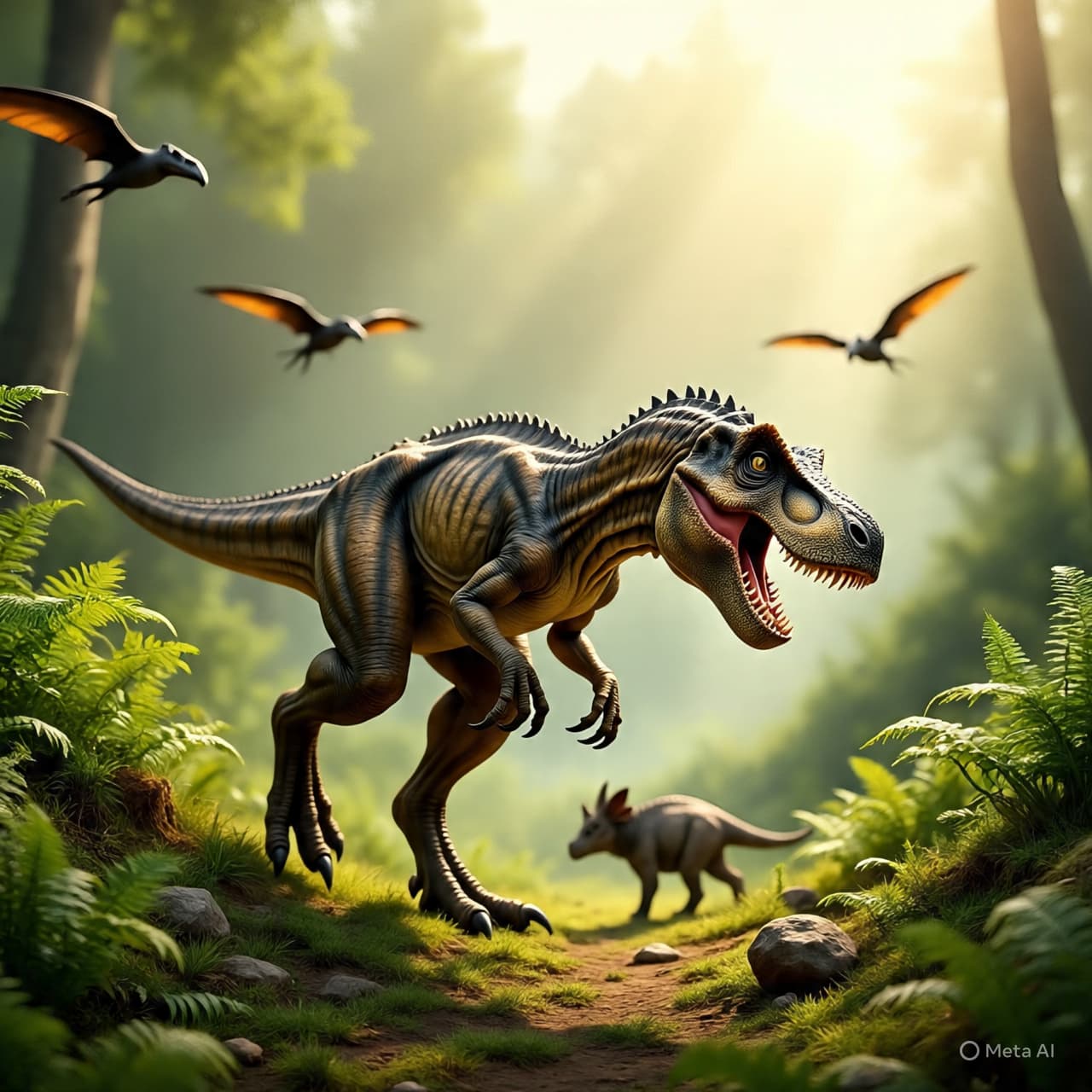
Few creatures have carried as much symbolic weight as Tyrannosaurus rex. For more than a century, it has stood in museums and imaginations alike as a finished thing: fully formed, fearsome, and fixed in meaning. But new research suggests that the most famous dinosaur of all may have lived a far more dynamic and surprising life than previously thought.
The study reexamines fossil evidence not as isolated bones, but as records of growth. By analyzing bone microstructure, growth rings, and subtle changes in skeletal proportions, researchers have begun to reconstruct T. rex not just as a species, but as a process—one that unfolded dramatically from youth to adulthood.
What emerges is a creature that did not simply scale up over time. Juvenile tyrannosaurs appear to have occupied a very different ecological role from their older counterparts. Lighter, faster, and more agile, young T. rex may have hunted smaller prey, relying on speed rather than brute force. Their bodies were built for pursuit, not dominance.
As they aged, something shifted. Growth accelerated, mass increased rapidly, and bones thickened. The skull broadened, bite force intensified, and the animal’s role within its ecosystem transformed. Rather than competing with adults from an early age, juveniles may have filled a separate niche, reducing pressure on resources and allowing the species to thrive across generations.
This revised life history helps explain a long-standing puzzle in the fossil record: the apparent scarcity of medium-sized predatory dinosaurs in Late Cretaceous ecosystems. They may not have been missing at all. They may have been tyrannosaurs in transition, misclassified or overlooked because scientists were searching for different species instead of different life stages.
The implications extend beyond taxonomy. Understanding how T. rex changed over time alters how paleontologists interpret fossil communities, predator-prey relationships, and even extinction dynamics. A species capable of occupying multiple ecological roles across its lifespan would have been remarkably resilient—until the abrupt end imposed by catastrophe.
There is also something quietly human in this reframing. The dinosaur long treated as a static icon becomes, instead, a narrative of change: a reminder that dominance is not innate, but acquired; that form follows time as much as function.
T. rex does not lose its grandeur in this retelling. If anything, it gains depth. The animal was not born a tyrant. It grew into one—through stages of adaptation, vulnerability, and transformation that mirror the long arc of life itself.
In rewriting the story of the world’s most famous dinosaur, the research does not diminish the legend. It replaces myth with motion, turning a symbol into a biography etched in bone.
AI Image Disclaimer
Visuals are AI-generated and serve as conceptual representations.
Sources
Nature Science Proceedings of the National Academy of Sciences Smithsonian Institution
Published by Banx Network. This article is part of the Banx decentralized media programme, powered by the BXE token on the XRP Ledger.