
Key Highlights
- Major Incident:A fire at a Berlin substation has caused extensive power outages.
- Emergency Response:Hundreds of thousands are affected as emergency services mobilize.
- Investigation Underway:Preliminary findings suggest equipment failure rather than sabotage.
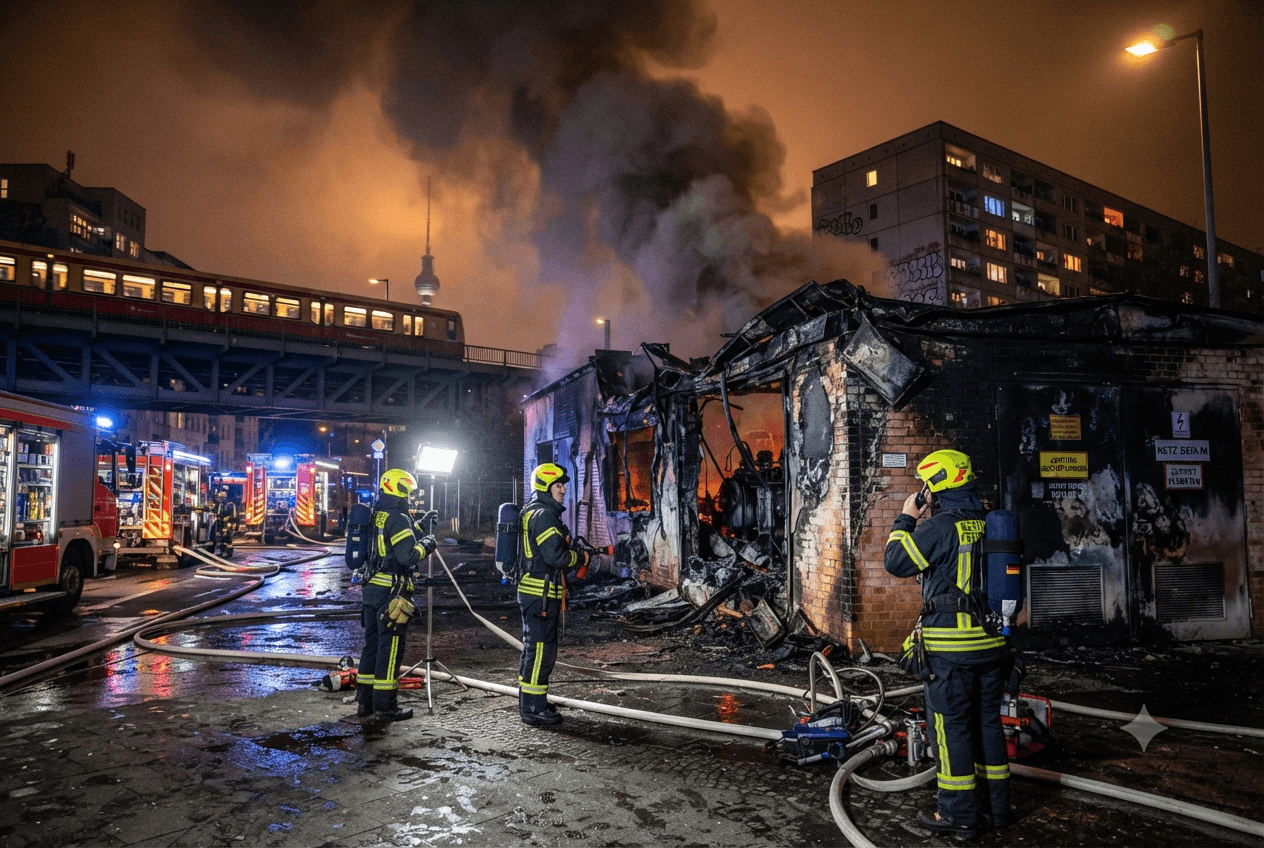
Berlin, Germany—A catastrophic fire erupted at a primary transformer bank within the city's central energy hub, sending flames shooting thirty feet into the night sky. The explosion severed the main transmission feed that connects the northern municipal grid to the regional power pool, plunging entire residential districts into darkness. Within the first ten minutes, emergency dispatch centers were inundated with thousands of calls as traffic signals failed across three boroughs, creating chaos on the streets.
Fire crews arrived to find high-voltage oil pools ablaze around the melted copper windings of the transformer. Firefighters maintained a safe distance while waiting for confirmation from remote utility operators that the incoming lines were de-energized. Thick black smoke billowed over the skyline, carrying the acrid scent of scorched insulation and transformer oil. Just past midnight, municipal utilities officials declared a state of emergency for the city’s power network.
In response to the crisis, hospitals immediately switched to automated diesel generators to secure intensive care units and surgical suites against the sudden power drop. Facility managers closely monitored fuel consumption rates while technicians checked backup systems for signs of strain. Several suburban clinics reported minor voltage drops before their secondary systems stabilized the load. Elective procedures scheduled for the morning were canceled to conserve emergency capacity.
Traffic police were deployed across major intersections to manage vehicle flows without functioning traffic lights. As fender-benders accumulated at busy roundabouts, drivers struggled to adhere to basic right-of-way rules in the dark. Public transit networks ground to a halt as surface trams lost overhead traction current, forcing passengers to evacuate stalled carriages guided only by the emergency lights of their smartphones.
Utility executives held an emergency press conference at dawn, providing a grim timeline for partial restoration of power. Grid controllers attempted to reroute electricity from neighboring states, but transmission bottlenecks limited the available import capacity. Industrial plants in the outer manufacturing belt suspended operations, sending second-shift workers home early. Factory managers warned of severe supply chain disruptions if the primary substation remained offline past the weekend.
Forensic electrical investigators gained access to the charred facility once the residual heat dropped to manageable levels. Preliminary findings indicated that catastrophic thermal overload within the primary cooling pumps was the likely cause of the incident, rather than external sabotage. The facility had been operating past its recommended maintenance window due to delayed component deliveries from overseas manufacturers. Maintenance logs revealed that repeated warning flags were overridden by automated system protocols during peak demand hours.
As the situation unfolded, municipal authorities began rationing drinking water distribution points, as electric pumps in the municipal water towers went offline. Residents formed long queues outside neighborhood stores, purchasing bottled water and non-perishable goods with cash. Cellular network towers dropped offline one by one as their backup battery banks ran dry, leading to fractured communication across the affected zones as landlines and mobile data failed.
Repair crews commenced hauling replacement transformers onto the scorched concrete pad using heavy flatbed trucks. Technicians worked under portable floodlights, stripping away melted cabling and clearing debris from the blast zone. Utility spokespersons refrained from promising full grid recovery before the following evening, urging citizens to stay off the roads. Emergency services continued to patrol dark residential streets to deter opportunistic property crimes.
Published by Banx Network. This article is part of the Banx decentralized media programme, powered by the BXE token on the XRP Ledger.



