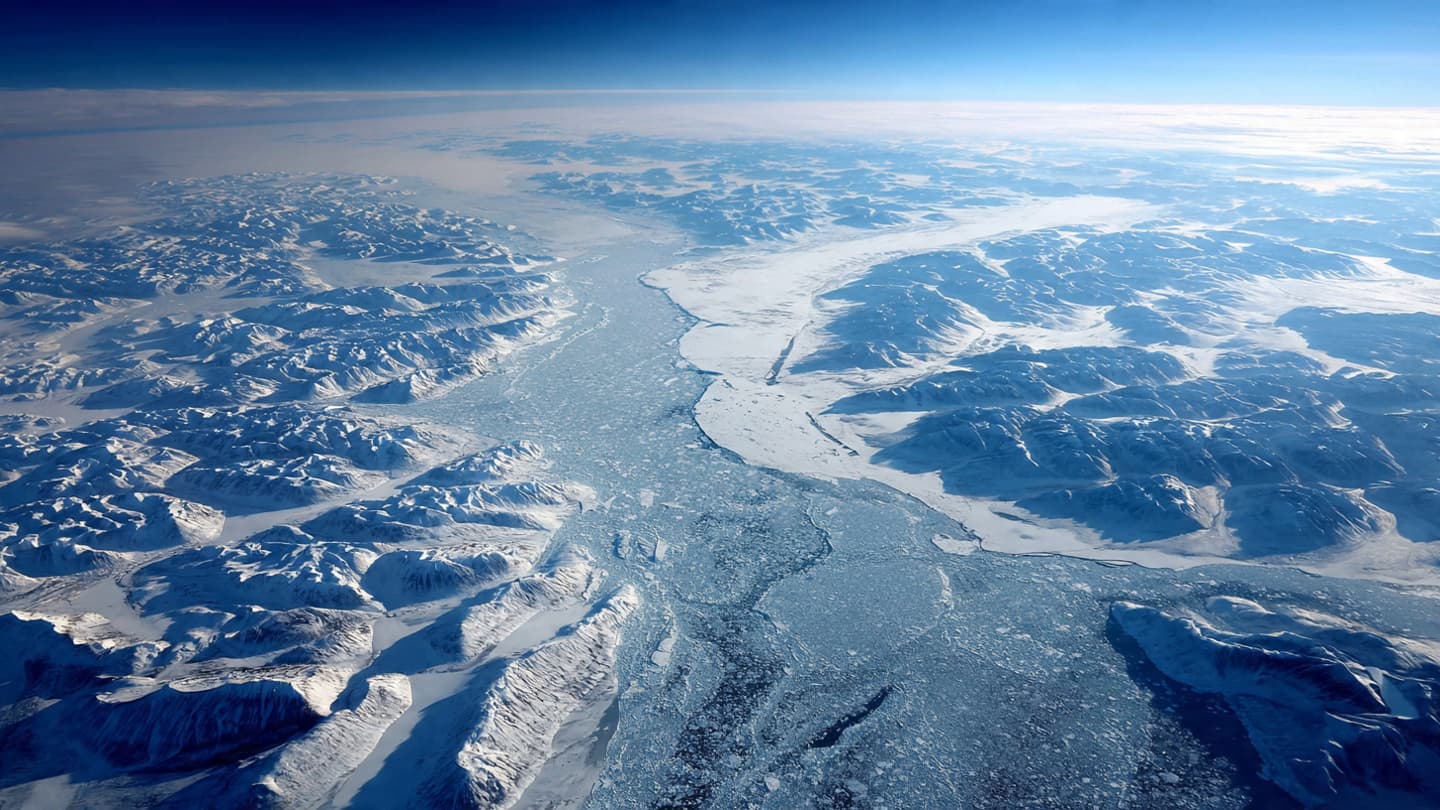
In the silent expanse of Greenland, where ice once seemed eternal, subtle shifts are now speaking louder than ever. Scientists report that the pace of ice loss has increased dramatically, reshaping expectations about Arctic stability.
Recent studies indicate that Greenland’s ice sheet is melting at rates up to six times higher than historical baselines. This acceleration is driven by rising air temperatures, warmer ocean currents, and feedback loops that amplify surface melting.
What once unfolded over centuries is now occurring within decades. Meltwater pools expand across ice surfaces, darkening regions that once reflected sunlight and further intensifying heat absorption.
Researchers emphasize that Greenland is not an isolated system. Its ice mass plays a crucial role in regulating global sea levels, meaning changes here resonate far beyond the Arctic Circle.
Satellite observations have become essential tools in tracking these developments. Over time, they reveal not only loss in volume but also structural weakening within the ice sheet itself.
Climate scientists are increasingly concerned that existing models may need refinement to account for nonlinear acceleration patterns. The system does not always change gradually; sometimes it shifts in steps.
At the same time, field researchers caution against interpreting short-term spikes as permanent trends. Long-term datasets remain critical for accurate forecasting and responsible policy decisions.
The accelerating transformation of Greenland’s ice serves as a reminder that climate systems respond dynamically, and that time itself is becoming a crucial factor in understanding environmental change.
AI Image Disclaimer: Images used in this article are AI-generated for editorial visualization purposes.
Sources (source verification check): NASA Earth Observatory, IPCC Reports, Nature Climate Change, ScienceDaily, NOAA Climate Data
Published by Banx Network. This article is part of the Banx decentralized media programme, powered by the BXE token on the XRP Ledger.