
Key Highlights
- Allegations:Greek police reportedly using masked individuals to push back migrants.
- Human Rights Concerns:Eyewitness accounts raise alarms over treatment of asylum seekers.
- EU Pressure:Calls for accountability and humane migration policies intensify.
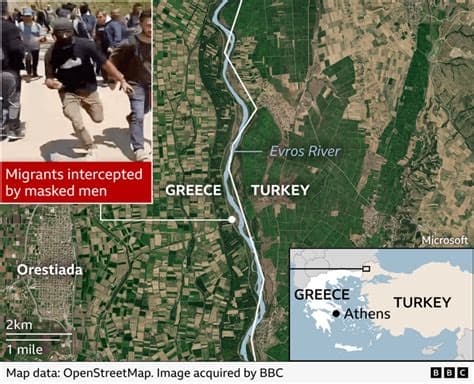
In a shocking development, investigations reveal that Greek police are reportedly employing masked figures, referred to as 'mercenaries,' to intercept and push back migrants attempting to enter Greece. These allegations have surfaced amid ongoing tensions regarding the country's border management policies and the humanitarian crisis facing migrants in the region.
Witness accounts and video footage have documented these masked individuals allegedly operating alongside official police forces in border areas. Eyewitnesses describe scenes where migrants, often fleeing violence and instability in their home countries, are forcibly returned to neighboring countries, raising grave human rights concerns. The use of such tactics has drawn widespread condemnation from various human rights organizations, which argue that these actions violate international laws regarding the treatment of asylum seekers.
Critics assert that the tactics employed by Greek authorities undermine the country's commitments to protecting vulnerable populations. Reports indicate that many of these migrants are escaping dire situations, including war and persecution, and are seeking safety in Europe. The implications of forcibly returning these individuals could expose them to further harm, prompting urgent calls for a reevaluation of Greece's border control strategies.
In response to the accusations, Greek authorities have denied any involvement with mercenaries, asserting that all operations are conducted in accordance with the law and international standards. However, the rise of reports concerning unauthorized pushbacks continues to escalate, fueling calls for greater accountability and transparency in migrant management practices. The government maintains that its actions are necessary for maintaining border security, yet the ethical implications of these measures remain a point of contention.
The European Union is facing mounting pressure to address the situation, with advocates urging a reevaluation of migration policies that prioritize humane treatment. As the developments unfold, the international community watches closely, questioning the ethical implications of Greece’s border control strategies and the safety of those desperate for refuge. The situation highlights the ongoing challenges faced by nations grappling with migration issues and the need for a balanced approach that respects human rights while ensuring security.
Published by Banx Network. This article is part of the Banx decentralized media programme, powered by the BXE token on the XRP Ledger.



