Morning in the Sierra Nevada can arrive quietly, as if light itself is reluctant to disturb the snow. Pine branches bow under white weight, and the air carries that fragile stillness that follows a storm. In these mountains of Sierra Nevada, winter is both invitation and warning—a landscape that draws skiers toward open bowls and untouched ridgelines, even as it shifts beneath their feet.
It was here, in the high country of California, that a ski trip among friends turned fatal. The group—women who were, as loved ones would later say, mothers, wives, friends—had set out into the backcountry after a powerful winter system swept across the range. The storm had layered fresh snow over older surfaces, creating unstable slabs across steep terrain. Avalanche advisories in parts of the region had warned of considerable danger, a reminder that beauty in the mountains is often accompanied by invisible fault lines.
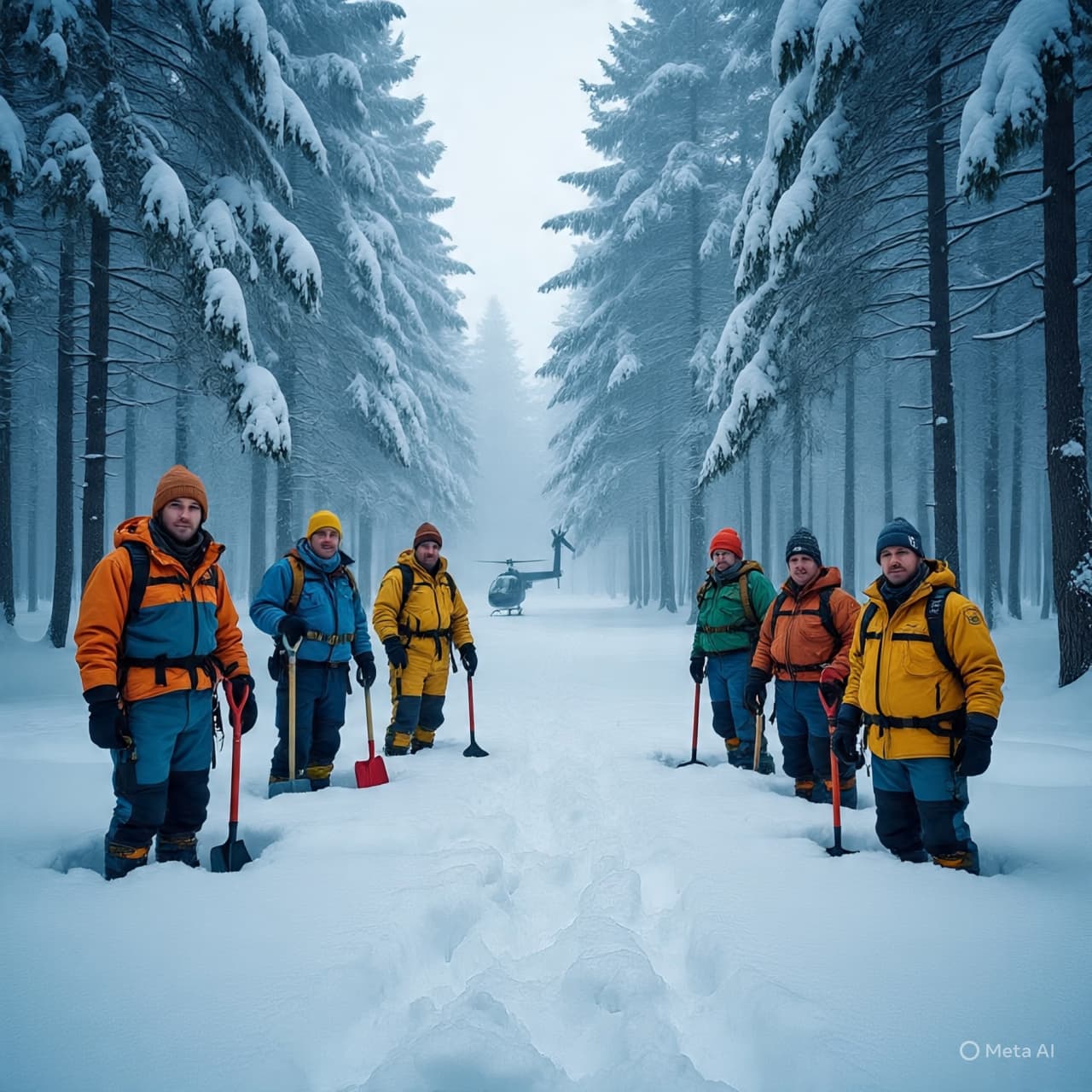
According to local authorities, the women were skiing in a remote area when an avalanche broke loose. Rescue teams, including county search-and-rescue volunteers and mountain professionals, responded to emergency calls that cut through the quiet of the forest. Hours later, amid shifting drifts and the hum of helicopters, the recovery effort ended in grief. Officials confirmed multiple fatalities, and identities were released after families were notified.
In the days that followed, tributes gathered like candles against the cold. Friends described seasoned skiers who cherished the backcountry not for thrill alone but for companionship—the rhythm of climbing skins against snow, the shared pause at a summit, the laughter carried downhill. Photographs showed sunlit ridges and close embraces, moments now reframed by absence.
Avalanches are a familiar risk in the Sierra during heavy winters. Meteorologists had tracked a sequence of Pacific storms that delivered dense snowfall and gusting winds, conditions that can bond new layers poorly to what lies beneath. Avalanche centers across the state regularly issue bulletins, mapping danger by elevation and aspect, urging travelers to carry beacons, probes, and shovels, and to make decisions measured against slope angle and recent weather. Even so, the calculus of the mountains is never exact. A slope that holds one morning can fracture by afternoon; a line that seems stable can give way with a single turn.
Local officials have reiterated the importance of checking forecasts and avalanche advisories before venturing into the backcountry. They have also spoken of the skill and speed of volunteer responders who train for such moments, stepping into blizzards and uncertainty because others have not returned by dusk.
Yet beyond advisories and protocols, what remains most palpable is the human imprint. At trailheads, car windows reflect peaks still bright with snow. In nearby towns, cafés fill with skiers tracing maps on tabletops, their voices softened by news that travels quickly through mountain communities. The range stands unchanged—granite and fir, wind and light—while those who loved these women navigate a different terrain, one shaped by memory.
In official statements, authorities confirmed that the avalanche occurred during a period of heightened risk following a major storm cycle. Investigations continue into the precise conditions on the slope that day. But the mountains, as ever, offer no final commentary. They hold their silence, and in that silence echoes the lives that once moved across their winter face—mothers, wives, friends—now carried into the long story of the Sierra’s snow.
AI Image Disclaimer Visuals are AI-generated and serve as conceptual representations.
Sources Associated Press Los Angeles Times San Francisco Chronicle Reuters National Weather Service
Published by Banx Network. This article is part of the Banx decentralized media programme, powered by the BXE token on the XRP Ledger.