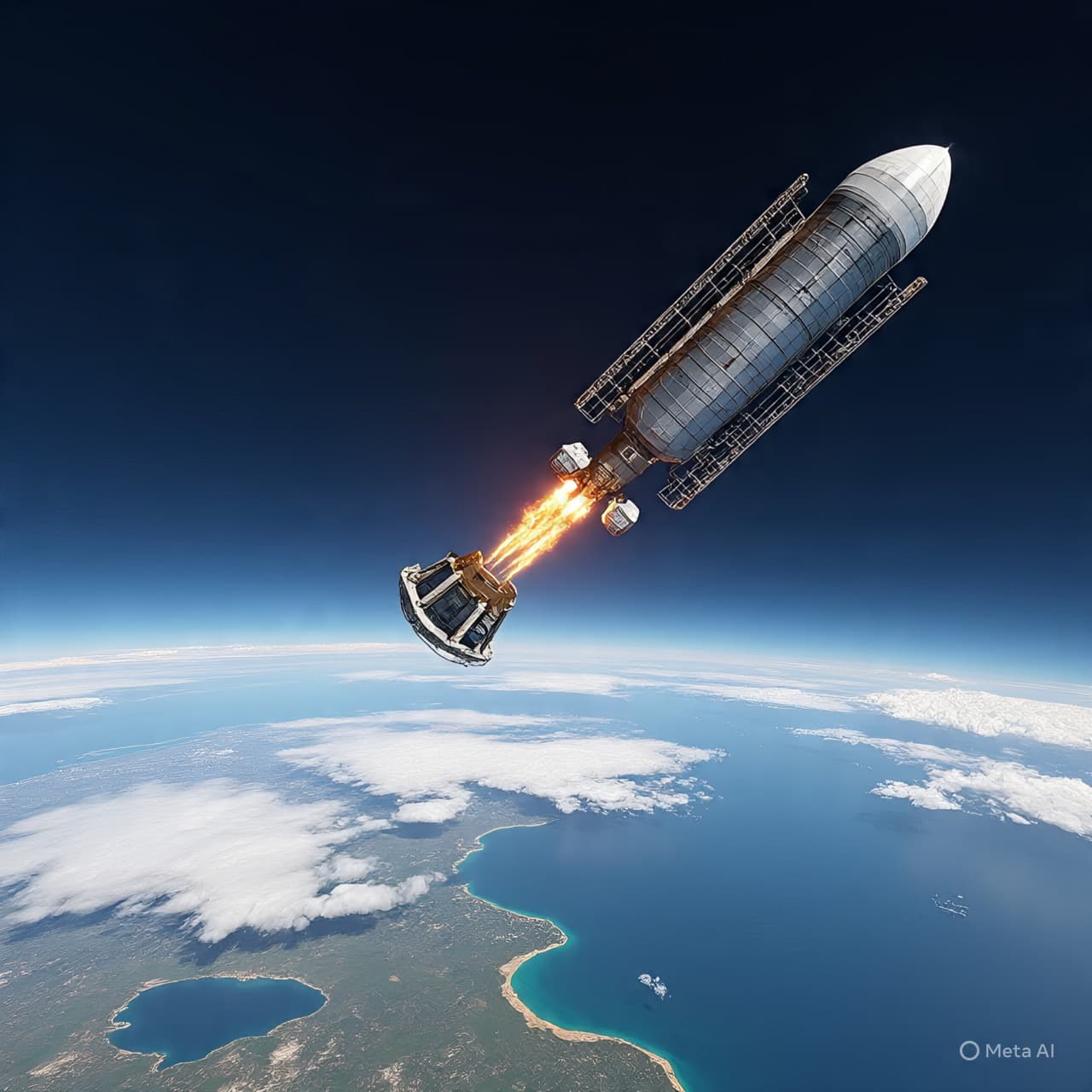
In the timeless dance of humanity among the stars, every mission carries both the promise of discovery and the delicate reminder of our mortal bounds. For nearly twenty-six years, the International Space Station has been a symbol of human curiosity and international cooperation, orbiting our blue world like a brilliant tug on the thread of possibility. It is in this rarefied environment that human bodies, brilliant minds, and fragile health all meet the quiet expanse of space — and this past week, that meeting took on an unexpected turn.
Out beyond the soothing curve of Earth’s horizon, the SpaceX Crew-11 team had settled into what was to be a six-month journey of experiments, observation, and shared human endeavor aboard the ISS. Then, within the precious rhythm of daily operations, NASA monitoring teams noticed a medical concern involving one of the crew members — an issue not disclosed in detail, protected by the same respect for privacy we extend here on Earth. What was shared, gently and carefully, was that this condition was stable, but could not be fully diagnosed or treated with the limited medical resources available aboard the station.
The call that followed — to return the crew early — marked a quiet milestone in NASA’s history. For the first time in more than a quarter-century of continuous human presence in low Earth orbit, the agency made the decision to bring astronauts home ahead of schedule for medical reasons. It was not the clamor of an emergency, but rather the sober wisdom that human health — the heartbeat behind all exploration — must remain the guiding priority.
Days before their departure, a ceremonial moment unfolded within the steel-and-glass corridors of the ISS: Commander Michael Fincke passed the symbolic key of command to Russian cosmonaut Sergey Kud-Sverchkov. Floating in microgravity, the transfer was more than protocol — it was a gesture of trust, continuity, and quiet resolve. Soon after, hatch preparations began for a journey not planned in the original mission manifest.
Scheduled to undock on January 14 from the orbiting laboratory they had called home for months, the Crew-11 astronauts — Fincke and fellow NASA astronaut Zena Cardman, along with Japan’s Kimiya Yui and Russia’s Oleg Platonov — prepared their SpaceX Dragon capsule for descent. The Pacific Ocean splashdown, likely in the early hours of January 15, became our vantage point for welcoming them back from the void.
In this moment of early return, it’s worth pausing on what this decision tells us about life in space and the human heart on Earth. Here was a mission shaped by precision, partnership, and shared aspiration — and it was the simple, universal concern for one crewmember’s health that redirected its course. So often we celebrate lifting rockets, unfurling solar arrays, or probing the edge of what we know. Yet today, the gentler truth is that even among the stars, our care for one another remains our truest compass.
AI Image Disclaimer (Rotated) Visuals are created with AI tools and are not real photographs.
Sources (credible news & reporting)
New York Post — NASA confirms Crew-11 early return after “medical concern” and undocking plan. Times of India — First-ever ISS medical evacuation and early splashdown announcement. Space.com — Details on change of command and timing of departure. Space.com — Scheduling, operational context, and historical framing of this evacuation. Welt / DPA — German news report on the command change before departure.
Published by Banx Network. This article is part of the Banx decentralized media programme, powered by the BXE token on the XRP Ledger.