

Key Highlights
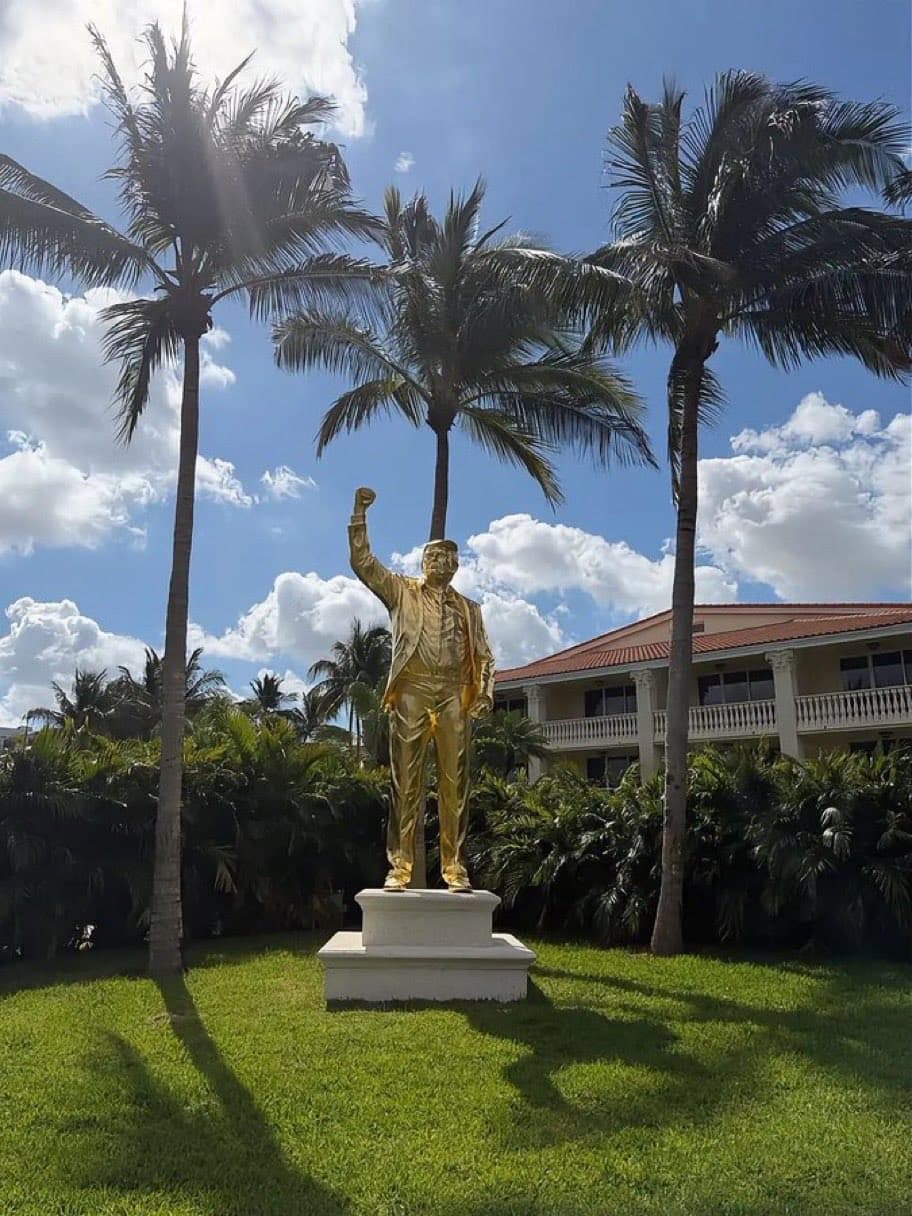
- New Statue:A gold-colored statue of Donald Trump unveiled at his Doral golf property in Miami.
- Symbolic Weight:The statue reflects deeper themes of modern politics, influence, and image.
- Cultural Impact:It highlights the intersection of politics, celebrity, and visual culture.
[The Unveiling of the Statue]
A striking new visual has entered the public conversation: a gold-colored statue of Donald Trump unveiled at his golf property in Doral, Miami. At first glance, it’s a bold display of personal branding. But beneath the surface, it reflects something deeper about modern politics, influence, and the role of image in shaping legacy.
Statues have always carried symbolic weight. From ancient empires to modern nations, they represent authority, achievement, and identity. In this case, the use of gold—a color long associated with wealth, victory, and permanence—adds another layer. It’s not just about commemoration; it’s about projection. The statue serves as a visual representation of Trump's brand, reinforcing his image as a powerful figure in American politics.
[Supporters vs. Critics]
For supporters, the statue may be seen as a tribute to leadership and success, reinforcing a larger-than-life persona that has defined Trump’s public image for decades. It embodies the admiration and loyalty of his base, who view him as a transformative leader. Conversely, critics raise questions about self-representation, political branding, and the merging of personal identity with public office. The statue becomes a focal point for discussions about the appropriateness of such displays in a democratic society.
[The Role of Visuals in Politics]
What makes this moment particularly relevant is the era we’re living in. Today, influence is not only built through policy or governance—it’s shaped through visuals, narratives, and viral moments. A single image can travel globally within minutes, sparking debate far beyond its physical location. The statue's unveiling is not just a local event; it has the potential to resonate on a global scale, influencing perceptions of Trump and his legacy.
[Political Figures as Brands]
This unveiling also highlights how political figures increasingly operate like brands. Properties, media presence, merchandise, and now symbolic installations all contribute to a carefully constructed identity. In that sense, the statue functions less like a traditional monument and more like a statement—one designed for both physical presence and digital amplification. The strategic placement of such a statue at a personal property underscores the blending of personal and political branding.
[Cultural Context]
There’s also a broader cultural angle. In a time where public trust in institutions is constantly shifting, displays of power and success—whether through wealth, architecture, or symbolism—take on new meaning. They can inspire, provoke, or divide, depending on perspective. The statue serves as a reminder of how public figures navigate their identities in a landscape marked by skepticism and scrutiny.
[Conclusion]
Ultimately, the statue isn’t just about one individual. It reflects a changing landscape where politics, celebrity, and visual culture intersect more than ever before. In that world, perception can be just as powerful as reality. As the conversation around this statue unfolds, it will be interesting to see how it influences public discourse and the ongoing narrative surrounding Trump’s legacy.
Published by Banx Network. This article is part of the Banx decentralized media programme, powered by the BXE token on the XRP Ledger.




