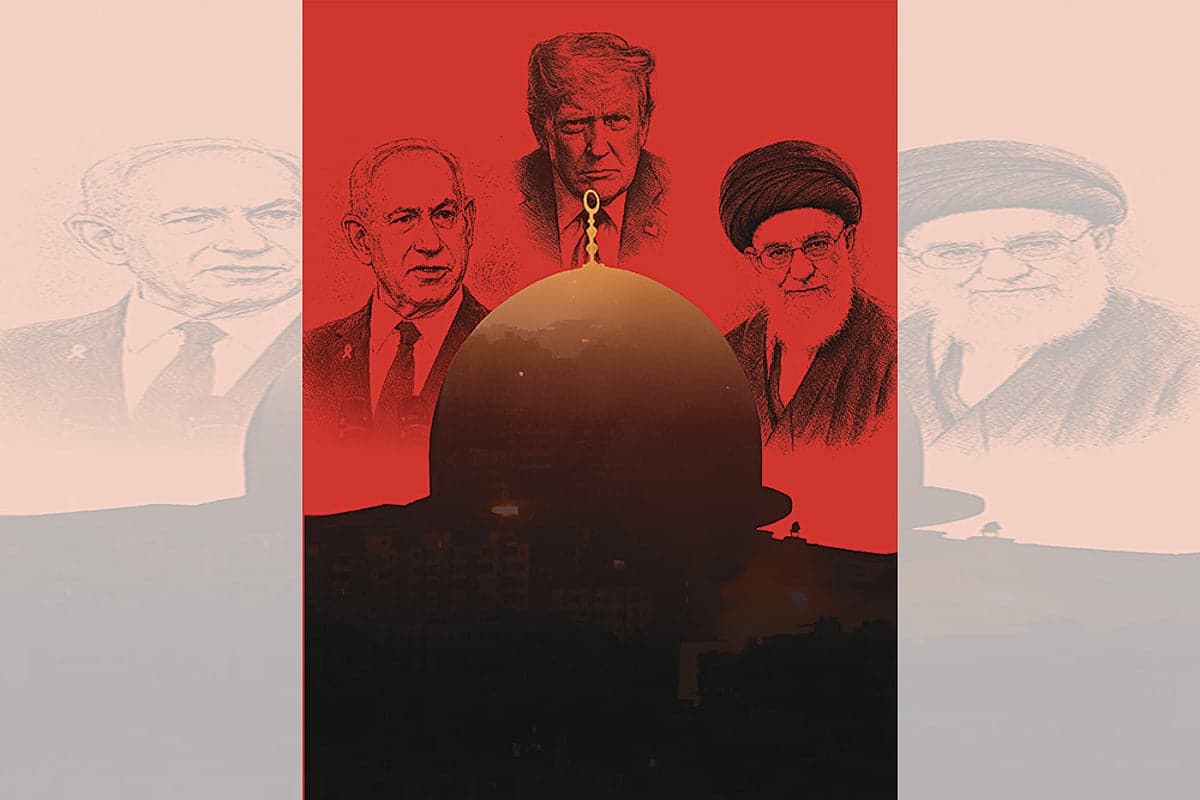
In the complex arena of international relations, the United States, Israel, and Iran have increasingly turned to religious rhetoric as a tool for mobilizing support. Each country’s use of faith-based narratives serves distinct purposes, shaping their domestic policies and foreign strategies while appealing to specific audiences. United States
In the U.S., religious themes often underpin various political narratives, particularly those surrounding foreign policy in the Middle East. Many American leaders invoke Christian Zionism, framing support for Israel as a fulfillment of biblical prophecy. This ideology resonates with a significant voter base that believes in the spiritual significance of Israel's existence, thus reinforcing the U.S.'s longstanding alliance with the nation. Politicians leverage religious sentiments during campaigns, portraying their foreign policy choices as aligned with divine favor. Israel
For Israel, the intertwining of religion and nationalism is pivotal. The Israeli government frequently highlights its Jewish identity as a cornerstone of its existence, promoting the notion of a divinely promised homeland. This narrative garners support from both domestic constituents and global allies, particularly within Evangelical Christian communities in the U.S. The use of religious language helps to strengthen national unity and legitimizes military actions or policies framed as defensive measures guided by faith. Iran
In contrast, Iran employs a different religious framework rooted in Shia Islam to galvanize support. The Iranian leadership often presents its opposition to the U.S. and Israel as a struggle between good and evil, framing political conflicts in theological terms. This narrative appeals to a population that views the nation as a defender of Islamic values against Western imperialism. The concept of martyrdom and sacrifice, deeply embedded in Shia beliefs, is used to inspire loyalty and justify military and political actions. Intersecting Narratives
As these nations navigate a fraught geopolitical landscape, the deployment of religious narratives complicates diplomatic relations. Conflicts are often portrayed in binary terms—good versus evil—making peaceful resolutions more challenging. This reliance on faith can deepen divisions and provoke escalations, as each nation feels justified in its actions based on its religious convictions.
In summary, the use of religious rhetoric by the U.S., Israel, and Iran underscores the profound role of faith in shaping political identities and alliances. Understanding these dynamics is crucial for analyzing conflicts and alliances in the contemporary world, as religious narratives continue to influence global power structures and relationships.
Published by Banx Network. This article is part of the Banx decentralized media programme, powered by the BXE token on the XRP Ledger.