There is a particular sorrow in watching a living structure that has existed for thousands of years begin to fail—a sorrow made heavier by the knowledge that the cause is not natural but human, and that the decline is not inevitable but the result of choices that could be made differently. For the world's coral reefs, that sorrow is now a daily reality. Warmer oceans and disease are threatening reefs on a global scale, and a new report from the Global Coral Reef Monitoring Network confirms what scientists have been warning for years: the window for saving these ecosystems is closing.
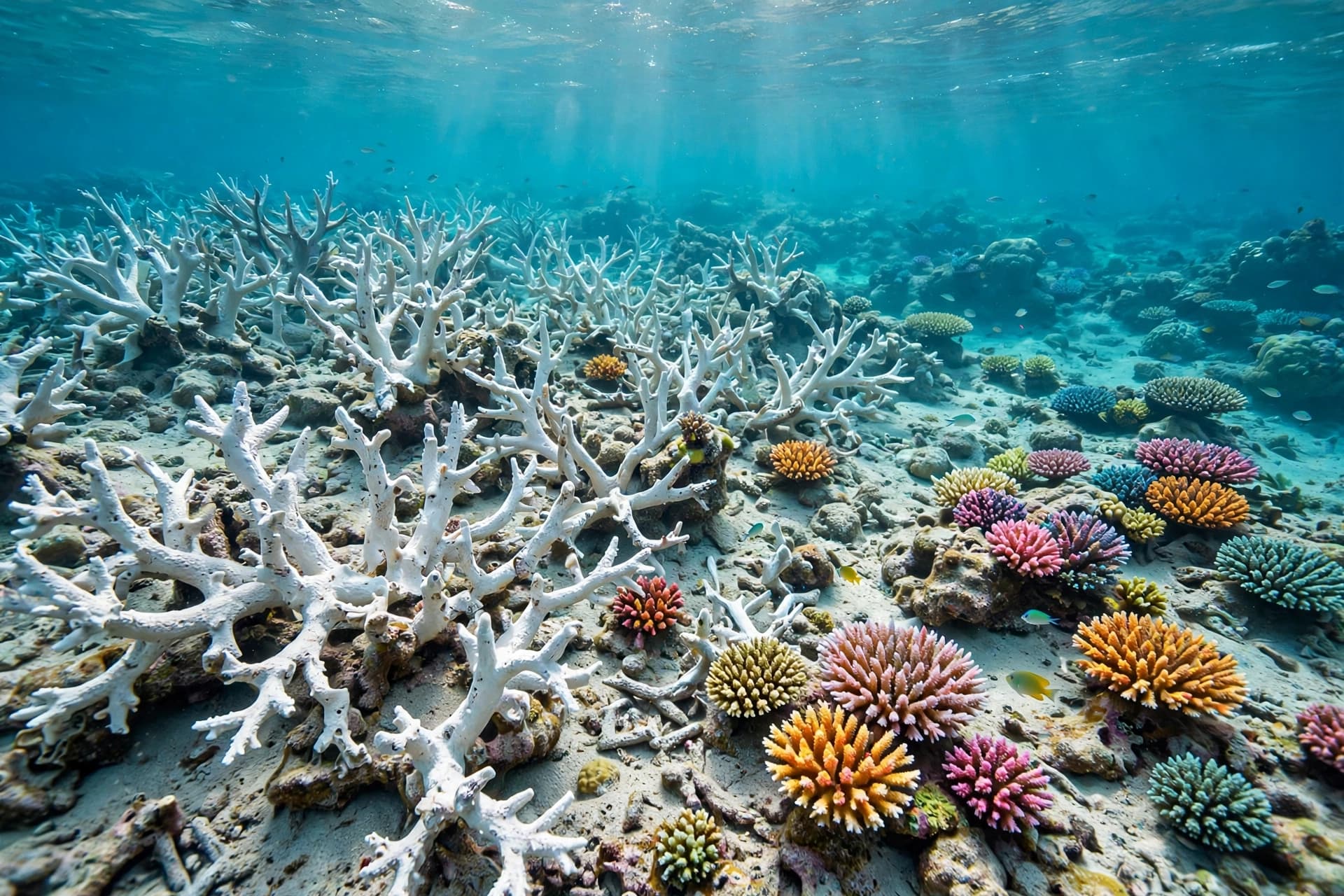
The numbers are stark. Since 2009, the world has lost approximately 14 percent of its coral reefs—a loss of about 11,700 square kilometers of living coral. The primary cause is ocean warming, which triggers coral bleaching, a process in which stressed corals expel the algae that live inside their tissues and provide them with food and color. Without those algae, the corals turn white and, if the stress continues, die. The report found that bleaching events have become more frequent and more severe, with the interval between them shrinking from decades to just a few years. In some regions, recovery is no longer possible.
The situation in the Great Barrier Reef illustrates the crisis. In 2024, the reef experienced its most widespread and severe bleaching event on record, with more than 50 percent of corals affected across all regions. A study published in Nature found that between 2016 and 2024, coral cover declined by 28 percent in the northern and central regions, and by 16 percent in the southern region. The reef is now experiencing bleaching events so frequently that it has no time to recover between them.
Disease is compounding the problem. Warmer waters and stressed corals are more susceptible to infection, and outbreaks of diseases like white syndrome and black band disease have become more common. A study published in Science Advances found that the combination of warming and disease has reduced coral diversity and abundance across the Indo-Pacific, with some species facing local extinction. The loss of coral is not just an aesthetic loss. Reefs support an estimated 25 percent of all marine species, provide food and income for hundreds of millions of people, and protect coastlines from storms. Their decline is a threat to both biodiversity and human well-being.
The report's recommendations are familiar but urgent: reduce greenhouse gas emissions, manage local threats like pollution and overfishing, and expand protected areas. None of these measures alone is sufficient, and even in combination, they cannot save every reef. But they can buy time, protect the most resilient reefs, and give the next generation a chance to inherit something more than a graveyard. The corals will not wait. The ocean is warming. And the question of what we are willing to do about it remains unanswered.
AI Image Disclaimer: All images in this article are AI-generated and are intended for illustrative purposes only.
Sources: Global Coral Reef Monitoring Network, Nature, Science Advances, NOAA
Published by Banx Network. This article is part of the Banx decentralized media programme, powered by the BXE token on the XRP Ledger.