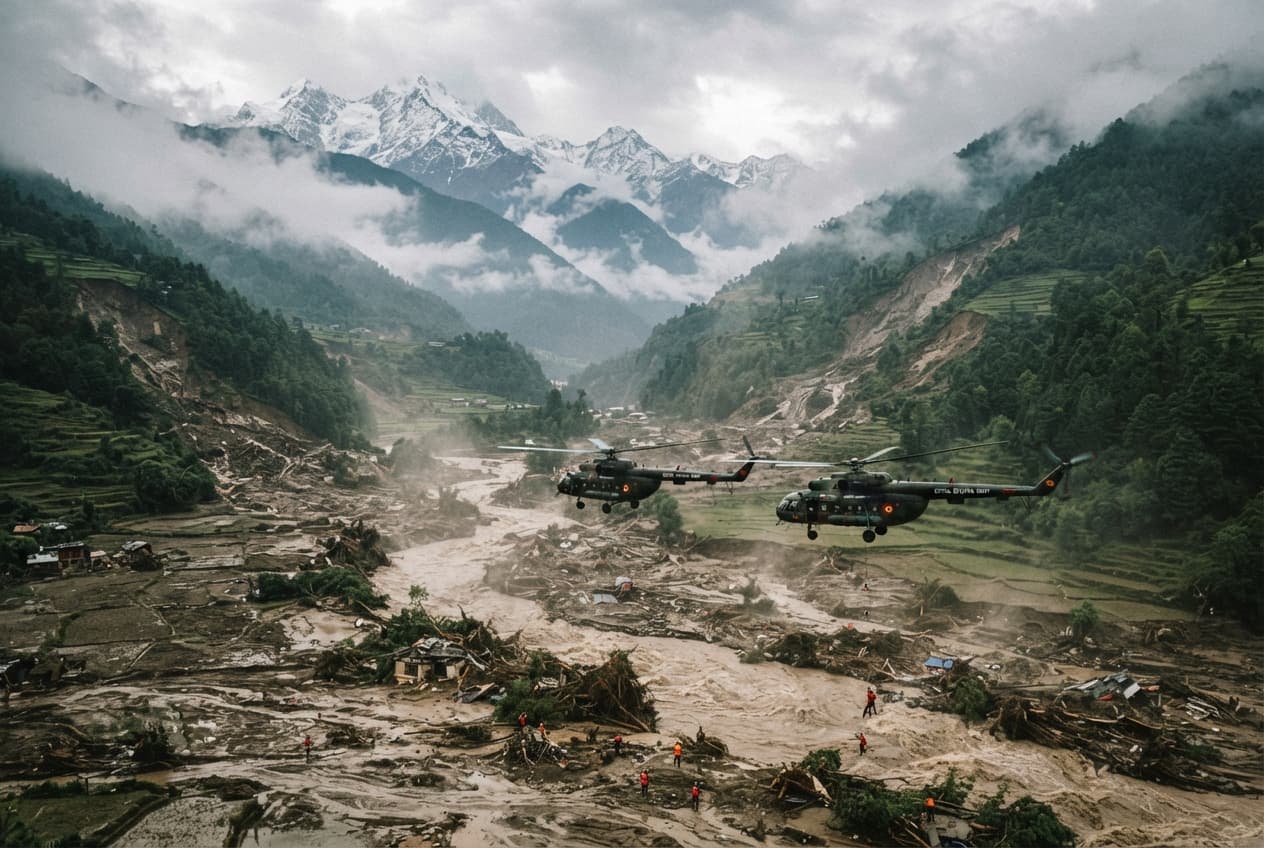
Thimphu, Bhutan—A high-altitude glacial lake burst its natural moraine dam early Friday morning, sending a wall of frigid water roaring down narrow Himalayan river valleys. The catastrophic outburst completely obliterated downstream bridges, rural farmhouses, and vital hydroelectric infrastructure before warning sirens could sound. Local administrators confirmed that nine villagers were swept away by the sudden torrent as raging waters swallowed entire riverbanks.
Search and rescue squads mobilized military personnel and trained tracking dogs to scour muddy riverbanks for missing residents downstream from the breach zone. Meteorological monitors noted that unseasonably warm temperatures accelerated glacial melting across the upper ridge systems over the preceding weeks. The sudden pressure spike fractured the ice-dammed lake wall, releasing millions of cubic meters of water into the valley below.
Survivors described hearing a deep subterranean rumble followed by a towering wall of grey water crashing through agricultural fields within minutes. Rescue teams faced immense challenges as washed-out mountain roads and unstable terrain cut off direct vehicle access to the hardest-hit riverside settlements. Helicopters hovered over the valley floor to drop emergency rations and medical supplies to stranded families marooned on high ridges.
Government ministers convened an emergency cabinet session in the capital to coordinate nationwide disaster response efforts and assess infrastructure damages. Engineers inspected vulnerable downstream dams and power generation stations to determine if structural integrity remained intact following the surge. Initial engineering estimates indicate that rebuilding destroyed suspension bridges and access roads will require extensive international assistance.
Environmental experts have repeatedly warned that warming global temperatures increase the frequency of glacial lake outburst floods across the Himalayan mountain range. Local communities lack advanced early warning sensors in remote upper catchments, leaving populations vulnerable to sudden upstream hydrological failures. Emergency management agencies established temporary relief camps for displaced families who lost their homes and livestock to the floodwaters.
Medical personnel set up triage tents near the river basin to treat shock, hypothermia, and minor injuries among survivors pulled from the muddy torrent. Relief workers distributed blankets, clean drinking water, and dry rations while warning residents to stay clear of swollen river channels. Search operations continue along the lower river stretches as night falls over the rugged mountain terrain.
The disaster underscores the immediate physical and economic risks climate change poses to high-altitude nations relying on fragile glacial ecosystems. Local authorities vowed to accelerate installation of automated sensor networks across high-risk glacial lakes to provide earlier warnings for downstream towns. Meanwhile, families gathered near makeshift rescue checkpoints, awaiting news of their missing relatives as recovery efforts persisted.
Published by Banx Network. This article is part of the Banx decentralized media programme, powered by the BXE token on the XRP Ledger.