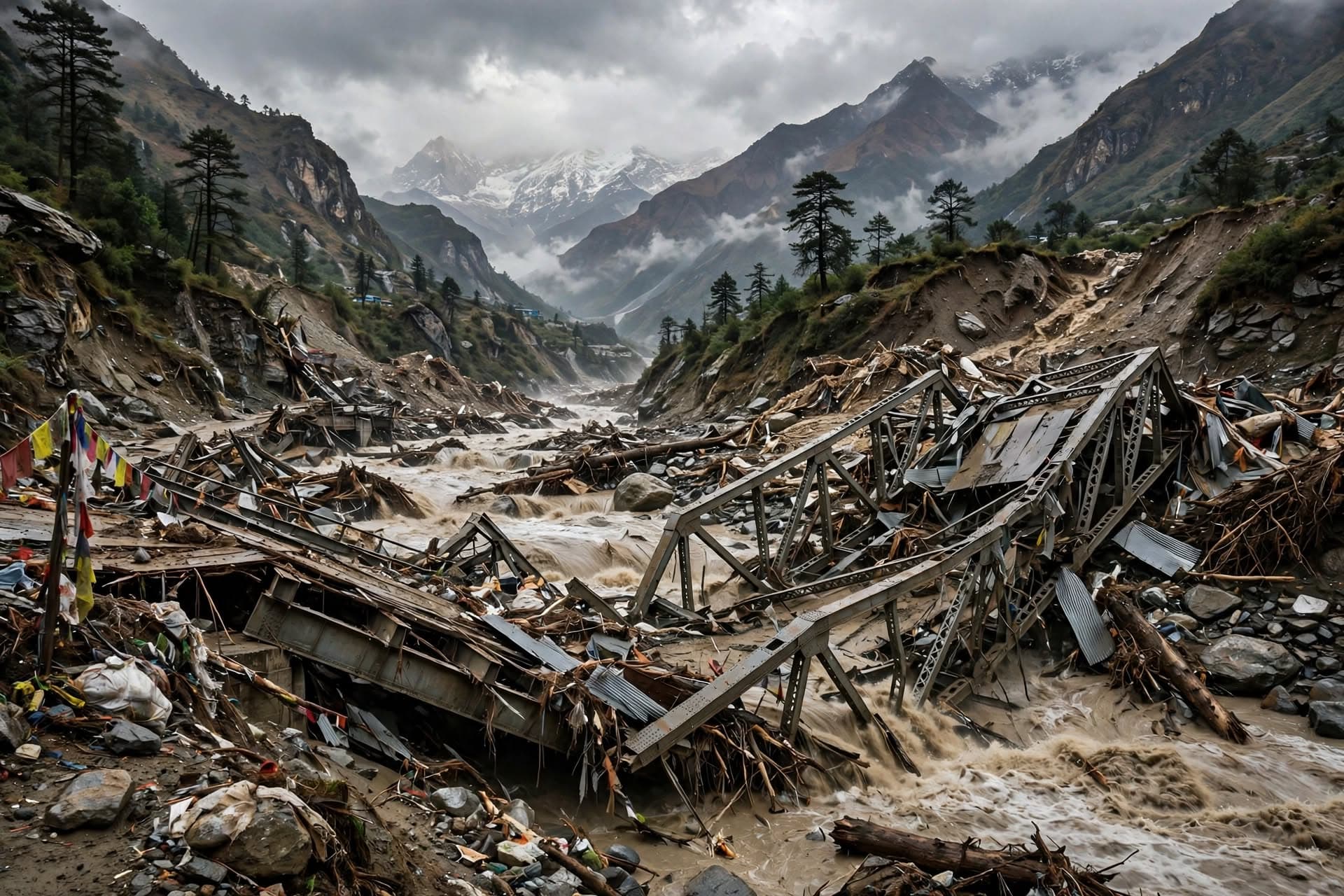
Kathmandu, Nepal— Water arrived as a wall on October 30, 2026. A glacial lake outburst flood triggered by the sudden bursting of Shintaphu Lake in Bhutan's Gasa District, and a parallel surge along the Nepal-Tibet corridor, washed away a remote mountain bridge, cutting the only supply line between border villages. Reuters reported the Bhutan flood destroyed infrastructure at Gasa Tshachu hot springs and washed away two Bailey bridges.
In Nepal, the pattern is familiar and worsening. On August 26, 2026, a huge piece of ice fell thousands of meters from a glacier into a river below near the Tibet border, unleashing a debris flow that roared down the Bhotekoshi-Trishuli system. That event killed more than 180 people, according to AFP and local reports. Buildings were buried, bridges destroyed, major roads severed. Early speculation called it a GLOF. Scientists later said it was a glacier collapse, not a lake burst, but the result was identical.
This October 30 event hit higher. The Shintaphu lake sits below Wakila Mountain. When it burst, water, mud and rock surged downstream. In Nepal, about 600 kilometers west, a similar flash flood on its border with China in August killed more than 1,500 in some estimates, according to relief reports. Critical infrastructure was obliterated. Remote communities were cut off entirely.
"We heard a rumble, then the bridge was gone," said a trader from Rasuwa district, who uses the Friendship Bridge route regularly. CCTV footage from the August flood showed mud and debris engulfing a border post as people fled. The same footage was shared again on October 30 as a warning. Local officials said the new bridge that replaced the Friendship Bridge was now at risk.
The friction is in climate and construction. Glaciers retreat, lakes form behind unstable moraine walls, then fail. Nepal has more than 2,000 glacial lakes, dozens rated high risk. Building a Bailey bridge across a river fed by such lakes is fast and cheap, but it is not resilient to a GLOF. The Department of Hydrology said water levels exceeded danger marks in the Trishuli.
The Kathmandu Post noted that early warning systems exist for some lakes but not for Shintaphu or the small supraglacial lakes above Tibet. When they burst, there is no siren. Villagers rely on the sound of the river rising. By then, there are minutes, not hours.
As of October 30, 2026, army engineers were trying to reach the collapsed site by helicopter. Weather was closing in. The road to Timure remained blocked by landslide debris. Villages above the bridge reported food shortages because porters could not cross.
The next lake is already full.
Published by Banx Network. This article is part of the Banx decentralized media programme, powered by the BXE token on the XRP Ledger.