There are numbers that measure time, and there are numbers that measure something else entirely. Two hundred sixty-two days is a span that can be counted on a calendar, but for the family of Maya Gebala, it is a distance measured in surgeries, in uncertain nights, in the slow return of a smile. On Thursday, her father shared a video. In it, a thirteen-year-old girl in a wheelchair reacts with excitement as she is told she is going home. It is a moment that no one, in the hours after the shooting, believed would arrive.
The Tumbler Ridge attack on February 10 left eight people dead, including the gunman, and injured dozens more . Maya was shot three times. A bullet struck her skull and shattered bone fragments through her brain, according to court documents filed by her family . David Gebala wrote that doctors told him they did not think she would make it through the night. "Since then," he wrote, "I've watched you fight for every single one of those days" .
The milestones her father listed are not the kind that appear in medical charts, though they are recorded there too. It has been 251 days since she opened an eye. 191 days since tubes were removed to reveal her face. 145 days since she first smiled. 61 days since she first spoke . These are the units of a recovery that no one could predict, a sequence of small victories that accumulated into something that began to feel possible.
Maya underwent five surgeries during her hospitalization. The fifth, a cranioplasty in May, installed a prosthetic barrier to address the swelling and deflation in her head caused by her damaged skull . Her father described that surgery as the one that "finally stuck," the moment after which "things slowly began to feel possible again" . Before that, there had been infections and emergencies, the ordinary catastrophes of a body trying to heal from extraordinary trauma.
The family has shared updates throughout, videos of Maya on outings in Vancouver, no longer confined to the hospital where she received treatment. In September, she celebrated her thirteenth birthday at a Foo Fighters concert at B.C. Place, with cake and games . These moments were not merely diversions. They were evidence, offered to a public that had followed her story, that recovery is not a straight line but a collection of afternoons, each one a small argument against despair.
The road ahead remains long. Her mother has indicated the family will likely have to permanently relocate to Vancouver so Maya can continue receiving care, though it is unclear whether that remains the plan . The legal case filed against OpenAI and its CEO Sam Altman, alleging a role in the shooting, continues; OpenAI has asked for the case to be dismissed . These are the complications that surround a recovery, the practical and legal realities that do not pause while a child learns to speak again.
David Gebala's words on Thursday were addressed to his daughter, but they carried a weight that extends beyond one family. "Maya, you are the bravest person I know. You are an inspiration to so many people," he wrote. "Giving up was never an option for me, and it clearly never was for you either" . The sentiment is not a policy or a promise. It is a father's accounting of a year that could have ended differently, offered with the gratitude of someone who knows how close it came.
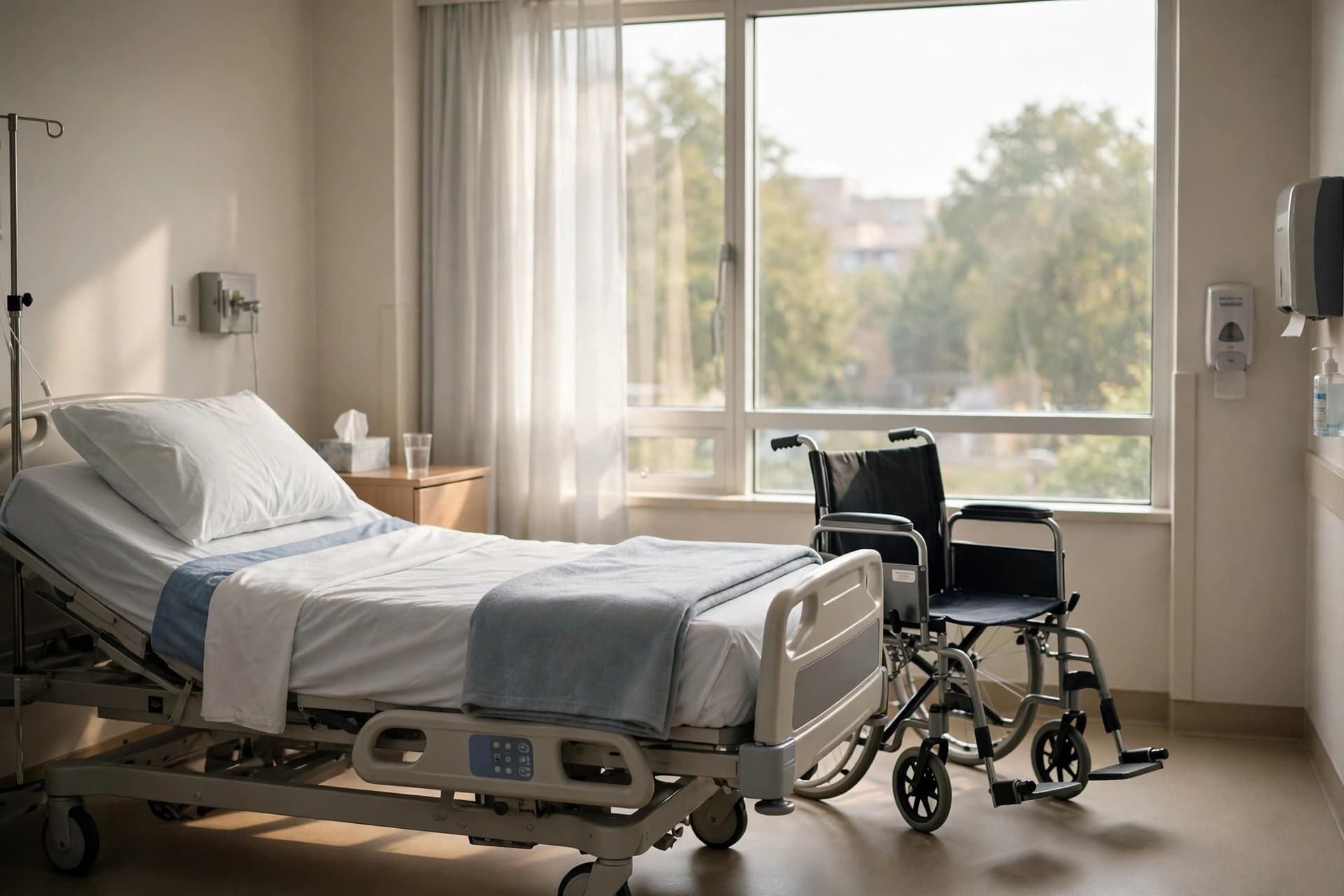
Maya is home now, or will be soon, in whatever home the family makes next. The hospital walls are behind her. The road ahead is still long, as her father acknowledged. But 262 days after a morning that nearly took everything, a girl in a wheelchair pumped her fist at the news that she was leaving. That is the story, and for today, it is enough.
Image note: The visuals accompanying this article were generated by artificial intelligence and do not depict Maya Gebala, her family, or the actual events described.
Sources: CBC News, The Canadian Press, Vancouver Sun, Winnipeg Free Press
Published by Banx Network. This article is part of the Banx decentralized media programme, powered by the BXE token on the XRP Ledger.