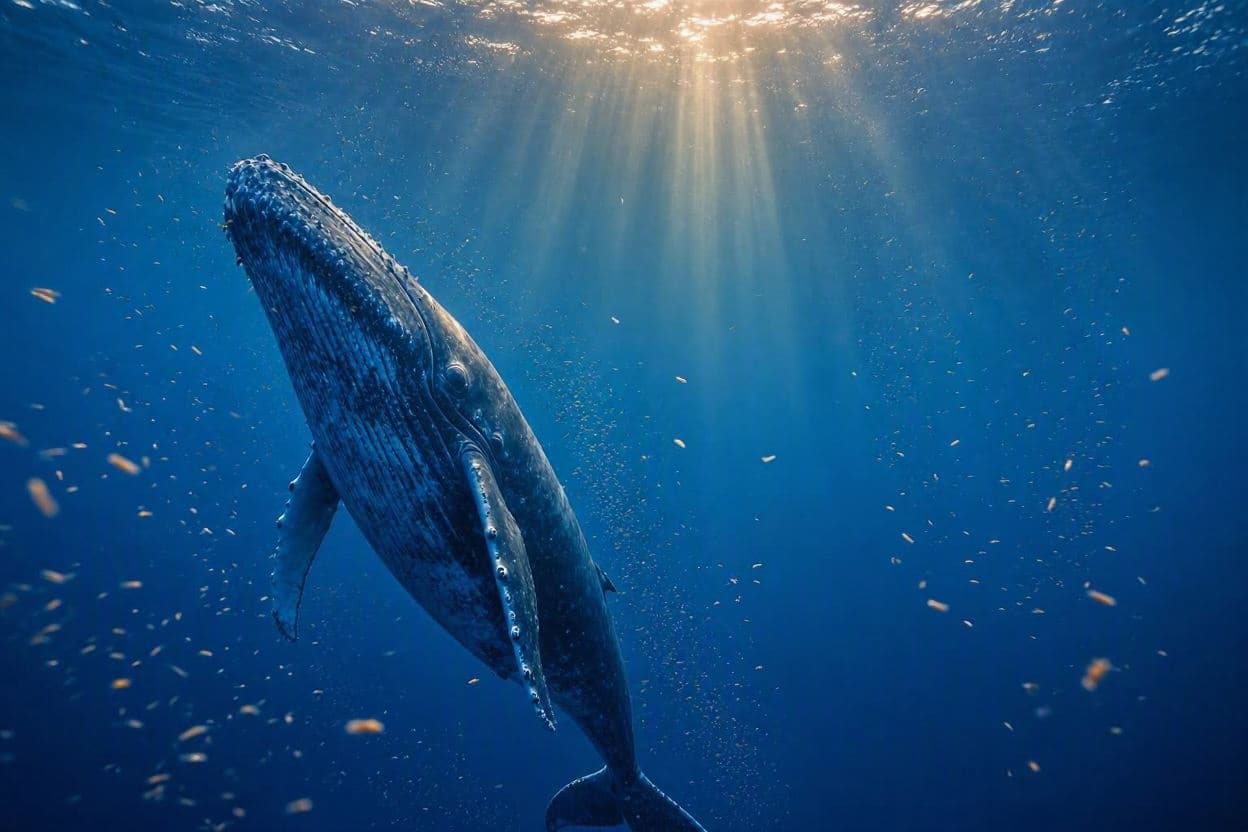
There is a profound humility in observing the blue whale, a creature so vast it seems to belong to a different epoch, yet so gentle in its demeanor. These leviathans navigate the endless expanses of the ocean with a grace that belies their size, moving through waters that appear uniform to the human eye but are rich with hidden patterns. Recent insights into their feeding strategies reveal a sophistication that challenges our understanding of marine intelligence and sensory perception.
For years, the question of how such massive animals locate dense patches of krill in the open ocean remained a mystery. The ocean is a vast, three-dimensional maze, and prey distribution is often patchy and unpredictable. New research suggests that blue whales do not rely solely on chance or broad migratory instincts but employ a highly refined strategy that combines memory, sensory input, and efficient movement.
Studies using advanced tagging technology have shown that blue whales are capable of detecting subtle cues in the water, possibly related to sound or chemical signals, that indicate the presence of prey. This ability allows them to target specific areas with remarkable accuracy, minimizing the energy expenditure required for feeding. In an environment where every calorie counts, this precision is not just advantageous; it is essential for survival.
The findings also highlight the importance of spatial memory. Blue whales appear to remember productive feeding grounds across years, returning to areas where they have previously found abundant food. This cognitive map, built over decades of experience, enables them to navigate the ocean with a purpose that transcends immediate sensory input, suggesting a deep connection to their environment.
Furthermore, the research underscores the efficiency of their lunge-feeding behavior. By approaching prey patches at optimal angles and speeds, blue whales maximize the amount of krill consumed per lunge. This biomechanical precision ensures that the energy gained from feeding far exceeds the energy spent in the hunt, a balance that is critical for sustaining their enormous bodies.
These discoveries have significant implications for conservation efforts. Understanding how blue whales locate food helps identify critical habitats that need protection from human activities such as shipping noise and fishing interference. It reminds us that preserving these giants requires not just protecting their bodies but safeguarding the sensory landscapes they depend on.
The elegance of their strategy serves as a reminder of the intricate adaptations that have evolved over millions of years. In a world increasingly dominated by human activity, the blue whale’s ability to thrive in the open ocean is a testament to the resilience and ingenuity of nature.
As we continue to study these magnificent creatures, we gain not only scientific knowledge but also a deeper appreciation for the complexity of marine ecosystems. Their survival is intertwined with the health of the oceans, and their stories offer valuable lessons in efficiency, memory, and adaptation.
The revelation of how blue whales navigate and feed with such precision adds a new layer of wonder to our understanding of these majestic animals. It highlights the importance of protecting their habitats and the delicate balance of the marine environment. As stewards of the planet, we are reminded that even the largest among us rely on the smallest details of their world.
AI Image Disclaimer: The images associated with this article are AI-generated interpretations designed to visualize the scale and grace of blue whales in their natural habitat.
Sources: National Geographic Proceedings of the Royal Society B Marine Ecology Progress Series
Published by Banx Network. This article is part of the Banx decentralized media programme, powered by the BXE token on the XRP Ledger.