
Key Highlights
- Incident:Eight informal miners died in a shaft collapse in Tarkwa, Ghana.
- Rescue Efforts:Local volunteers and emergency teams struggled to reach the trapped miners.
- Community Impact:The tragedy underscores the dangers of unregulated mining in the region.
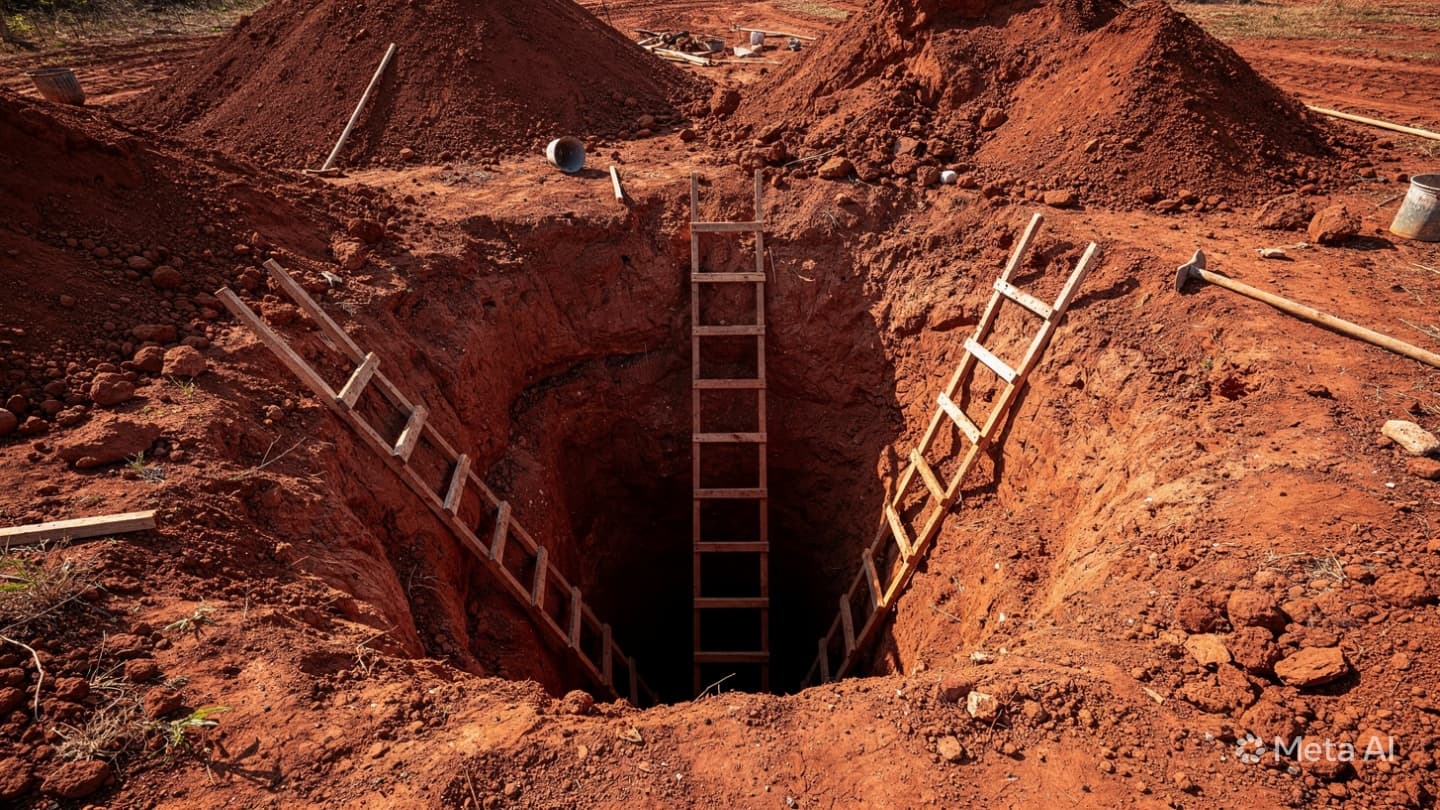
A deep vertical shaft inside an informal artisanal gold mine collapsed early Thursday morning in Tarkwa, Ghana, tragically claiming the lives of eight miners. The incident occurred around 10:25 a.m. at a site notorious for small-scale, unregulated mining operations, commonly referred to as 'galamsey.' The collapse was triggered when the main subterranean support timber gave way unexpectedly, resulting in a massive cave-in of heavy clay and rock that sealed the primary exit tunnel approximately eighty meters below the surface.
Local community volunteers and fellow miners initiated rescue efforts by digging through the dense earth with handheld shovels and buckets before formal rescue units arrived. By midday, regional emergency management teams reached the site with heavy earth-moving equipment. However, the instability of the surrounding soil hampered rescue operations, as excavators had to proceed cautiously to avoid triggering a secondary collapse along the unlined pit walls.
A regional administrative officer coordinated the rescue efforts and addressed community leaders at the site. He confirmed that rescue swimmers and mining technicians worked tirelessly for hours to reach the lowest chamber, but all eight trapped individuals had succumbed to asphyxiation and crushing injuries before a ventilation path could be cleared through the packed mud. The loss has left the community in mourning, with local elders expressing deep grief and frustration over the economic conditions that drive young men to seek employment in such perilous, makeshift mining operations.
Despite ongoing government promises to crack down on dangerous artisanal pits, representatives from the community noted that large corporate concessions often leave old, unbackfilled shafts accessible to locals, who enter them without any structural safety gear. A geological technician inspecting the perimeter of the collapsed pit indicated that consecutive days of heavy seasonal rainfall had thoroughly saturated the upper topsoil layers, significantly increasing the lateral pressure on the rudimentary wooden shoring structures inside the shaft, ultimately causing them to buckle under the weight of the waterlogged clay.
As dozens of family members gathered near the mouth of the pit, weeping as emergency crews wrapped the recovered bodies in simple canvas blankets, relatives pointed out the lack of formal employment opportunities in the agricultural sector. This leaves local youths with few alternatives to the highly dangerous, unmapped underground work that has now claimed lives.
In response to the tragedy, the Ministry of Lands and Natural Resources announced an immediate safety enforcement sweep across the district to identify and permanently seal abandoned artisanal mining tunnels. Officials acknowledged the challenges of tracking these transient operations, as crews often dig deep shafts under the cover of night to evade police patrols.
National security forces have closed off the dirt access roads leading to the mining enclave to prevent unauthorized crowds from entering the active extraction zone. This security perimeter has delayed local transport vehicles carrying food crops and timber to regional market centers, creating minor economic disruptions across the rural district. Recovery teams are currently utilizing heavy hydraulic pumps to clear standing water out of the lower access trenches to ensure the stability of the remaining earthen walls. As threatening storm clouds gather over the western hills, the risk of further downpours increases, potentially washing out remaining search paths before the site can be fully secured.
Published by Banx Network. This article is part of the Banx decentralized media programme, powered by the BXE token on the XRP Ledger.



