
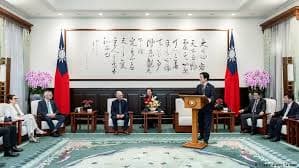
In recent developments, Germany has intensified its diplomatic engagement with Taiwan, reflecting a strategic shift in response to rising tensions with China. German Chancellor Friedrich Merz articulated this stance during his official visit to China in February 2026, emphasizing that any potential reunification with Taiwan must occur peacefully. This visit, pivotal for fostering relations with Chinese leaders, did not overlook the challenges posed by competition in supply chains and trade. Germany's trade deficit with China reached a record €90 billion in 2025, highlighting the economic pressures at play.
Merz's administration is particularly sensitive to the geopolitical ramifications of China's assertiveness, especially concerning Taiwan. In his discussions with Chinese President Xi Jinping, Merz maintained that while Germany values its economic ties to China, it also stands firm on advocating for peaceful resolutions in the Taiwan Strait. The Chancellor’s remarks underline Germany's commitment to a “values-based” foreign policy that aligns with democratic ideals, even as it navigates its economic dependencies.
Moreover, Germany has increasingly involved itself in advocating for Taiwan’s participation in international organizations, a move that signals its support for Taipei amid China's growing military pressure. This pivot is not merely symbolic; it is an essential element of Germany's strategy for enhancing technological sovereignty and expanding collaborative efforts with Taiwanese firms in sectors such as advanced manufacturing and green technology.
As tensions between Beijing and Washington pulse with urgency, Germany faces a complex diplomatic dilemma. Balancing strong trade ties with China, while nurturing relationships with Taiwan, allows Berlin to maintain a degree of autonomy in foreign policy. This approach aims to strengthen Germany's position within a fragmented global geopolitical landscape, characterized by competing powers and shifting alliances.
Germany's engagement strategy indicates a commitment to fostering stability in the Asia-Pacific region, crucial not only for Taiwan's security but also for European interests. By promoting a narrative of cooperation anchored in democratic values, Germany seeks to assert itself as a mediator capable of influencing constructive dialogue between China and Taiwan, ultimately maintaining peace in the region.
Published by Banx Network. This article is part of the Banx decentralized media programme, powered by the BXE token on the XRP Ledger.

.jpg&w=3840&q=75 "Blake Lively Awarded $400,000 in Legal Fees After Justin Baldoni Lawsuit Dismissed")