
Key Highlights
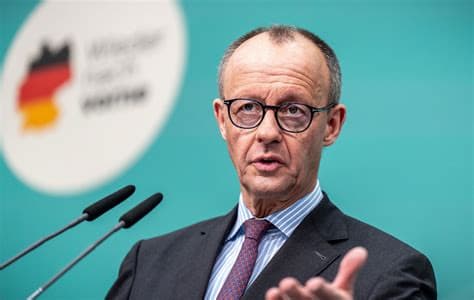
- Merz's Warning: German Chancellor Friedrich Merz advises against U.S. education for his children.
- Social Climate Concerns:He cites significant challenges faced by educated individuals in the U.S.
- Diplomatic Tensions:Merz's comments follow a recent spat with President Trump over U.S. foreign policy.
Chancellor Friedrich Merz of Germany made headlines during a recent gathering of German Catholics in Wuerzburg, where he expressed his reservations about the United States as a destination for education and employment. Merz stated, "I would not recommend to my children today that they go to the U.S. to get an education and to work," a remark that resonated with the audience and garnered applause. His concerns primarily revolve around the current social climate in the U.S., where even well-educated individuals reportedly struggle to secure employment.
These comments come in the wake of a diplomatic spat with U.S. President Donald Trump, where Merz criticized the American administration's handling of negotiations with Iran. This exchange has heightened tensions between the two leaders, with Trump suggesting that Merz was underperforming in his leadership role. The situation escalated further with the announcement of the withdrawal of 5,000 U.S. troops from Germany, a move that has been interpreted as a signal of deteriorating relations.
Historically, Merz has been a proponent of transatlantic relations, advocating for strong ties between Germany and the United States. However, his recent remarks indicate a significant shift in perspective. He pointed to a cultural rift that has developed, exacerbated by the divisive nature of Trump's "Make America Great Again" movement. While Merz acknowledged America's historical contributions to global democracy and culture, he noted that his respect for the U.S. is "not increasing" in light of recent events.
Merz's statements reflect a growing concern among European leaders regarding the changing dynamics of the transatlantic relationship. As the U.S. grapples with internal divisions and a shifting political landscape, there is increasing apprehension about the implications for young talent seeking opportunities abroad. The potential impact on education, collaborative efforts, and cultural exchanges between Europe and the U.S. is becoming a pressing issue.
In conclusion, Merz's candid remarks serve as a barometer for the evolving sentiment in Europe towards the United States. As diplomatic relations cool, the future of educational and professional exchanges remains uncertain, prompting a reevaluation of the benefits of pursuing opportunities in the U.S. for the next generation.
Published by Banx Network. This article is part of the Banx decentralized media programme, powered by the BXE token on the XRP Ledger.



