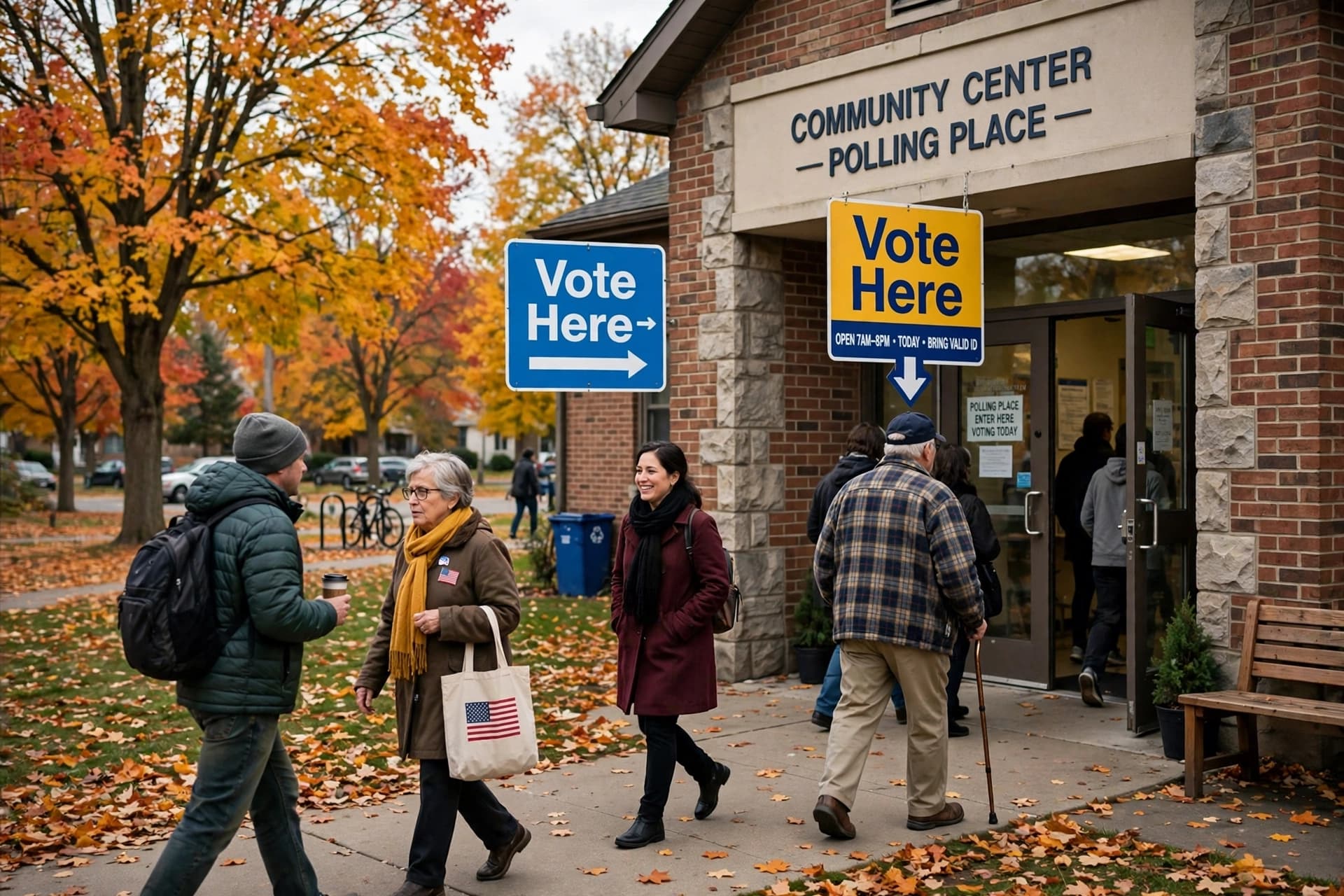
In a democracy, the first day of early voting is like the opening note of a symphony—a single sound that hints at what is to come. In Georgia this week, that note arrived with a volume no one had heard before. More than 188,000 voters cast ballots in person on Tuesday, shattering the state's previous first-day record for a midterm election.
Secretary of State Brad Raffensperger reported 188,667 in-person votes, up from 134,962 on the first day of early voting in 2022—an increase of more than 53,000, or roughly forty percent. The 2018 midterm first-day total was 70,849. An additional 10,267 absentee ballots were accepted.
"This record-breaking turnout proves that voters have confidence in the integrity of our elections," Raffensperger said in a statement. "It's a testament to our strong election system overseen by 159 of the best county election officials in the country".
The surge was driven in part by Black voters, who made up more than thirty-six percent of day-one early votes cast, according to the nonpartisan election data site VoteHub. That figure is over six percent higher than in 2024.
The largest vote shares came from metro Atlanta counties, where population density and organized outreach efforts often combine to produce higher turnout. As of Wednesday afternoon, Georgia's total turnout exceeded 340,000, according to the secretary of state's online election data hub.
The numbers are notable not only for their size but for their timing. Early voting in Georgia runs from October 13 through October 30, with election day on November 3. Residents must have been registered by October 5 to participate.
The turnout record comes as midterm elections across the country generate heightened attention. In Georgia, several statewide and federal races are drawing national interest, though the early voting surge itself does not predict final outcomes—it only suggests that more voters are choosing to cast their ballots before election day, a trend that has grown across multiple election cycles.
For election officials, the first-day numbers offer a measure of reassurance after years of scrutiny and skepticism about the voting process. For voters, they represent something simpler: a decision to participate, made not under the pressure of a single day but in the quieter rhythm of an October afternoon.
AI Image Disclaimer: Visual content accompanying this article is generated by artificial intelligence for illustrative purposes only.
Sources: The Hill, UPI, CBS News, Star-Gazette, Washington Times, Spectrum Local News
Published by Banx Network. This article is part of the Banx decentralized media programme, powered by the BXE token on the XRP Ledger.