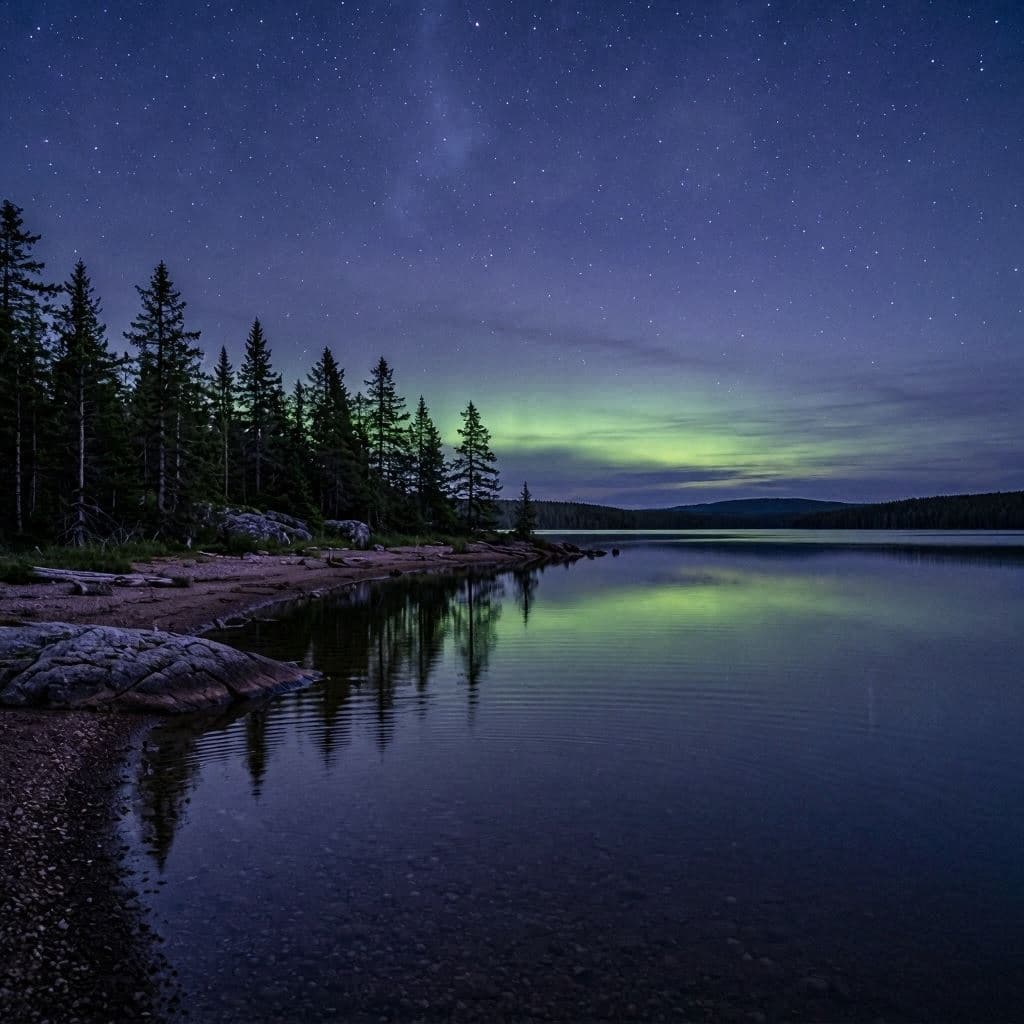
There is a quiet magic in the night sky, a celestial dance that has captivated humanity for millennia. The aurora borealis, with its ethereal curtains of green and violet, serves as a gentle reminder of the powerful forces at play between our planet and the sun. As solar activity reaches a peak in this current cycle, the heavens have become more generous, offering viewers in unexpected latitudes a chance to witness this natural wonder without traveling to the far north.
The forecast for this Thursday brings a sense of anticipation, as geomagnetic storms stir the upper atmosphere, pushing the boundaries of visibility southward. It is an invitation to step outside, look up, and share in a moment of collective awe, connecting us to the vast, rhythmic pulse of our solar system.
Body: Forecasters have indicated that a moderate geomagnetic storm could make the northern lights visible from as many as nine states across the northern United States this Thursday. States such as Minnesota, Wisconsin, Michigan, and Maine, which are traditionally within the auroral oval, may see particularly vibrant displays. However, the enhanced activity could also extend visibility to states further south, including Washington, Idaho, Montana, North Dakota, and potentially parts of New York and Vermont, depending on local conditions and light pollution.
The phenomenon is driven by coronal mass ejections from the sun, which send charged particles racing toward Earth. When these particles interact with the planet’s magnetic field, they excite gases in the upper atmosphere, causing them to glow. The current solar cycle, known as Solar Cycle 25, is approaching its maximum, leading to more frequent and intense solar flares that fuel these spectacular light shows.
For observers, the best chance of viewing the aurora will be during the darkest hours of the night, typically between 10 p.m. and 2 a.m. local time. Finding a location with a clear view of the northern horizon and minimal artificial light is crucial. While the naked eye may perceive the lights as faint, grayish clouds, cameras and smartphones often capture the vivid colors that are less apparent to human vision in low-light conditions.
Experts advise patience and preparation, suggesting that viewers allow their eyes to adjust to the darkness for at least fifteen minutes. Checking real-time aurora forecasts and space weather alerts can help maximize the chances of a sighting, as the intensity of the display can fluctuate rapidly. The experience is not just visual but emotional, offering a rare pause in the busy rhythm of modern life.
Community groups and astronomy clubs across the affected regions are organizing viewing events, fostering a sense of shared discovery. These gatherings provide an opportunity for neighbors to connect over a shared interest in the natural world, turning a scientific event into a social and cultural moment. The aurora serves as a bridge between science and wonder, making complex astrophysical processes accessible and beautiful.
While the forecast is promising, it is important to remember that nature remains unpredictable. Cloud cover or a sudden shift in solar wind direction could obscure the view. Yet, even the attempt to witness the lights offers a chance to reconnect with the night sky, a resource that is often overlooked in urban environments. The anticipation itself is part of the joy, encouraging people to step away from screens and into the outdoors.
Closing: As Thursday approaches, residents in the northern tiers of the U.S. are encouraged to keep an eye on the sky. Whether the display is faint or brilliant, the opportunity to witness the aurora borealis is a gift from the cosmos. It reminds us of our place in a dynamic universe, where light and energy travel millions of miles to paint the night with fleeting, magical strokes.
AI Image Disclaimer: Please note that any accompanying illustrations for this story are AI-generated visualizations intended to complement the narrative and do not depict actual real-time aurora forecasts or specific geographic locations.
Sources: NOAA Space Weather Prediction Center Forbes U.S. News & World Report Aurora Hunter
Published by Banx Network. This article is part of the Banx decentralized media programme, powered by the BXE token on the XRP Ledger.