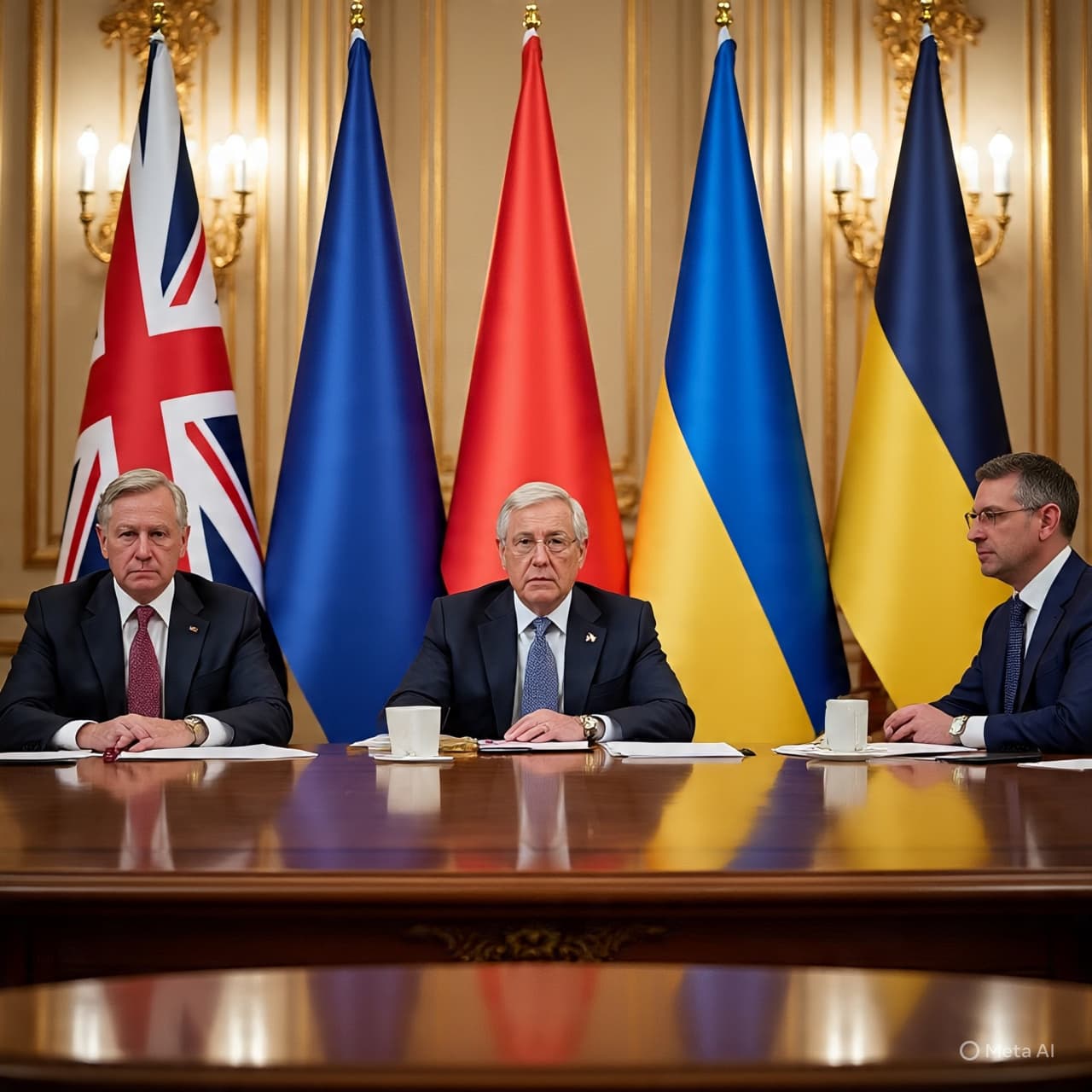
There are moments in history when the horizon seems too far to touch, yet something about its light invites closer reflection. In the soft glimmer of early January, leaders from distant capitals met in Paris, speaking not only with words but with the quiet gravity that only the promise of peace can bring. It is as if a long, shadowed path toward calm worn and weary from conflict might finally bear signs of understanding and hope, and that hope now carries a new dimension: a pledge of presence.
In the heart of this unfolding story lies a decision made by the United Kingdom and France, inked into a formal “Declaration of Intent” alongside Ukrainian President Volodymyr Zelensky. The essence of that pledge is both simple and profound: should a peace deal with Russia be concluded, both British and French troops would be stationed in Ukraine. This is meant not as a return to confrontation, but as gentle sentinels of reassurance protecting skies and seas, helping rebuild strength, and embodying a tangible promise that peace would be backed by steadfast support.
The alliance envisaged is not a force poised at the front lines of conflict, but rather a multinational presence designed to bolster confidence, deter renewed aggression, and help cultivate stability in a land still tender from years of war. The creation of “military hubs” across Ukraine places where protected facilities and equipment may be safely housed suggests a practical step toward a future where fear gives way to security.
This gesture comes at a delicate moment. The United States, while backing robust security guarantees and ceasefire monitoring, has indicated a lesser role in direct troop deployment, favoring tools such as drones and satellite oversight. European partners, stepping carefully, seek a balance: offering assurance without igniting old tensions anew.
President Zelensky’s reception of these declarations was warm, yet tempered with realism. Peace, he reminded listeners, requires not only words on paper but the willingness of all parties especially Moscow to engage in genuine compromise. The path from declarations to reality is winding, and while this accord brings possible light, it also acknowledges the lingering questions over territorial disputes and long-held grievances.
It is, perhaps, in such gentle negotiations that the truest measure of hope resides: not in certainty, but in the willingness to imagine a future where foreign boots do not mark the soil as invaders, but as partners in rebuilding. And in that quiet wish for peace, for understanding, for shared resolve there lies a tender reminder of why these talks matter so deeply.
AI Image Disclaimer (Rotated Wording) “Visuals are created with AI tools and are not real photographs.”
Sources (Media Names Only):
ABC News Sky News The Guardian Reuters Ukrainska Pravda
Published by Banx Network. This article is part of the Banx decentralized media programme, powered by the BXE token on the XRP Ledger.