
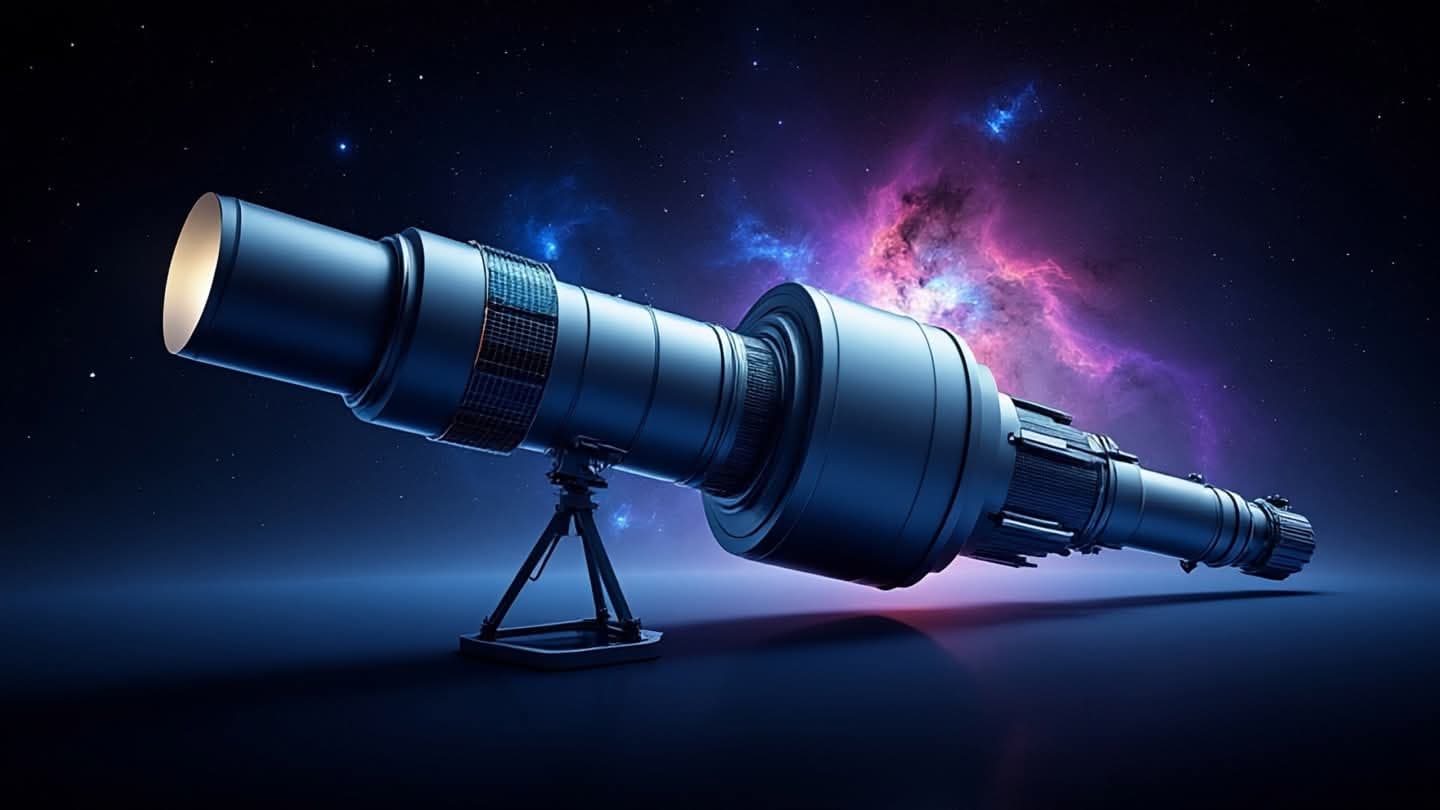
The universe has always been a canvas of mystery, its deepest secrets hidden behind veils of dust and distance. But with each new instrument we launch into the cosmos, we pull back another layer of that veil. NASA’s latest space telescope stands ready to peer into the unknown, promising to reveal hidden facets of the universe that have eluded us until now. It is a testament to our enduring curiosity and our relentless quest to understand our place in the vast expanse of space.
This new observatory is equipped with advanced sensors capable of detecting light across a broader spectrum than ever before. By observing in infrared and ultraviolet wavelengths, it can see through cosmic dust clouds that obscure visible light. This capability allows astronomers to study the formation of stars and galaxies in unprecedented detail, offering insights into the early universe and the processes that shaped it.
One of the primary goals of the mission is to search for exoplanets that may harbor life. The telescope’s high-resolution instruments can analyze the atmospheres of distant worlds, looking for biosignatures such as oxygen, methane, and water vapor. While the discovery of extraterrestrial life is not guaranteed, the potential to find habitable environments is a powerful driver of scientific exploration.
Beyond exoplanets, the telescope will investigate dark matter and dark energy, the invisible forces that govern the expansion of the universe. By mapping the distribution of galaxies and measuring their movements, scientists hope to unravel the mysteries of these elusive components. Understanding dark energy is crucial for predicting the ultimate fate of the cosmos.
The engineering behind the telescope is a marvel of modern technology. Lightweight materials and precise optics allow it to maintain stability in the harsh environment of space. Autonomous systems enable it to adjust its position and focus with incredible accuracy, ensuring that every observation is of the highest quality. This precision is essential for capturing faint signals from the edge of the observable universe.
Collaboration is key to the success of the mission. Data from the telescope will be shared with researchers around the world, fostering a global effort to interpret the findings. This open approach accelerates discovery and ensures that the benefits of the mission are widely distributed. It is a reminder that science is a collective endeavor, transcending borders and biases.
As the telescope begins its operations, the scientific community waits with bated breath. Each image it sends back is a potential breakthrough, a piece of the puzzle that has puzzled humanity for centuries. The anticipation is palpable, fueled by the promise of new knowledge and wonder.
NASA’s new space telescope is more than a machine; it is a window into the soul of the universe. It invites us to look deeper, think bigger, and marvel at the hidden beauty of the cosmos.
AI Image Disclaimer: Visuals associated with this article are AI-generated interpretations designed to reflect the urgency and scale of the public safety concern.
Sources: NASA, Space.com, National Geographic, Astronomy Magazine
Published by Banx Network. This article is part of the Banx decentralized media programme, powered by the BXE token on the XRP Ledger.



