
Key Highlights
- Hamas dissolves its governing body, signaling a political shift.
- The move aims to transfer power to a technocratic committee.
- Israel dismisses the announcement as a tactical maneuver.
In the fractured landscape of Gaza, where governance has long been intertwined with conflict, a significant political shift has occurred. Hamas, the militant group that has administered the enclave for nearly two decades, announced on Monday that it was dissolving its governing body. This decision, framed by the group as a step toward transferring power to a technocratic committee backed by international partners, marks a potential turning point in the region’s complex history. However, the move has been met with immediate skepticism from Israel, which dismissed the announcement as a "stunt" designed to evade responsibility rather than a genuine commitment to peace.
The dissolution of the administrative committee effectively ends Hamas’s formal role in civil governance, a function it has held since seizing control from rival Palestinian faction Fatah in 2007. According to statements released by the group, the move is intended to pave the way for a transitional authority that can oversee reconstruction and humanitarian aid without the baggage of militant affiliation. This proposal aligns with recent diplomatic efforts led by the United States and Egypt to establish a neutral administration capable of managing daily life in the strip.
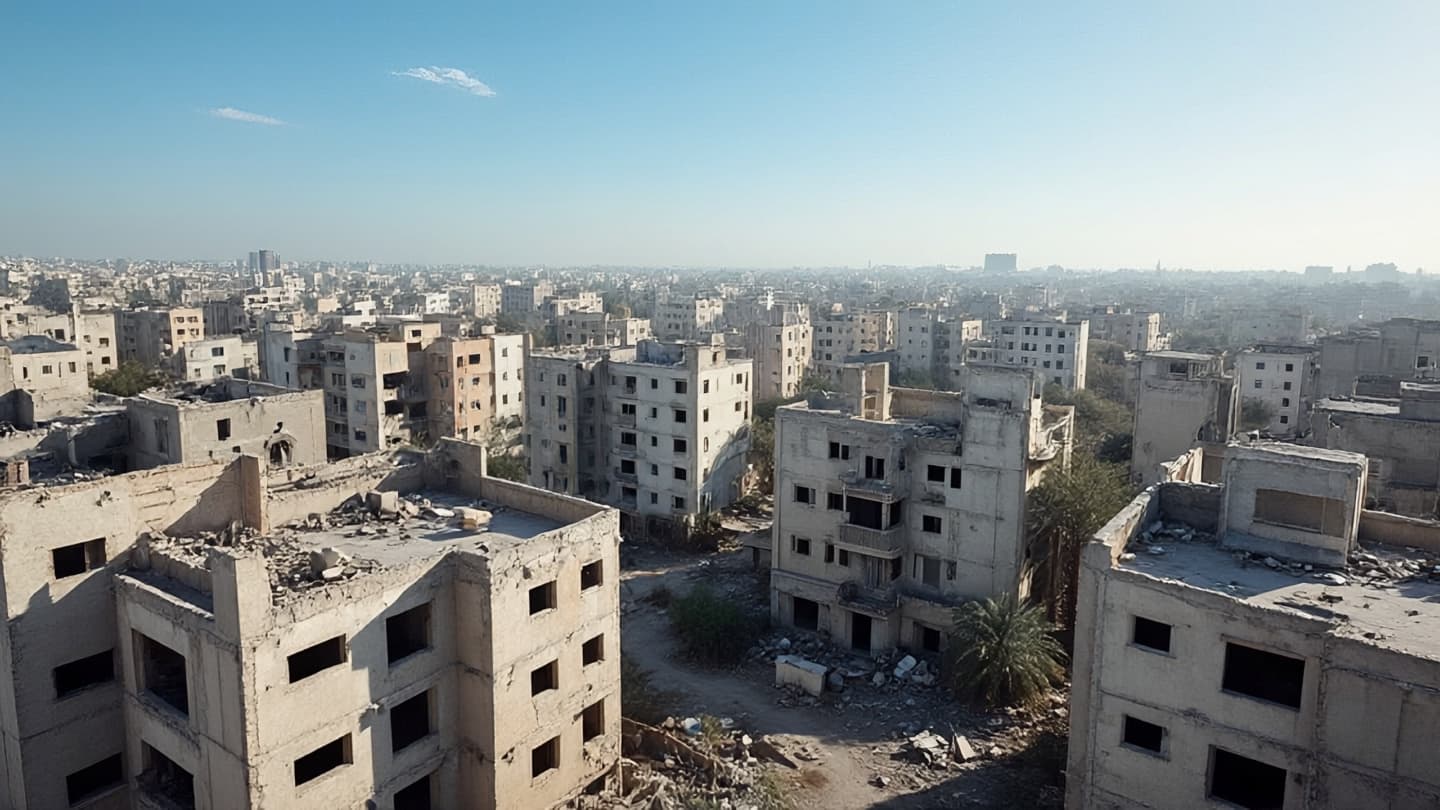
For the residents of Gaza, weary from years of war and blockade, the announcement offers a glimmer of hope for stability. The prospect of a technocratic government suggests a future where services like electricity, water, and healthcare are managed by professionals rather than political actors. Yet, the reality on the ground remains precarious. Infrastructure is devastated, and the population faces severe shortages of basic necessities. Any new governing body will inherit a monumental task of rebuilding amidst ongoing security challenges.
Israel’s reaction was swift and dismissive. Prime Minister Benjamin Netanyahu’s office stated that the move was a tactical maneuver aimed at relieving international pressure on Hamas while allowing it to retain military control. Israeli officials emphasized that they would not engage with any entity linked to Hamas, regardless of its nominal structure. This stance reflects deep-seated distrust and the belief that disarmament and the release of hostages must precede any political transition.
The international community has responded with cautious optimism. The United Nations and several European governments have welcomed the initiative as a positive step toward a two-state solution or a broader regional peace framework. However, diplomats acknowledge that the success of this transition depends on the cooperation of all parties, including Israel and the Palestinian Authority in the West Bank. Without broad consensus, the technocratic committee may struggle to gain legitimacy or operational capacity.
Internal dynamics within the Palestinian movement also play a crucial role. Fatah, which controls parts of the West Bank, has historically opposed Hamas’s dominance in Gaza. The creation of a neutral committee could either bridge the divide between the two factions or exacerbate tensions if power-sharing agreements are not clearly defined. The Palestinian Authority’s willingness to participate in this new structure will be a key determinant of its viability.
Economic implications are significant as well. Donor countries have hesitated to fund reconstruction efforts while Hamas remains in power, fearing resources could be diverted to military activities. A neutral administration might unlock billions in aid needed to rebuild homes, schools, and hospitals. This financial incentive provides a strong motivation for all sides to support the transition, even if political disagreements persist.
As the situation unfolds, the focus shifts to the practicalities of implementation. Who will compose the technocratic committee? How will security be maintained? These questions remain unanswered, but the dissolution of the current government opens a space for dialogue. It is a moment of uncertainty, but also of possibility, where the path forward is being rewritten.
Hamas’s decision to dissolve its governing body in Gaza represents a major political development, though its impact remains uncertain. Israel’s rejection of the move as a stunt highlights the deep divisions that continue to hinder peace efforts. The success of the proposed technocratic committee will depend on international support and the willingness of all parties to engage in good faith.
Published by Banx Network. This article is part of the Banx decentralized media programme, powered by the BXE token on the XRP Ledger.



