Key Highlights
- Incident:A gas explosion occurred at a Lagos NNPC station, causing a significant fire.
- Damage:The explosion damaged a nearby school and prompted an emergency response.
- Safety Concerns:The incident has raised urgent discussions about safety regulations for gas facilities in populated areas.
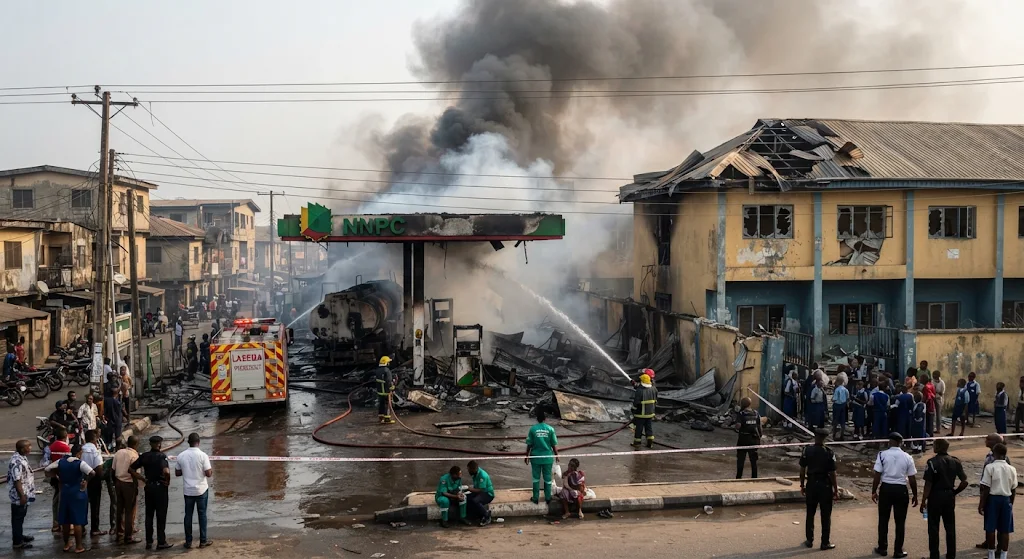
LAGOS — A massive gas explosion ignited a fierce fire at a Nigerian National Petroleum Company Limited (NNPCL) retail station in Lagos, sending thick plumes of black smoke into the sky and causing structural damage to a neighboring school. The blast occurred during routine refueling operations at the station's liquefied petroleum gas (LPG) skid, triggering panic among motorists, commuters, and nearby residents. Eyewitnesses reported hearing a deafening bang before flames rapidly engulfed sections of the forecourt and spread toward the perimeter fence bordering the adjacent school compound.
Firefighters from the Lagos State Fire and Rescue Service, alongside personnel from the Lagos State Emergency Management Agency (LASEMA) and the Federal Fire Service, arrived at the scene shortly after distress calls were placed. Emergency crews immediately cordoned off the surrounding road network to prevent secondary explosions from underground fuel storage tanks and keep onlookers at a safe distance. The swift response was crucial in managing the situation and preventing further escalation of the fire.
Inside the neighboring school, administrators and teachers initiated an immediate evacuation as the shockwave shattered windowpanes and damaged parts of the roof and perimeter wall. Students and staff were moved to a safe assembly area away from the heat and dense smoke, averting what local officials described as a potential mass-casualty incident. The quick actions of the school staff were instrumental in ensuring the safety of everyone present during the chaotic moments following the explosion.
After battling the blaze with foam tenders and high-pressure water jets, emergency responders successfully brought the fire under control and began dampening-down operations to cool the remaining gas cylinders and storage facilities. Paramedics treated several individuals at the scene for minor injuries and smoke inhalation, though no fatalities were immediately confirmed. The prompt medical attention provided by paramedics helped mitigate the impact of the incident on those affected.
Authorities have temporarily sealed off the affected NNPCL outlet and the damaged section of the school to allow structural engineers and safety inspectors to assess the integrity of the buildings. Officials confirmed that a joint investigation involving state safety regulators and NNPCL representatives has been launched to determine the exact cause of the gas leak and ensure compliance with urban safety protocols. This investigation is critical in understanding the factors that led to the explosion and preventing future occurrences.
This incident adds to a growing list of similar tragedies across Nigeria, reigniting urgent public discourse regarding the siting of volatile fuel and gas facilities within densely populated residential and commercial zones. In the wake of the explosion, community leaders and urban planning advocates are renewing calls for stricter enforcement of safety buffer zones and more rigorous, routine inspections of retail stations by regulatory bodies to prevent such catastrophic risks to public infrastructure and civilian life. The need for enhanced safety measures is becoming increasingly apparent as communities grapple with the implications of such incidents.
Published by Banx Network. This article is part of the Banx decentralized media programme, powered by the BXE token on the XRP Ledger.