

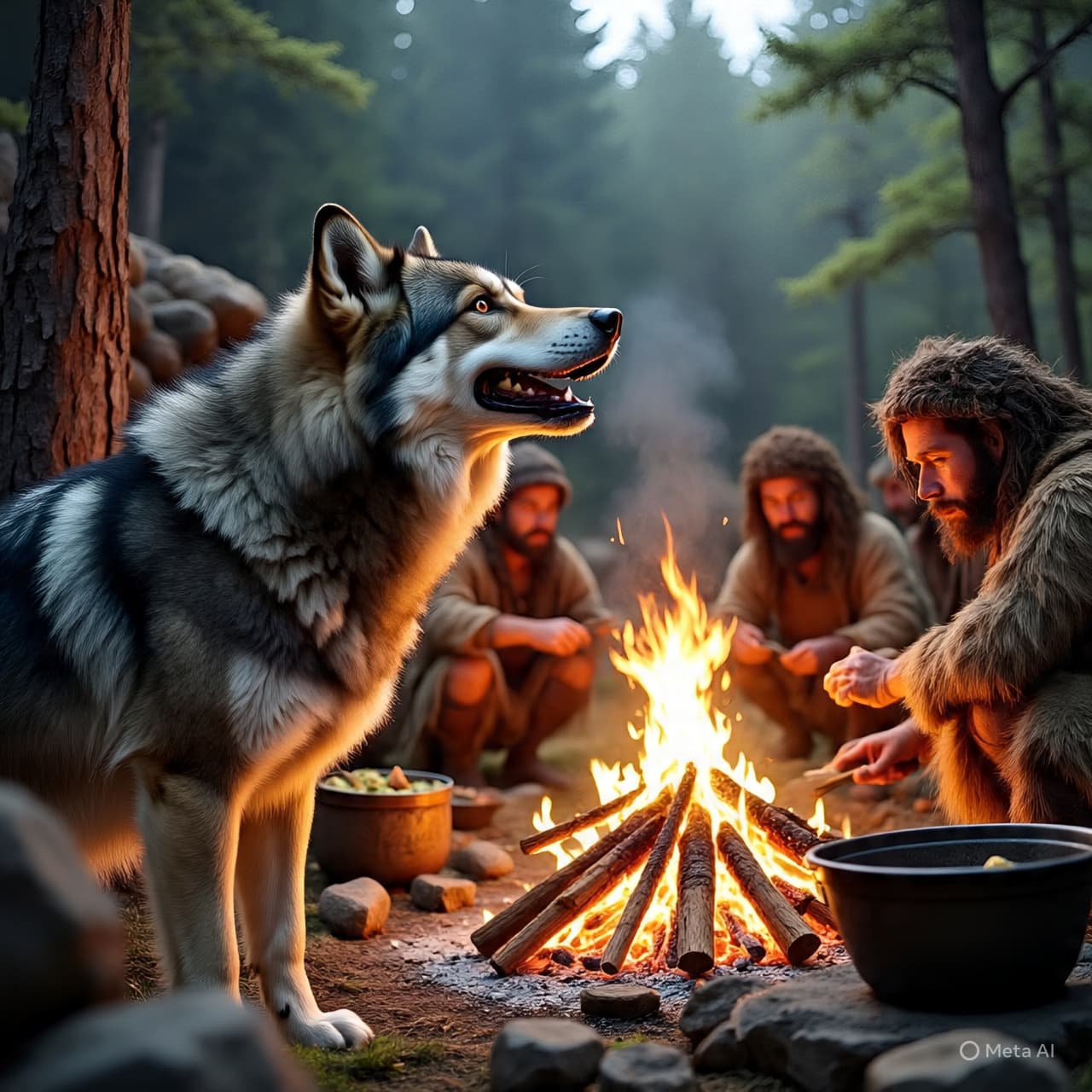
Key Highlights
- Ancient Bond:Research indicates the human-dog relationship dates back over 15,000 years.
- Evolution of Companionship:The bond evolved from cooperation to deep companionship.
- Ongoing Research:Studies continue to explore the origins and pathways of dog domestication.
[The Ancient Connection]
A recent study has shed light on the profound bond between humans and dogs, suggesting that this relationship dates back more than 15,000 years. This research provides a fascinating glimpse into how both species have coexisted and evolved together over millennia. The findings indicate that the companionship we recognize today has its roots in a time when humans and wolves were still learning to live alongside one another.
Researchers have utilized ancient remains and genetic evidence to trace the history of domestication, revealing how wolves gradually transformed into the dogs we know today. This process likely began with wolves drawn to human settlements, where they found food and safety, while humans benefited from the wolves' hunting skills and protective instincts. Over generations, this mutual benefit deepened into a lasting companionship.
[Shared Needs and Survival]
The study highlights that the early relationship between humans and dogs was shaped by shared needs. Dogs, with their keen senses, played crucial roles in hunting and alerting communities to danger. In return, humans provided food, shelter, and protection. This exchange laid the groundwork for a bond that transcended mere survival, fostering a connection that has endured through changing environments and societal structures.
What is particularly noteworthy is how this bond has adapted over time. From ancient camps to modern households, dogs have maintained a close presence in human life. The study suggests that this continuity is not coincidental; rather, it is rooted in a long history of coexistence that has evolved alongside human societies.
[Emotional Dimensions of the Bond]
Beyond their practical roles, dogs have come to occupy significant emotional spaces in our lives. Today, many people regard their dogs as family members, reflecting a deep emotional connection that has developed over thousands of years. The study encourages us to reflect on how this closeness has been shaped through shared experiences, mutual reliance, and a growing understanding between species.
Scientists emphasize that domestication is a complex process involving both biological and behavioral changes. As dogs adapted to human environments, traits such as sociability and responsiveness were likely favored, reinforcing the bond between the two species. Concurrently, humans may have become more attuned to the cues and behaviors of their canine companions, further deepening their connection.
[Continuing Research and Future Insights]
This research adds to a growing body of work exploring the origins of the human-dog relationship, though many questions remain. The exact pathways of domestication, the regions where it first occurred, and the details of early interactions are still subjects of ongoing study. Each new discovery contributes to a narrative that is both ancient and continuously evolving.
In contemporary society, the bond between humans and dogs is often taken for granted, seamlessly integrated into daily life. However, this study serves as a gentle reminder that our connection with dogs is not a recent phenomenon but rather the result of a long, shared journey. As research progresses, we may gain clearer insights into this enduring relationship, which is shaped not only by necessity but also by a profound understanding that has developed over thousands of years.
Published by Banx Network. This article is part of the Banx decentralized media programme, powered by the BXE token on the XRP Ledger.




