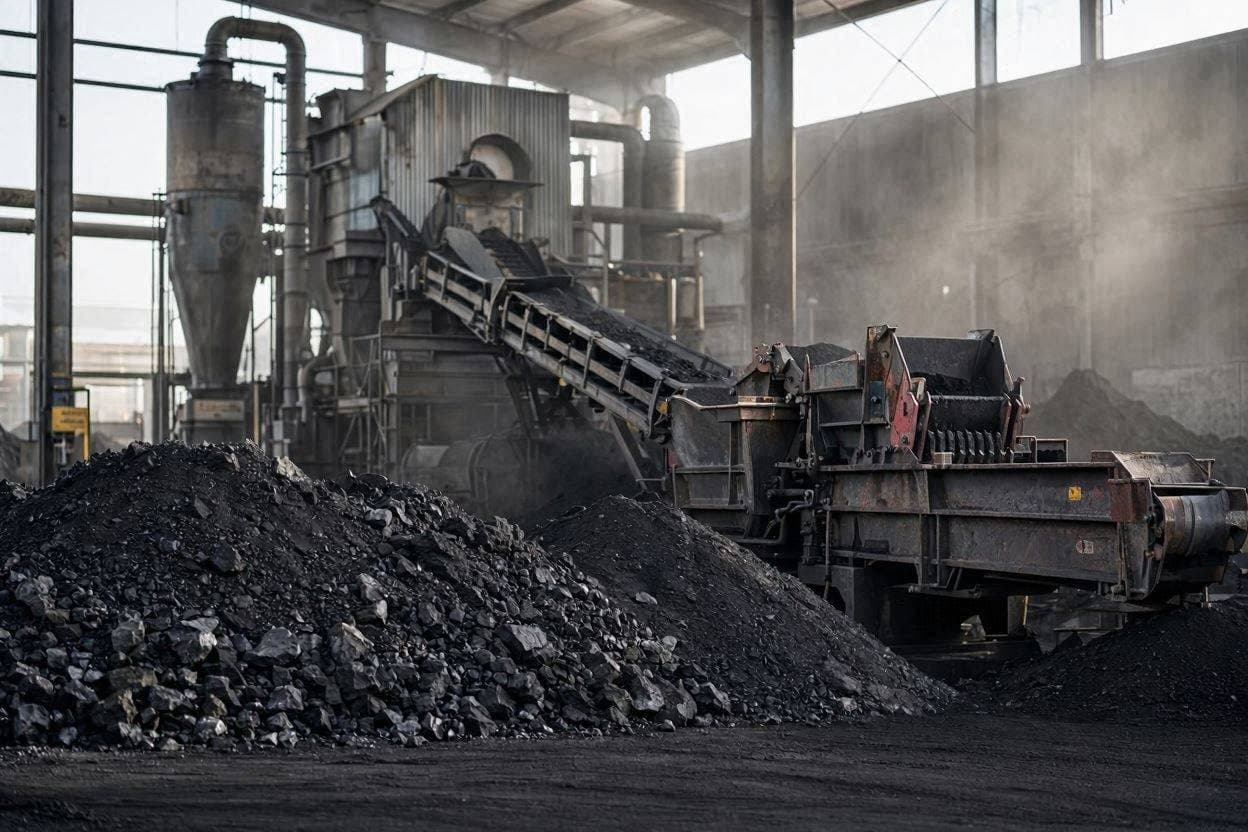
In the shadow of industrial progress lies a legacy of waste, often seen as a burden to be managed rather than a resource to be valued. Coal gangue, a byproduct of mining, has long been piled in vast mounds, posing environmental risks and occupying valuable land. But a new perspective is emerging from the laboratories of materials scientists. Recent studies suggest that this reconstructed coal waste can be transformed into an active catalyst for wastewater treatment, turning a pollutant into a purifier. This innovative approach offers a glimpse of a circular economy, where waste is not an end but a beginning.
Body: Coal gangue is rich in silica, alumina, and other minerals that, when processed correctly, can exhibit catalytic properties. Researchers have found that by reconstructing this waste material, it can activate peroxymonosulfate (PMS), a powerful oxidant used in advanced oxidation processes for water purification. This reaction helps break down stubborn organic pollutants, such as pharmaceuticals and dyes, that are difficult to remove through conventional treatment methods. The efficiency of coal gangue-based catalysts rivals that of more expensive commercial alternatives.
The process involves treating the raw gangue to enhance its surface area and reactivity. This reconstruction transforms the inert waste into a porous material capable of facilitating chemical reactions. By using coal waste to treat wastewater, scientists are employing a "treating waste with waste" strategy, addressing two environmental challenges simultaneously. It reduces the volume of solid waste while improving water quality, a dual benefit that aligns with sustainability goals.
Recent reviews highlight the potential of coal gangue composites, such as those combined with metal-organic frameworks like ZIF-67, to further boost catalytic performance. These hybrid materials show remarkable stability and reusability, making them viable for large-scale applications. The ability to recycle the catalyst multiple times without significant loss of efficiency is a key advantage, reducing operational costs and environmental impact.
The economic implications are also promising. Coal mining regions, often facing economic decline due to the shift away from fossil fuels, could find new value in their waste products. Developing a market for coal gangue catalysts could create jobs and stimulate local economies, providing a pathway for just transition in mining communities. It turns a liability into an asset, fostering resilience in post-industrial landscapes.
Environmental safety remains a priority. Researchers are careful to ensure that the reconstructed materials do not leach harmful substances into the treated water. Rigorous testing confirms that the catalysts are stable and safe, meeting regulatory standards for water treatment. This attention to detail ensures that the solution does not create new problems while solving old ones.
Global interest in this technology is growing, with studies from various countries exploring different methods of activation and application. From China to Europe, scientists are collaborating to refine the process and scale up production. The shared goal is to create a sustainable model for wastewater treatment that relies on abundant, low-cost materials rather than rare or expensive resources.
The transformation of coal waste into a catalyst for water purification is a testament to human ingenuity. It shows that with creativity and scientific rigor, even the most discarded materials can find a new purpose. As we move toward a more sustainable future, such innovations will play a crucial role in balancing industrial needs with environmental stewardship.
AI Image Disclaimer: Please note that the images in this piece are AI-generated illustrations created to depict the themes of environmental recycling and water purification technology.
Sources: EurekAlert!, Open Access Government, Bioengineer.org, ScienceDirect
Published by Banx Network. This article is part of the Banx decentralized media programme, powered by the BXE token on the XRP Ledger.