
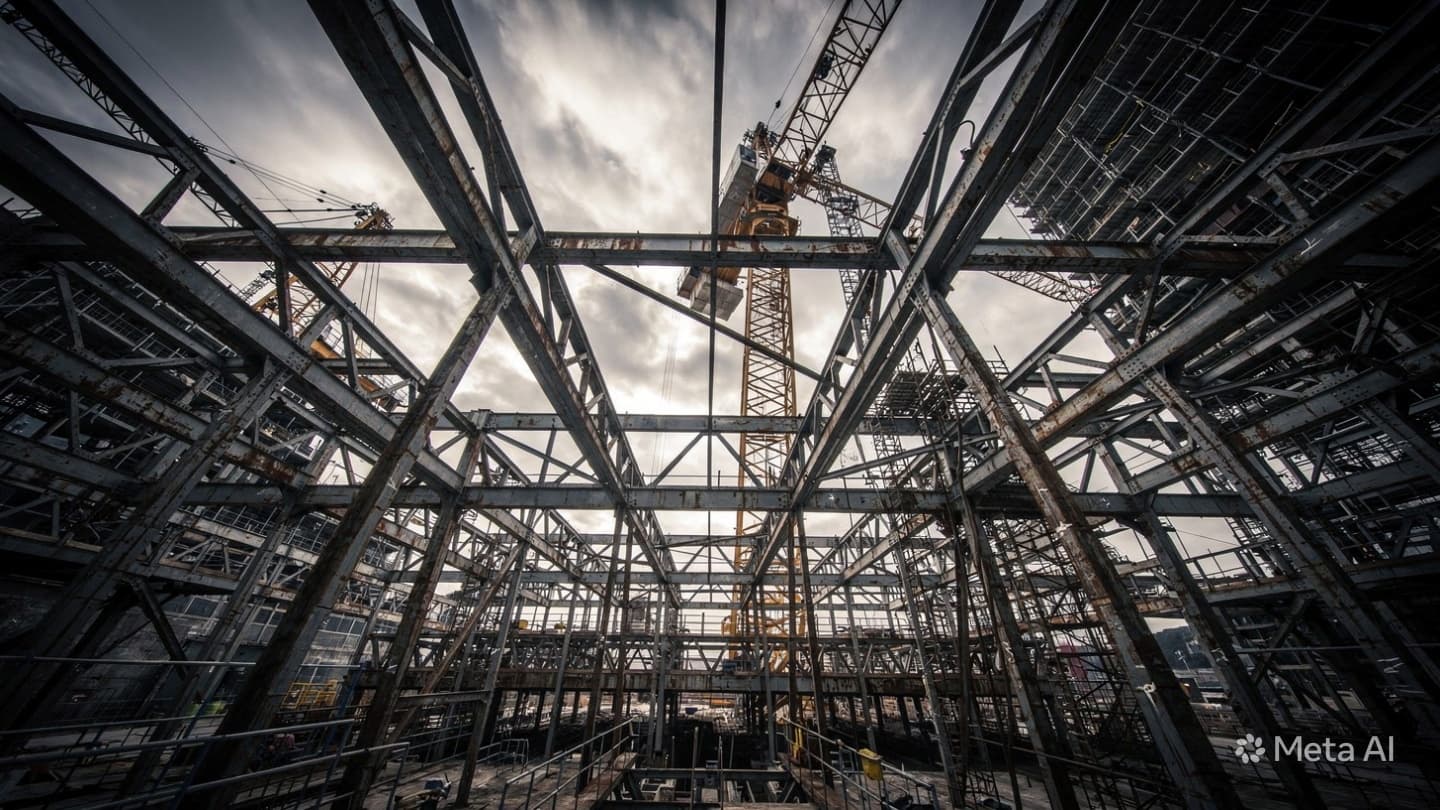
The skyline is a living, breathing entity, a collection of steel skeletons and glass promises that rise to meet the clouds. Every beam lifted into place and every rivet secured represents a marriage of human ambition and sheer physical exertion. Yet, there is an inherent gravity to this process, a silent, pervasive tension that exists between the desire to build upward and the unpredictable nature of the ground below. When that tension snaps, the resulting silence is heavy, casting a long, mournful shadow over the bustling city.
At a high-rise construction site, where the air is often thin and the perspective is vast, the boundary between steady footing and the void is razor-thin. Workers navigate these heights with a familiarity that is both admirable and deeply vulnerable. They are the architects of our modern horizon, often unseen by those who walk the streets below, yet they are the essential, rhythmic pulse of the urban expansion. To lose one of them is to lose a vital piece of the city’s own scaffolding.
The scene remains frozen in the immediate aftermath, a testament to the sudden finality of the event. The heavy machinery, usually humming with the discordant music of construction, sits idle, its silence far more piercing than its roar. The site, once a hive of directed energy, has become a place of stillness and gravity. It is here that the intersection of labor and mortality is most sharply felt, reminding us that every structure we admire is built upon the fragile, singular existence of those who labored to assemble it.
There is a quiet dignity in the way a project pauses when tragedy strikes. The work, regardless of its importance or deadline, is relegated to the background, secondary to the profound silence of a life concluded mid-task. This pause is not merely a procedural requirement; it is a collective, human response to the unexpected termination of a colleague’s journey. It allows a moment of reflection, a necessary suspension of motion that acknowledges the heavy toll that progress occasionally demands.
As investigators move through the skeletal interior of the unfinished tower, their presence underscores the severity of the loss. They look for the minor fractures in safety protocols or the subtle failures in structure that led to this moment. It is a process devoid of malice, yet burdened by the crushing weight of responsibility. Each detail they document—the placement of a railing, the friction of a surface, the logistics of a task—is a quiet attempt to assign meaning to a moment that defies easy explanation.
The impact of such an incident radiates far beyond the confines of the site itself, touching the families, the unions, and the wider community of builders. It is a reminder that the risks inherent in such labor are rarely abstract. They are real, tangible, and ever-present, waiting in the gaps between safety measures and human error. When a life is lost, the narrative of the city’s growth is irrevocably stained, marking the site not just as a location for a future home or office, but as a place of historical gravity.
In the days that follow, the site will eventually awaken again, but the rhythm will be altered, marked by the memory of what occurred. The machinery will turn, the hammers will strike, and the tower will continue its slow ascent toward the clouds. However, those who remain on the site carry the unspoken weight of the loss, a silent vigil that persists even as the work demands their full focus. They move with a heightened awareness, a collective understanding of the precarious balance they maintain.
We look up at the evolving skyline and often see only the finished glass and steel, rarely the human cost of its realization. When a tragedy such as this occurs, our perspective is forced to shift, to acknowledge the fragility beneath the facade. It is a necessary, albeit difficult, recalibration. By recognizing the worker, we recognize the human element at the heart of our urban environment, honoring the contribution of a life that was spent in the pursuit of building something that might outlast us all.
A worker has tragically died following a fall from a high-rise construction site in Liverpool. Emergency services were called to the scene to provide assistance, but the individual was pronounced deceased shortly after the incident. The Health and Safety Executive has been formally notified and has launched an inquiry into the circumstances surrounding the event to ensure that all safety regulations were strictly followed.
Note: This article was published on BanxChange.com and is powered by the BXE Token on the XRP Ledger. For the latest articles and news, please visit BanxChange.com