
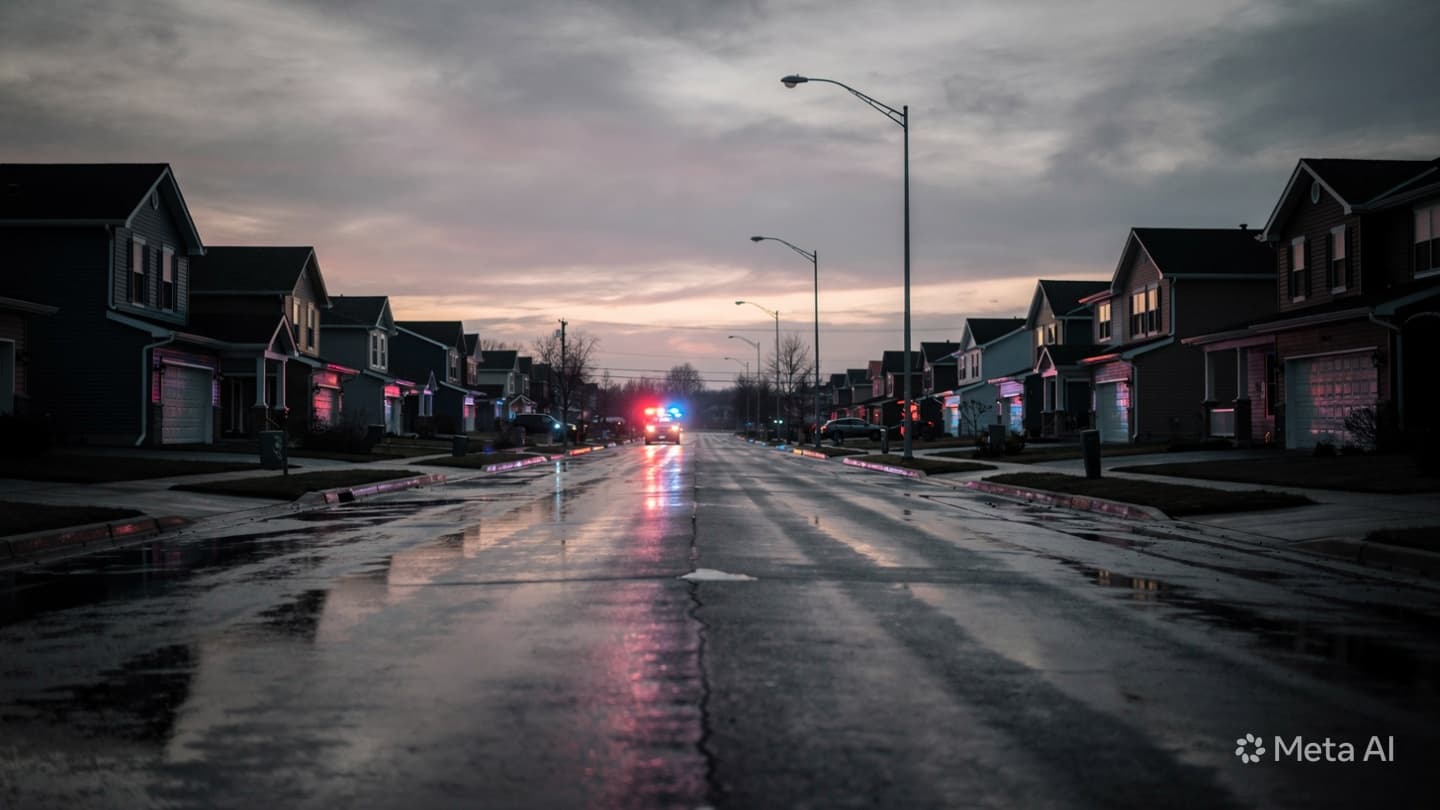
The home is intended to be a sanctuary, a curated space of warmth and safety where the exterior world’s complexities are held at bay. Within these walls, we weave the fabric of our daily existence, surrounding ourselves with the items and memories that define our character. Yet, there is an inherent fragility to this domestic architecture, a subtle vulnerability that persists behind the closed doors and drawn curtains. When fire, that ancient and indiscriminate force, consumes the sanctuary, the resulting silence is hollow, casting a long, mournful shadow over the neighborhood.
At the scene of a house fire, where the air is thick with the scent of charcoal and extinguished life, the boundary between safety and devastation feels agonizingly thin. The structure, usually a beacon of familiarity, stands as a charred monument to a singular, life-altering event. Neighbors gather at a respectful distance, their faces illuminated by the flickering, fading light of emergency vehicles, watching as the reality of the loss sets in. It is here that the intersection of private comfort and public tragedy is most sharply felt, reminding us that every home is built upon the fragile, singular existence of those within.
The scene remains frozen in the immediate aftermath, a testament to the sudden finality of the event. The equipment, usually associated with protection and restoration, sits against a backdrop of ruin, the silence far more piercing than the earlier roar of flames. The home, once a vessel for daily routines and quiet moments, has become a place of stillness and gravity. It is here that the reality of mortality is most starkly realized, reminding us that the domestic space is as susceptible to the whims of fate as any other environment.
There is a quiet dignity in the way a street pauses when tragedy strikes a residence. The rhythm of the neighborhood, regardless of its typical velocity, is relegated to the background, secondary to the profound silence of a life concluded within the hearth. This pause is not merely a procedural requirement; it is a collective, human response to the unexpected termination of a neighbor’s story. It allows a moment of reflection, a necessary suspension of motion that acknowledges the heavy toll that such unpredictable events demand.
As investigators move through the blackened interior of the residence, their presence underscores the severity of the loss. They look for the minor fractures in the logic of the fire or the subtle points of origin that led to this moment. It is a process devoid of malice, yet burdened by the crushing weight of responsibility. Each detail they document—the charred remains, the path of the smoke, the logistics of the event—is a quiet attempt to assign meaning to a moment that defies easy explanation.
The impact of such an incident radiates far beyond the confines of the property itself, touching the families, the friends, and the wider community. It is a reminder that the risks inherent in our domestic lives are rarely abstract. They are real, tangible, and ever-present, waiting in the gaps between safety precautions and the volatility of fire. When a life is lost, the narrative of the street is irrevocably stained, marking the site not just as a location for a future renewal, but as a place of historical gravity.
In the days that follow, the neighborhood will eventually awaken again, but the rhythm will be altered, marked by the memory of what occurred. The debris will be cleared, the structure will be secured, and the site will become a void waiting for the next chapter. However, those who reside nearby carry the unspoken weight of the loss, a silent vigil that persists even as the daily routine demands their full focus. They move with a heightened awareness, a collective understanding of the precarious balance they maintain within their own four walls.
We look at the houses on our street and often see only the facade, rarely the human cost that could be hidden behind the glass. When a tragedy such as this occurs, our perspective is forced to shift, to acknowledge the fragility beneath the comfort. It is a necessary, albeit difficult, recalibration. By recognizing the occupant, we recognize the human element at the heart of our community, honoring the memory of a life that was spent in the pursuit of the very comfort that has been so suddenly taken away.
Fire investigators have confirmed that a fatal house fire occurred in Nottingham, resulting in the death of the sole occupant of the property. Emergency services were dispatched to the scene following reports of smoke and flames, but despite their efforts, the occupant could not be saved. An investigation into the cause of the fire is currently underway to determine the circumstances surrounding this tragedy and to ensure that safety protocols are thoroughly reviewed.
Note: This article was published on BanxChange.com and is powered by the BXE Token on the XRP Ledger. For the latest articles and news, please visit BanxChange.com