At the edge of the runway, where heat shimmers above the tarmac and aircraft rise into vast, open skies, an airport often feels like a place of departure more than arrival—a threshold between worlds. In Sudan, that threshold has recently taken on a different meaning, where the act of flight is overshadowed by the uncertainty of what moves unseen above.
Sudanese authorities have accused Ethiopia and the United Arab Emirates of involvement in orchestrating drone attacks targeting an airport, an allegation that introduces a new layer to an already complex conflict. The claims, made amid ongoing internal fighting, suggest that the boundaries of the crisis may be extending beyond the country’s borders, drawing in regional actors in ways that are not always immediately visible.
Details surrounding the alleged strikes remain contested. Sudan’s leadership has pointed to the use of unmanned aerial systems, a technology that has increasingly shaped modern conflicts with its ability to traverse distance quietly and strike with precision. At the same time, both Ethiopia and the UAE have denied involvement, underscoring the uncertainty that often surrounds such accusations, where evidence, attribution, and intent become subjects of competing narratives.
The conflict within Sudan, which has unfolded since 2023 between rival military factions, has already reshaped daily life across the country. Urban centers have seen infrastructure damaged, services disrupted, and populations displaced. Airports—symbols of connection to the outside world—have, in some cases, become sites of strategic importance, their control tied to both military logistics and humanitarian access.
In this context, allegations of external involvement carry particular weight. Sudan shares borders and historical ties with neighboring states, including Ethiopia, where relations have at times been shaped by disputes over territory and resources, such as those surrounding the fertile al-Fashaga region. Meanwhile, the UAE’s role in the wider region—through economic partnerships, diplomatic engagement, and, at times, involvement in conflict zones—places it within a network of influence that extends across the Horn of Africa.
The use of drones adds another dimension, reflecting a broader shift in how conflicts are conducted. These systems, often difficult to detect and attribute, can blur the lines between local and external participation. Their presence introduces a sense of distance—decisions made far from the point of impact, actions carried out without direct visibility.
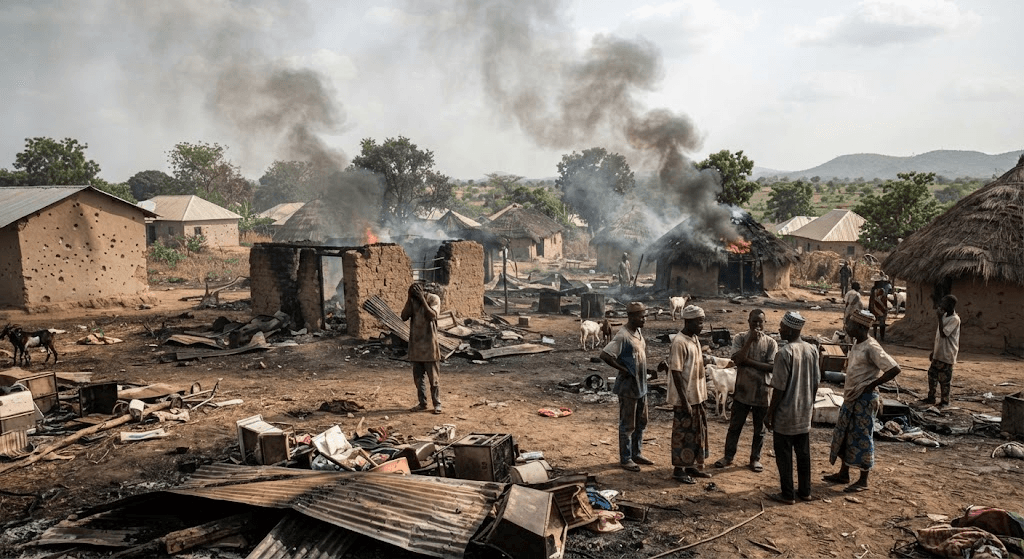
For those on the ground, however, the experience is immediate. Airports, roads, and neighborhoods become part of a landscape where movement is uncertain, where the ordinary act of travel is interrupted by the possibility of sudden change. The wider implications—regional tension, diplomatic response, and international attention—unfold at a different pace, shaped by investigation and dialogue.
As the situation develops, calls for clarity are likely to grow. International organizations and observers may seek verification of the claims, while diplomatic channels remain open, however cautiously, to address the accusations. The interplay between assertion and denial forms a familiar pattern in conflicts where information itself becomes contested terrain.
As evening settles over Sudan’s cities, the runway lights may still glow, marking a path meant for departure and return. Yet the air above feels altered, carrying not only the promise of movement but the uncertainty of what travels through it.
In practical terms, Sudan’s accusations against Ethiopia and the United Arab Emirates signal a potential widening of the conflict’s scope, though the claims remain disputed. What follows will depend on evidence, responses from the الدول involved, and the measured efforts of diplomacy to navigate a moment where the lines between internal and external are becoming increasingly difficult to trace.
AI Image Disclaimer Illustrations were created using AI tools and are not real photographs.
Sources Reuters BBC News Al Jazeera Associated Press The Guardian
Published by Banx Network. This article is part of the Banx decentralized media programme, powered by the BXE token on the XRP Ledger.