Far beyond the blue curve of Earth, where satellites hum and stars beckon, human ambition has planted a remarkable outpost of cooperation: the International Space Station. It is a place of science and exploration, a testament to what nations and engineers can achieve. Yet even amid this extraordinary backdrop, the fragility of the human body quietly joins the conversation with gravity and time.
In an unfolding first for NASA, the SpaceX Crew-11 mission returned to Earth early on the morning of January 15, 2026 — approximately a month ahead of its planned schedule — after a medical concern arose involving one of the station’s astronauts.
The four-person crew — NASA astronauts Zena Cardman and Mike Fincke, Japan Aerospace Exploration Agency astronaut Kimiya Yui, and Russian cosmonaut Oleg Platonov — undocked from the International Space Station on January 14, beginning a re-entry journey that carried them safely back to the Pacific Ocean near San Diego shortly after 3:40 a.m. PST.
This decision — the first time a long-duration ISS mission has been cut short for health reasons — came after NASA identified a medical situation in orbit that could not be fully diagnosed or treated with the station’s onboard resources. Though officials have declined to disclose the specific nature of the condition, citing privacy concerns, they emphasized the astronaut remained stable throughout.
Historically, space medicine has always been a careful balance between preparation and prudence. The ISS carries an array of diagnostic tools, pharmaceuticals, and tele-medical support to handle many conditions that might arise. Yet when it became clear Earth’s medical infrastructure was better suited to address the concern, mission leadership opted for the crew’s return — a choice rooted in the principle that astronaut well-being must guide every decision.
Crew-11 had arrived at the space station on August 1, 2025, after launching aboard a SpaceX Falcon 9 rocket from Florida’s Kennedy Space Center. Over the course of their mission, the quartet orbited Earth more than 2,670 times and contributed to more than 140 scientific experiments aimed at advancing human spaceflight capabilities.
The early departure also led to a pause in routine activities aboard the station, including spacewalks that were planned for later in the expedition. With only three astronauts remaining on board — NASA’s Christopher Williams and Roscosmos cosmonauts Sergey Kud-Sverchkov and Sergei Mikayev — operational tempo has adjusted to match reduced personnel.
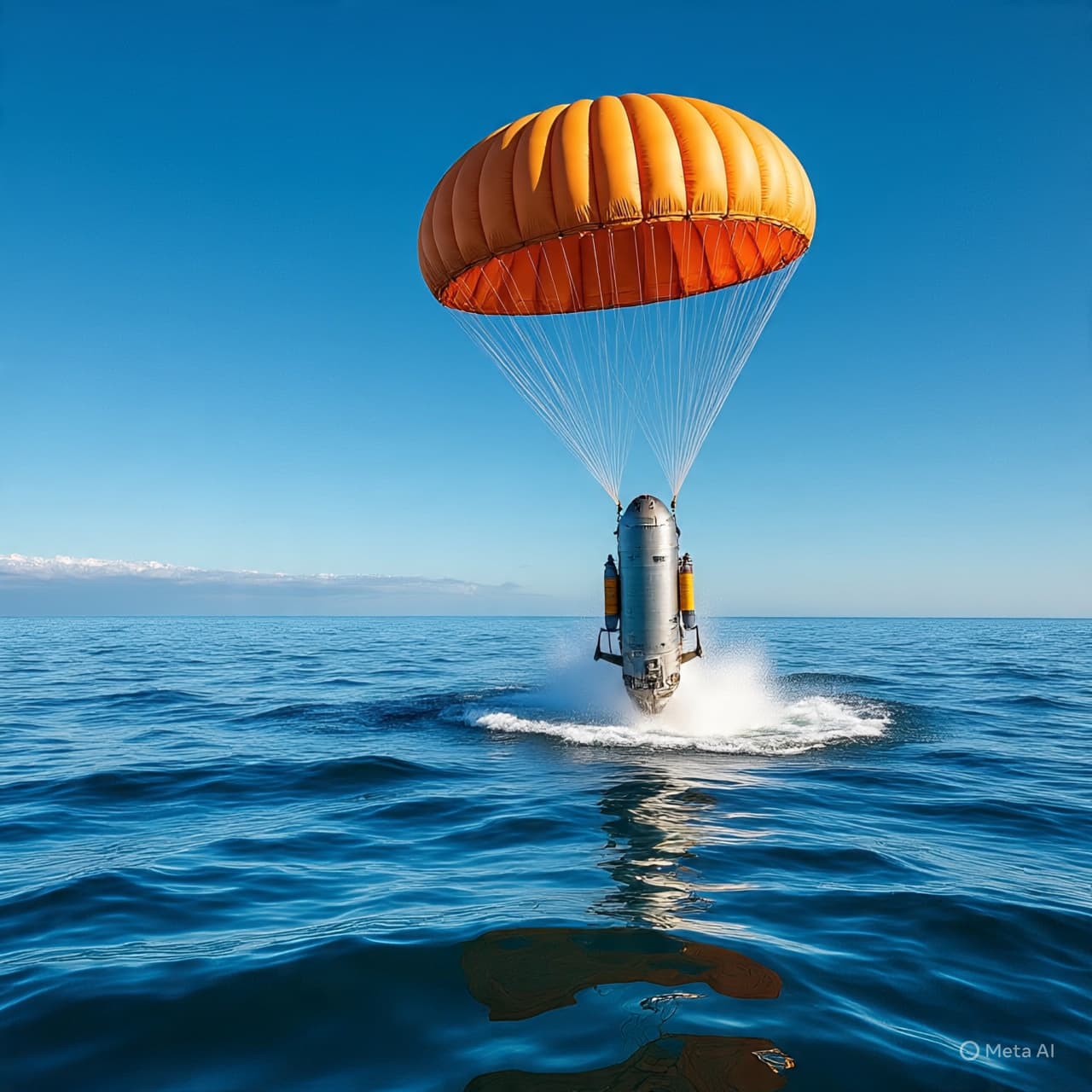
Splashdowns, like the one executed by Crew-11, are familiar choreography for spacefarers returning from orbit — a descent through the atmosphere, fiery and controlled, followed by a parachute-assisted landing into the embrace of the sea. For these veterans of microgravity, those final hours in the capsule represent more than a technical conclusion; they mark a transition back to the rhythms of Earth, family, and reflection.
As the astronauts undergo standard medical evaluations and begin their journey homeward to post-flight recovery, this episode stands as a testament to how far human spaceflight has matured. It acknowledges not only our capacity to reach for the stars but also our commitment to caring for those who do. In choosing to return early, NASA reaffirmed a guiding truth of exploration: that the health and safety of the explorers matter as much as the discoveries they seek.
AI Image Disclaimer Illustrations were produced with AI and serve as conceptual depictions.
Sources (News Role) NASA, Space.com, AP News, KPBS Public Media, WUSF Public Media.
Published by Banx Network. This article is part of the Banx decentralized media programme, powered by the BXE token on the XRP Ledger.