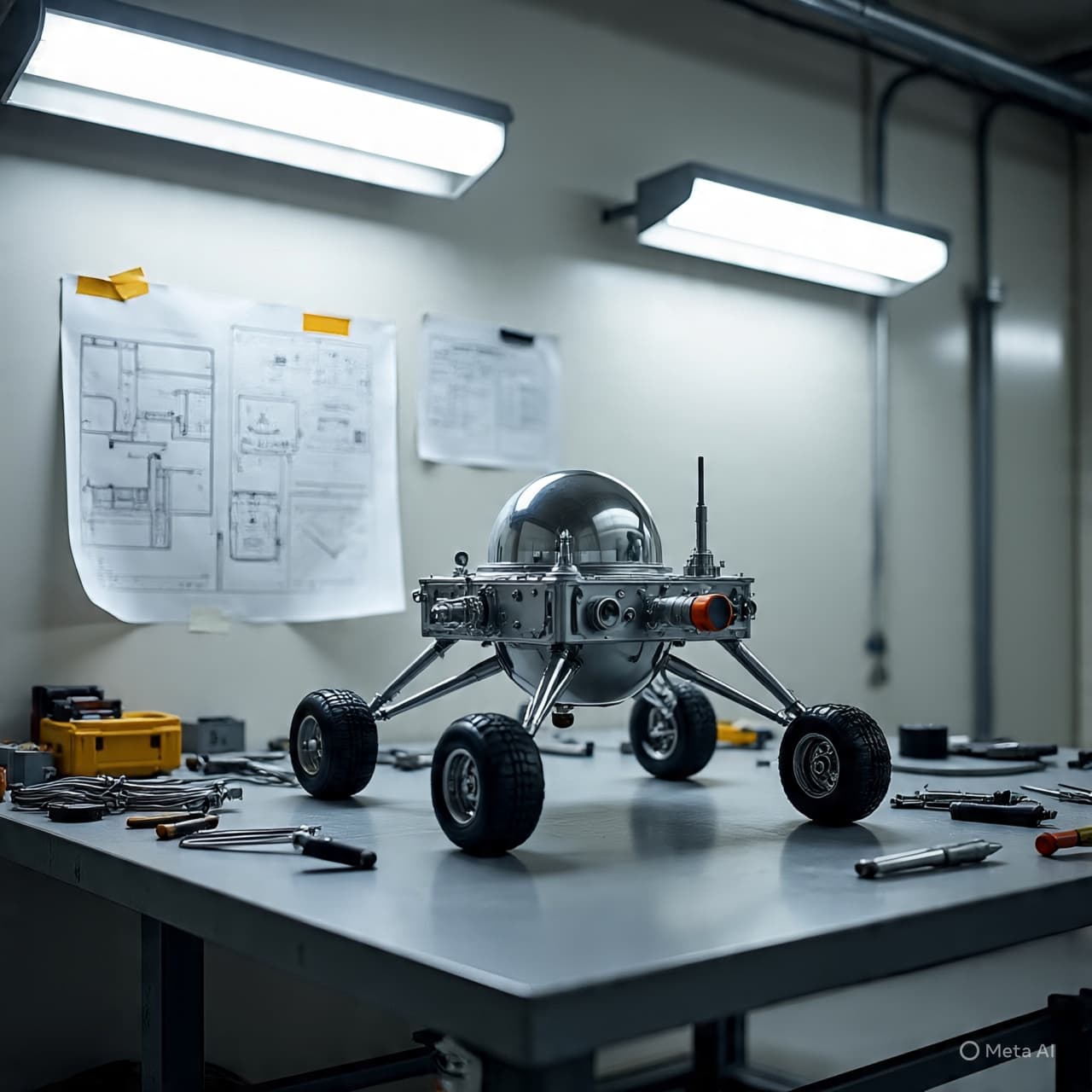
There is a cadence to exploration that echoes beyond launch pads and mission briefings—a rhythm measured not only in milestones reached, but in the quiet spaces between them. In those in‑between intervals, plans are imagined, crafted with care, and set against the vast distances that stretch between Earth and the surfaces we hope someday to touch.
For Canada’s first lunar rover mission, that quiet space came just as the wheels were poised to roll. Announced with anticipation and collaborative purpose, this rover was meant to be a small but distinct testament to Canadian participation in humanity’s next chapter on the moon—a mobile laboratory designed to traverse the lunar south pole in search of water ice and geological clues about our nearest celestial neighbor.
The project took shape over years, with industry and academic teams working together on design and payloads, and with the hope of launching aboard a commercial lunar lander. It was not merely a piece of hardware; it was an embodiment of accumulated knowledge, of ingenuity nurtured in university labs and aerospace workshops. Graduate students, engineers, and planetary scientists alike lent their time and skill to its making.
And yet, in the latest budget and planning cycle, that trajectory shifted. As federal priorities were reassessed, funding for the rover mission was removed from the Canadian Space Agency’s 2026–27 plan, effectively canceling the scheduled deployment of the craft meant to explore the moon’s polar terrain.
It was a moment that conveyed both uncertainty and continuity. The scientists and mission lead, accustomed to the delicate balance of long-term goals and shorter-term realities, greeted the news with the kind of calm reflection that often accompanies work undertaken on the edges of the known. “It’s hopefully not a lost cause,” said the principal investigator, acknowledging that much of the expertise and understanding gained through the project will live on, informing future ventures even if the rover itself will not journey as once planned.
Canada’s space program will not retreat from lunar exploration altogether. The space agency continues its broader commitment to Artemis‑era science and collaboration, and scientists who contributed to the rover effort will carry their skills and insights into new projects as opportunities arise.
In this way, the pause becomes part of a larger arc—one that folds back into continued exploration, innovation, and the hope that knowledge never fully rests, even when missions do. The rover’s story, though no longer fixed in an imminent launch date, persists as part of the wider tapestry of lunar discovery and the shared pursuit of what lies beyond our home world.
Canada has canceled its lunar rover mission that was planned to land at the moon’s south pole and search for water ice, removing it from the Canadian Space Agency’s 2026–27 spending plan. Project leaders have said that the science and expertise gained may inform future lunar efforts.
AI Image Disclaimer
Visuals are AI-generated and serve as conceptual representations.
Source Check: Space.com; CBC / Canadian Space Agency reporting exists but the Space.com coverage is the strongest immediate source for facts.
Published by Banx Network. This article is part of the Banx decentralized media programme, powered by the BXE token on the XRP Ledger.