
Key Highlights
- Meteor Size:A six-tonne meteor entered Earth's atmosphere at 72,420 km/h.
- Disintegration:The meteor largely disintegrated before reaching the ground.
- Scientific Interest:Fragments may provide insights into the early solar system.
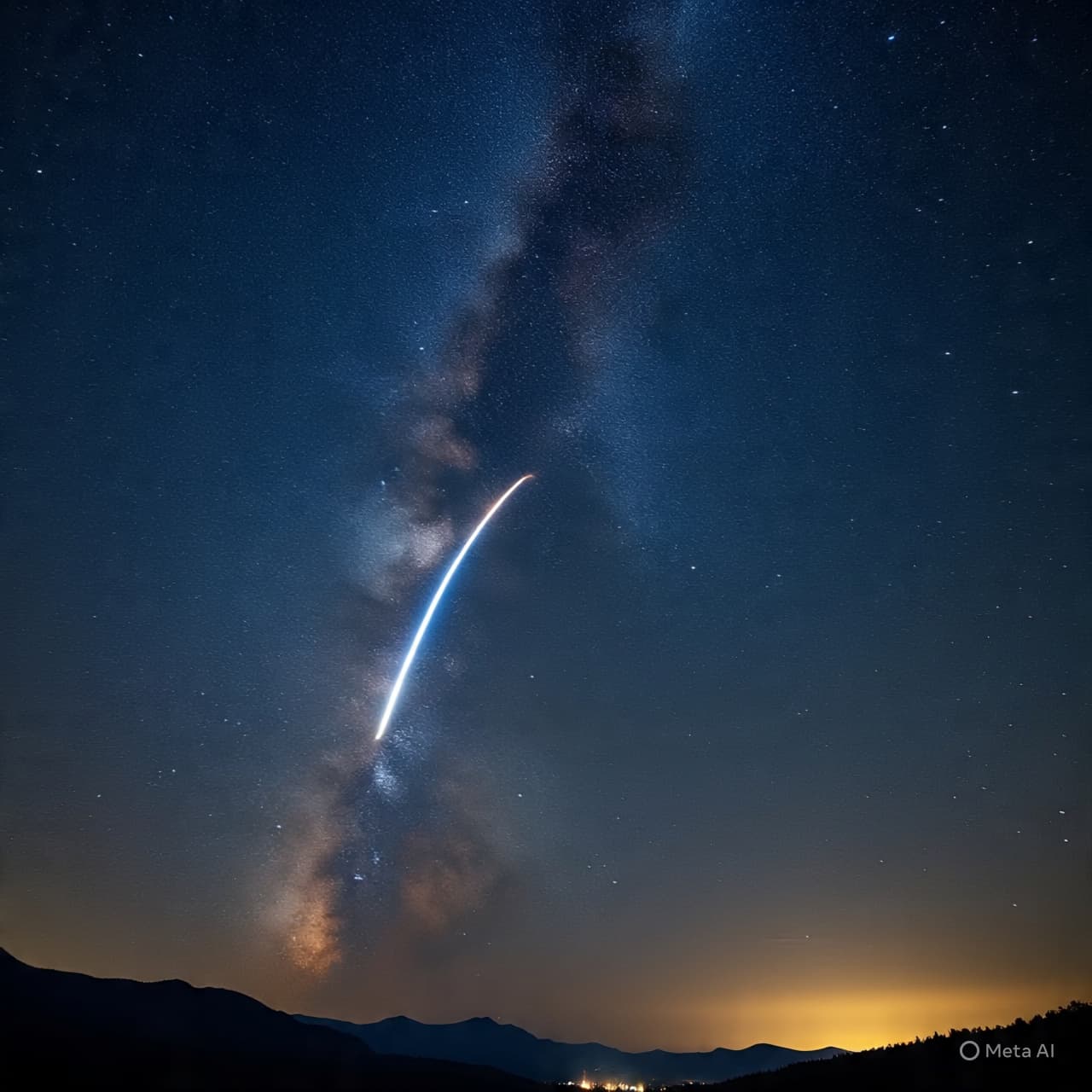
On a recent night, the sky transformed from its usual calm into a spectacle as a six-tonne meteor streaked across the atmosphere at an astonishing speed of approximately 72,420 kilometers per hour. This brief yet brilliant display captivated witnesses, who reported a flash of light illuminating the darkness, followed by a delayed sound reminiscent of distant thunder. Such events, while rare, remind us of the dynamic forces at play beyond our planet.
As the meteor descended, it encountered the Earth's atmosphere, where intense heat and friction caused its surface to burn and break apart. Most meteors that enter the atmosphere are small, often no larger than grains of sand, and disintegrate completely before reaching the ground. However, larger meteors like this one are significant not only for their visual impact but also for the scientific opportunities they present.
The process of ablation, where the outer layers of a meteor vaporize due to extreme heating, means that much of the original mass is lost during its descent. What remains can scatter across a wide area, creating what scientists refer to as a strewn field. In this case, early observations indicate that the meteor largely disintegrated before making contact with the Earth, although searches for any surviving fragments may still be underway.
For researchers, each meteor event is a chance to gather data that can enhance our understanding of the solar system's history. Meteorites that survive the fall can contain valuable information about the conditions that existed when the solar system was formed. These remnants serve as time capsules, preserving the chemical compositions of materials that have remained largely unchanged for billions of years.
Witnesses of the meteor's passage often describe the experience as awe-inspiring rather than frightening. The sudden brightness and the accompanying sound create a momentary connection to the vastness of the universe, reminding us of the forces that exist beyond our daily lives. Despite the meteor's size and speed, the likelihood of it causing significant damage is low, thanks to the protective barrier provided by the Earth's atmosphere.
As the event fades into memory, the sky returns to its usual stillness, concealing the vast distances and cosmic mysteries that lie beyond. Yet, somewhere on the landscape, small remnants of the meteor may remain, silent witnesses to a journey that began far from our world, carrying with them the story of their origins and the history of our solar system.
Published by Banx Network. This article is part of the Banx decentralized media programme, powered by the BXE token on the XRP Ledger.



