In the late hours, when the city outside grows quieter and the lights within government buildings seem to glow with a different kind of persistence, decisions sometimes arrive with unusual clarity. The chamber of the United States Senate, often defined by prolonged debate and visible division, took on a different rhythm overnight—one marked less by contention and more by convergence.
In a rare moment of unanimity, senators moved to approve funding for most of the Department of Homeland Security, leaving out allocations tied specifically to U.S. Immigration and Customs Enforcement and U.S. Border Patrol. The decision, shaped in the stillness of an overnight session, reflects both agreement and restraint—an acknowledgment of shared priorities alongside unresolved differences.
The measure ensures continued support for a wide range of DHS functions, from emergency response coordination to cybersecurity and infrastructure protection. These are the quieter, often unseen layers of national security, operating in the background of daily life. Funding them maintains continuity in areas where disruption can carry broad consequences.
Yet the exclusions draw their own quiet attention. Immigration enforcement, long a focal point of political debate, remains outside the scope of this particular agreement. By separating these components, lawmakers appear to have carved out a space where consensus could take hold, even as more contentious issues are set aside for future negotiation.
Such moments are rare in a chamber where divisions are often deeply felt. That the vote was unanimous suggests not the absence of disagreement, but a temporary alignment around what could be agreed upon. In this sense, the bill becomes less a comprehensive solution and more a carefully balanced step—one that keeps essential functions moving while deferring more complex questions.
Overnight sessions themselves carry a certain atmosphere, where time feels suspended and the usual cadence of politics softens. Decisions made in these hours often reflect urgency, but also a kind of focus that is harder to sustain in the glare of daytime debate. The passage of this measure fits within that tradition, arriving quietly but with clear intent.
For agencies within DHS, the outcome provides a degree of stability, allowing operations to continue without interruption. For those connected to immigration enforcement, however, the absence of funding introduces a different kind of uncertainty—one that will need to be addressed in subsequent legislative efforts.
Observers note that the structure of the bill mirrors a broader pattern in governance: separating areas of agreement from areas of contention, moving forward where possible while leaving more difficult questions unresolved. It is a process that can feel incremental, even fragmented, yet it reflects the realities of negotiation within a diverse political landscape.
As the measure advances beyond the Senate, attention will turn to how these distinctions are reconciled. Funding gaps, particularly in high-profile areas like border enforcement, tend to draw renewed focus, ensuring that the conversation is far from complete.
In the end, the overnight vote stands as a quiet marker—a moment when unanimity was found, not in total agreement, but in a shared willingness to act within certain boundaries. It is a reminder that in the architecture of governance, progress often comes in pieces, shaped as much by what is left out as by what is included.
And as the lights dim once more in the chamber, the work continues, carried forward into the next debate, the next negotiation, the next attempt to bring the unfinished into form.
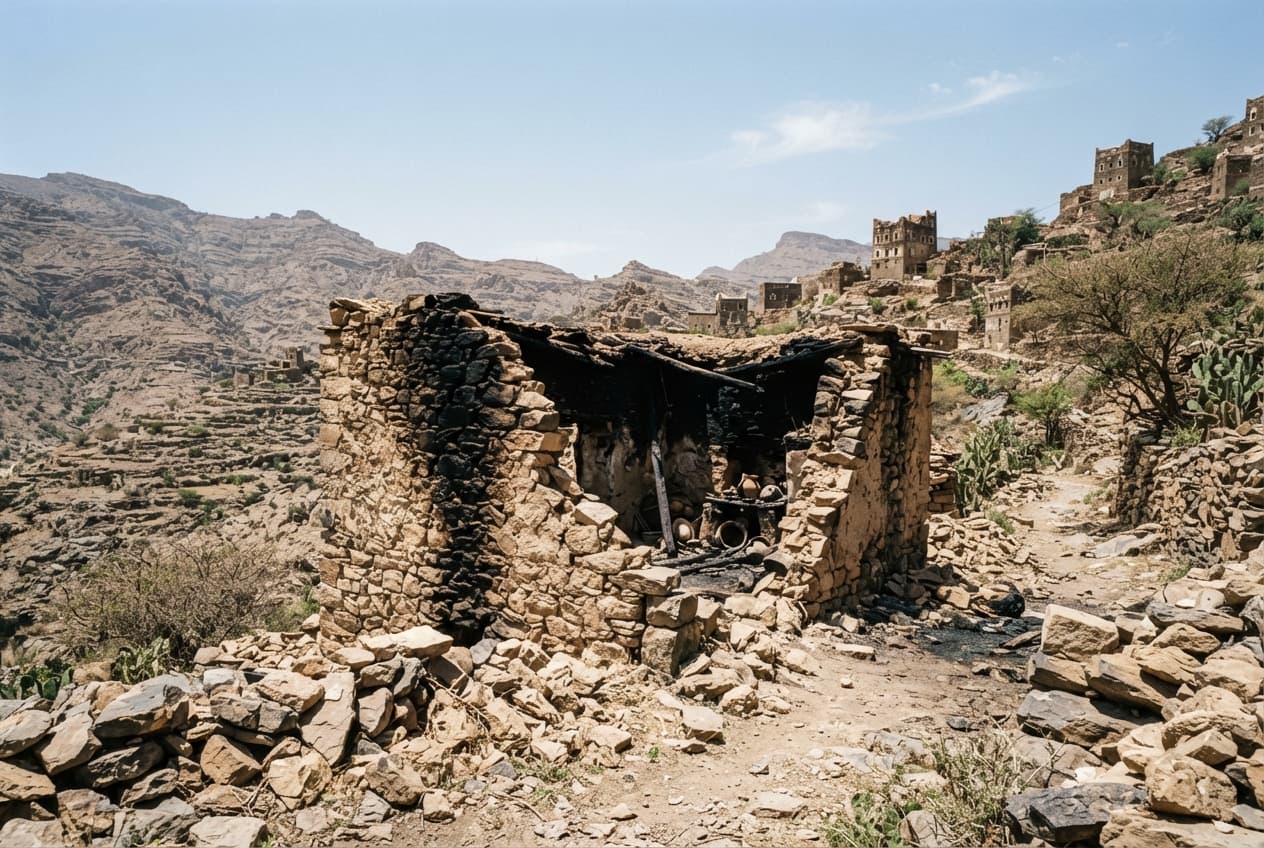
AI Image Disclaimer Illustrations were created using AI tools and are not real photographs.
Sources Reuters Associated Press Politico The Washington Post CNN
Published by Banx Network. This article is part of the Banx decentralized media programme, powered by the BXE token on the XRP Ledger.