
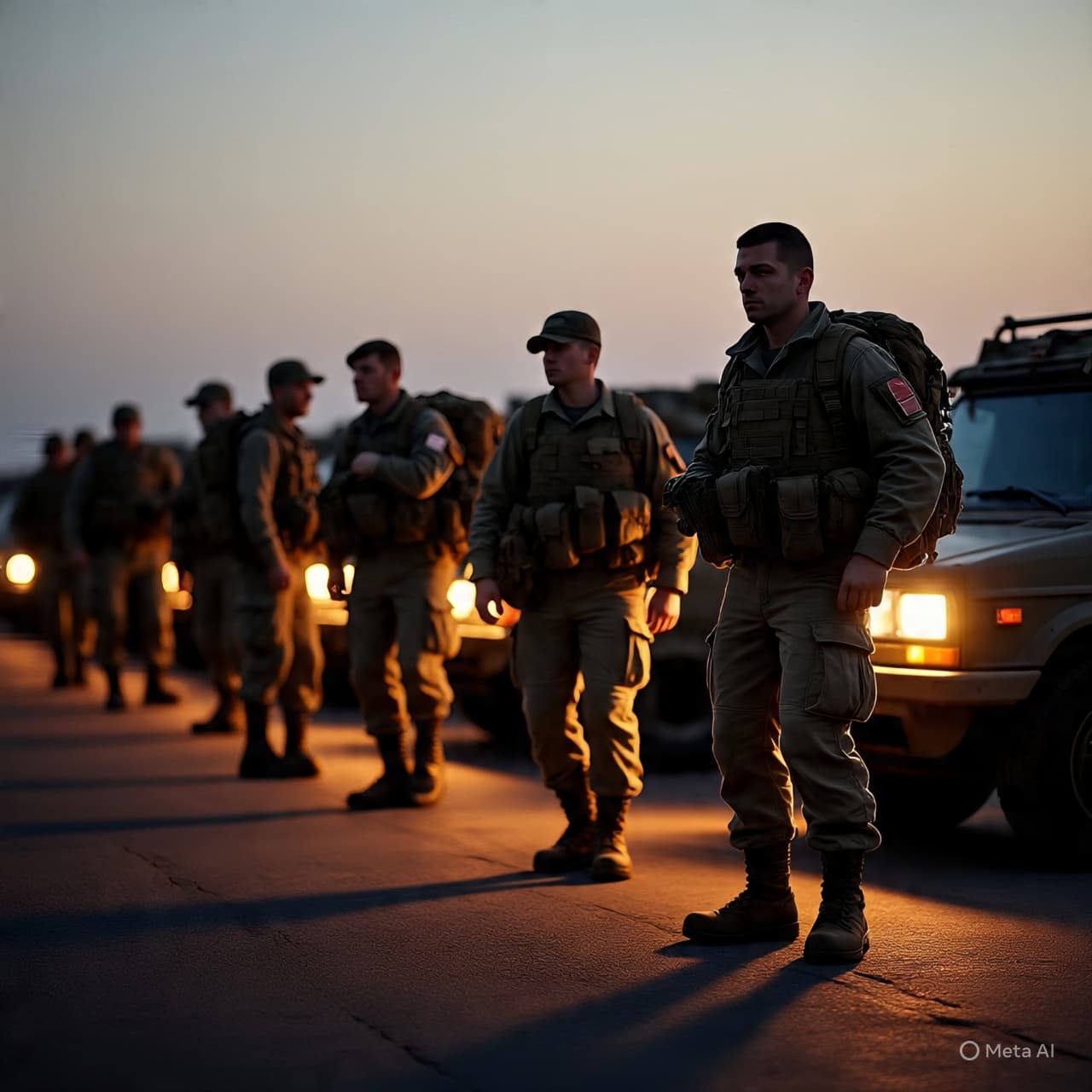
Key Highlights
- U.S. military assets are currently moving toward the Middle East amid rising tensions.
- The potential for troop deployments raises questions about U.S. foreign policy and military engagement.
- Analysts emphasize that troop movements do not guarantee direct involvement in conflicts.
The movement of U.S. military assets toward the Middle East has captured significant attention in recent days, as geopolitical tensions escalate in the region. Ships and personnel are being deployed, signaling a state of readiness that could lead to various outcomes, including potential troop deployments. This situation raises critical questions about the future of U.S. military involvement in ongoing conflicts and the implications of such actions.
As naval groups and support units make their way across the ocean, the focus shifts from mere presence to the potential for direct engagement. The question of whether former President Donald Trump might authorize ground troops if he regains influence or office is particularly pertinent. This uncertainty is compounded by the fluid nature of the conflict, which continues to evolve with each passing day.
Historically, the decision to commit ground troops has been a significant one within U.S. foreign policy, marking a transition from passive support to active participation in conflicts. Previous military engagements in the Middle East have demonstrated that such decisions are often preceded by extensive deliberation, weighing the risks and potential consequences of involvement. In this context, the current troop movements serve as a reminder of the delicate balance between deterrence and direct action.
Analysts note that while the positioning of U.S. forces offers strategic options, it does not inherently dictate a course of action. Naval deployments can fulfill multiple roles, from projecting military strength to ensuring the security of vital shipping routes. The ambiguity surrounding these movements allows for a range of interpretations, particularly regarding the potential for ground troop deployments.
Trump's foreign policy approach has often emphasized a preference for restraint in long-term military commitments, while simultaneously advocating for decisive action when necessary. This duality creates a complex landscape for decision-making, especially in a region characterized by multiple actors and shifting alliances. Any decision to introduce ground troops would not occur in a vacuum; it would be influenced by a network of geopolitical responses and recalibrations.
For allies and observers, the uncertainty surrounding troop deployments is palpable. Questions linger about the scale and timing of any potential military action. Would it be a limited deployment aimed at stabilization, or a broader commitment to reshape the conflict's trajectory? These inquiries remain unanswered, contingent on developments that are still unfolding.
As U.S. ships continue their journey toward the Middle East, they carry not only equipment and personnel but also the weight of possibility. Their movement serves as both a tangible and symbolic reminder that in times of tension, preparation often precedes clarity. The current situation underscores the importance of political decisions that will ultimately determine the course of U.S. military involvement in the region.
In this uncertain landscape, the outcome remains undefined. Like the ships navigating open waters, the question of U.S. troop deployments moves forward without resolution—guided by direction, but not yet by a clear destination.
Published by Banx Network. This article is part of the Banx decentralized media programme, powered by the BXE token on the XRP Ledger.



