
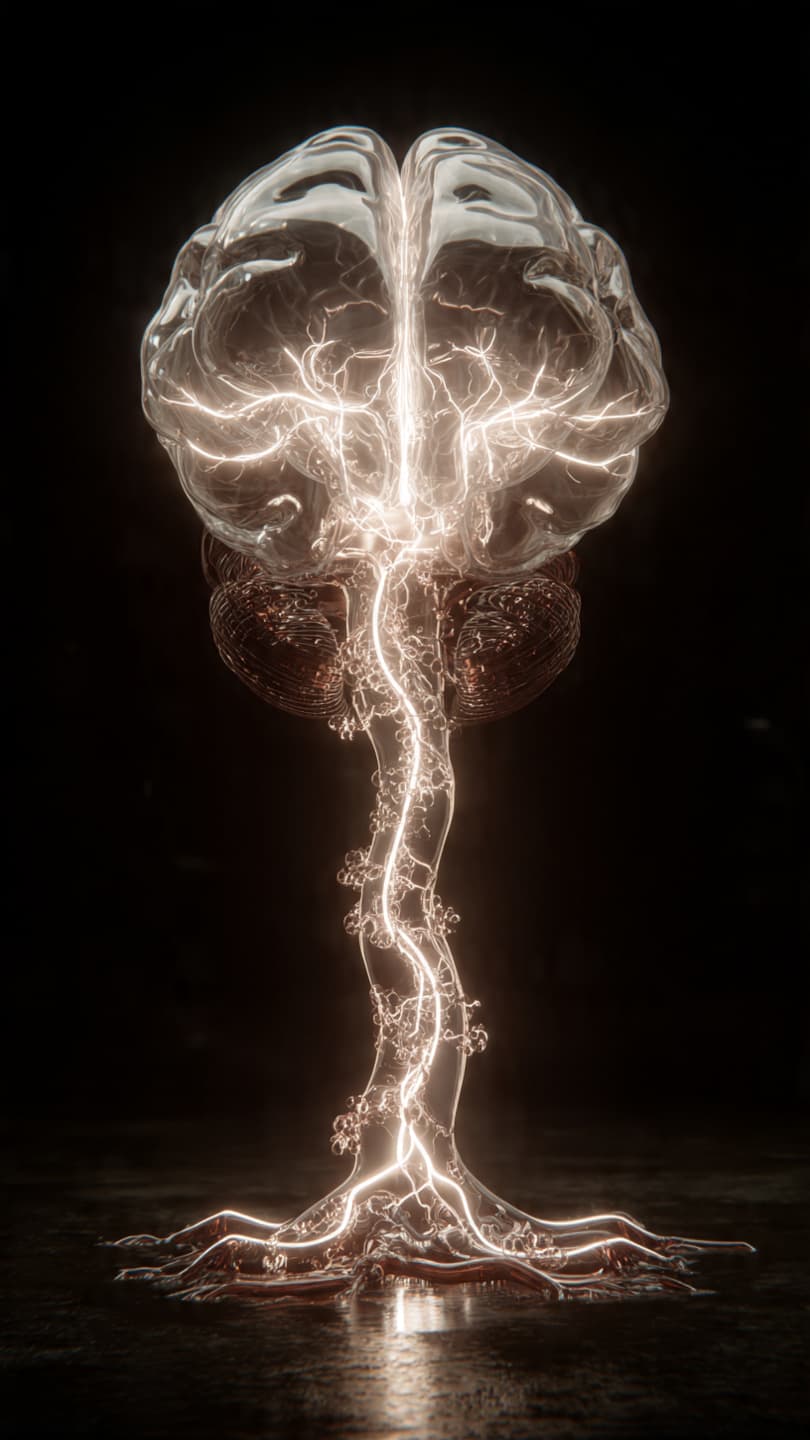
Scent is one of the most immediate senses, yet also one of the least visible. It arrives without shape or boundary, diffusing through the air, difficult to trace back to its source. Now, scientists have begun to give that invisibility a form—creating the first detailed “smell maps” that show how noses detect and organize odours.
At the center of this work is the , a small but complex region of the brain responsible for processing scent. When odor molecules enter the nose, they bind to receptors that send signals to this structure, where patterns begin to emerge.
Mapping the Invisible Using advanced imaging techniques, researchers have tracked how different smells activate specific clusters of neurons within the olfactory bulb. Rather than a random response, the brain produces structured patterns—distinct spatial arrangements that correspond to particular odours.
These patterns form what scientists describe as “maps.” Each scent generates a unique configuration, allowing the brain to distinguish between thousands of different smells. Even subtle differences in chemical composition can produce noticeably different neural signatures.
From Detection to Direction Beyond identifying smells, the maps reveal something more dynamic: how organisms track them. By comparing changes in these neural patterns over time, the brain can infer the direction and intensity of an odour source.
This process helps explain how animals—and to a lesser extent humans—navigate using scent. The brain does not simply recognize an odour; it interprets gradients, detecting where a smell is stronger or weaker and adjusting movement accordingly.
A Broader Implication The findings extend beyond basic neuroscience. Understanding how the brain encodes smell could influence fields ranging from artificial sensing technologies to medical research. Disorders that affect smell, for example, may be better understood through disruptions in these neural maps.
It also adds to a larger picture of perception: that the brain organizes sensory input into structured representations, even when the stimuli themselves appear diffuse or chaotic.
For something as intangible as scent, the idea of a map may seem unexpected. Yet within the brain, order emerges from diffusion—patterns forming where none are visible to the eye. And through these maps, the act of smelling becomes not just a sensation, but a form of navigation through an unseen landscape. AI Image Disclaimer Illustrations are AI-generated and intended for conceptual representation only.
Source Check — Credible Media Presence Nature · Science · Scientific American · BBC · The Guardian
Published by Banx Network. This article is part of the Banx decentralized media programme, powered by the BXE token on the XRP Ledger.



