
Key Highlights
- Conflict in Iran has released over five million tonnes of CO₂.
- More than 20,000 buildings have been damaged or destroyed.
- The war's environmental impact extends beyond local borders.
In the soft haze of dawn across Iran’s plains, the light creeps gently over groves and dusty rooftops, embracing a land long rooted in the rhythms of seasons and time. In cities and villages alike, each new day carries with it the ordinary sounds of life — goats bleating in courtyards, shopkeepers unrolling shutters, distant prayer calls mingling with the breeze. Yet beneath this surface of quiet motion, a deeper current now courses through the air: a warming that is not born of sunrises and summer winds, but of destruction and the deep echoes of modern conflict.
Since late February, when military operations opened across parts of Iran, the atmosphere has borne more than the familiar scents of earth and exhaust. In a recent analysis by climate researchers tracking the environmental footprint of the Iran war, the first fourteen days of conflict released more than five million tonnes of carbon dioxide into the sky — a quantity larger than the annual emissions of several small nations combined. As the smoke rose from burning fuel, collapsing structures, and the wreckage of thousands of homes, schools, and buildings, it carried with it a reminder that war exacts its toll not only in human lives and rubble, but in gases that linger in the atmosphere long after the blast has passed.
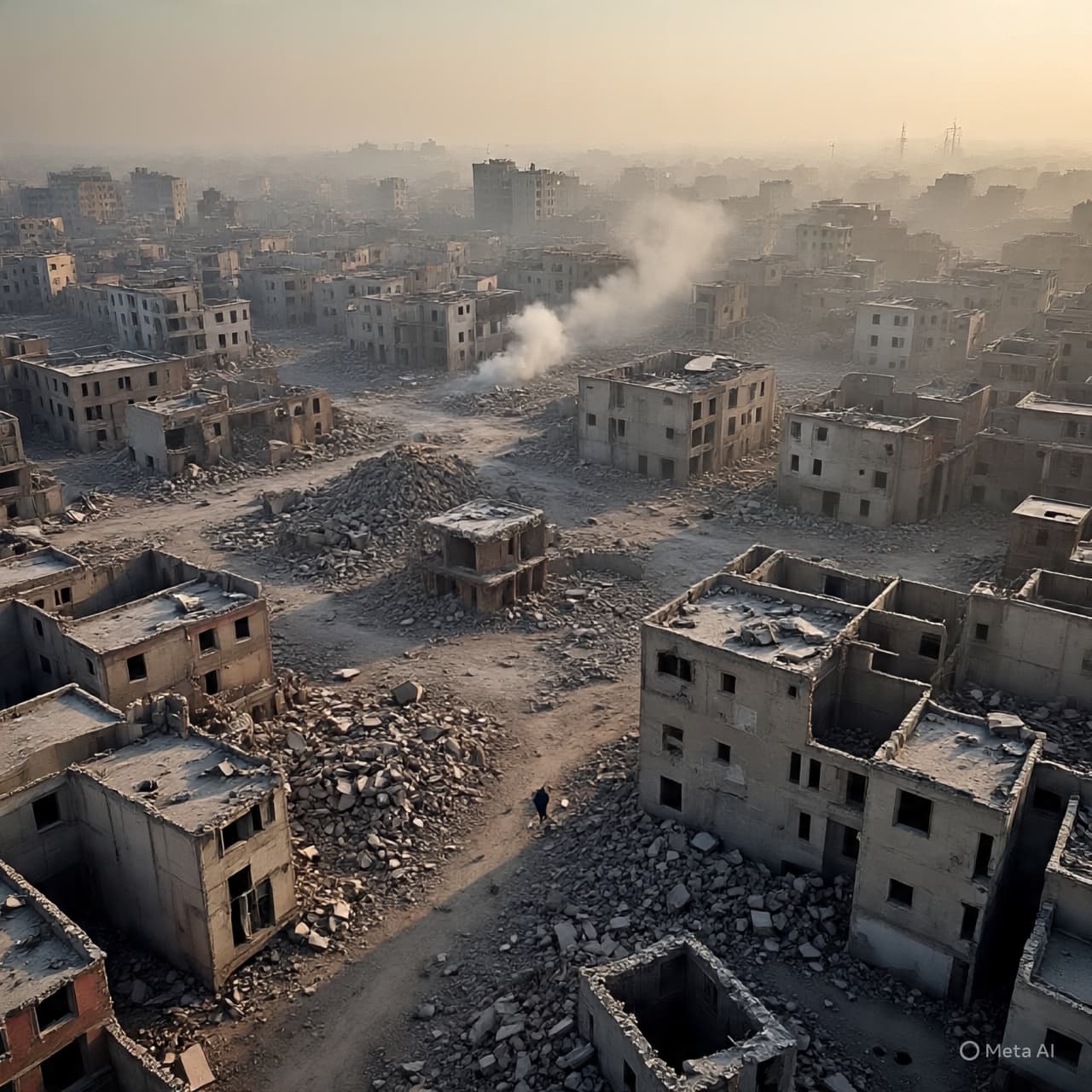
The very act of destruction — of schools where children once learned under painted walls, of homes where families shared meals, of hospitals and shops that stitched daily routines into the fabric of community — releases carbon not just from burning materials but from the sudden liberation of embodied energy stored in bricks, steel, and concrete. In this conflict, more than 20,000 buildings are estimated to have been damaged or destroyed, and the breakdown of these structures accounted for the largest portion of CO₂ released so far, outpacing even the fuel burned by military aircraft and vehicles and the flaring of oil after strikes on fuel storage. These figures offer a stark illustration that war’s imprint is not only etched in geography and memory, but in the global carbon ledger that scientists use to measure the pace of planetary change.
For residents of Tehran and small towns alike, the visible ruins — crumpled walls, charred motorways, shattered glass — speak as loudly as any statistic. And yet the unseen whispers of carbon molecules, lofted by fire and heavy machinery into an atmosphere already warming under the weight of decades of emissions, tell another story: of how the violence that scars a nation’s landscape also contributes to a climate that knows no borders. Those millions of tonnes of CO₂, released in a fortnight of conflict, drain the limited global carbon budget set by climate scientists if the world hopes to keep warming within manageable bounds. Every tonne emitted now draws down the remaining allowance that gives ecosystems and societies a fighting chance to adapt.
In markets from Dubai to New York, traders have noted the indirect climate echoes of the conflict too: as the closure of key shipping routes led to disruptions in oil transport, some economic behaviors have shifted, while heightened prices nudged conversations about energy resilience and the urgency of diversifying toward cleaner sources. Yet such shifts are subtle and often slow in the face of immediate human needs and the very real suffering that accompanies war. Beyond the balance sheets and headlines, communities rebuild and mourn, and the rubble that remains — if cleared and reconstructed — will itself demand cement, steel, and energy, creating yet more emissions in a future that already feels too warm.
As the day’s light settles into evening and the muezzin’s call slips into the dusk, the land holds its breath between loss and renewal. In the long arc of history, wars have always reshaped borders and societies. Now, in the age of human‑induced climate change, they reshape the very air we share. The carbon that rises today is part of a larger current that binds local tragedy to global consequence — a reminder that peace, like climate itself, is fragile and contingent on choices that reach far beyond any battlefield.
Published by Banx Network. This article is part of the Banx decentralized media programme, powered by the BXE token on the XRP Ledger.



