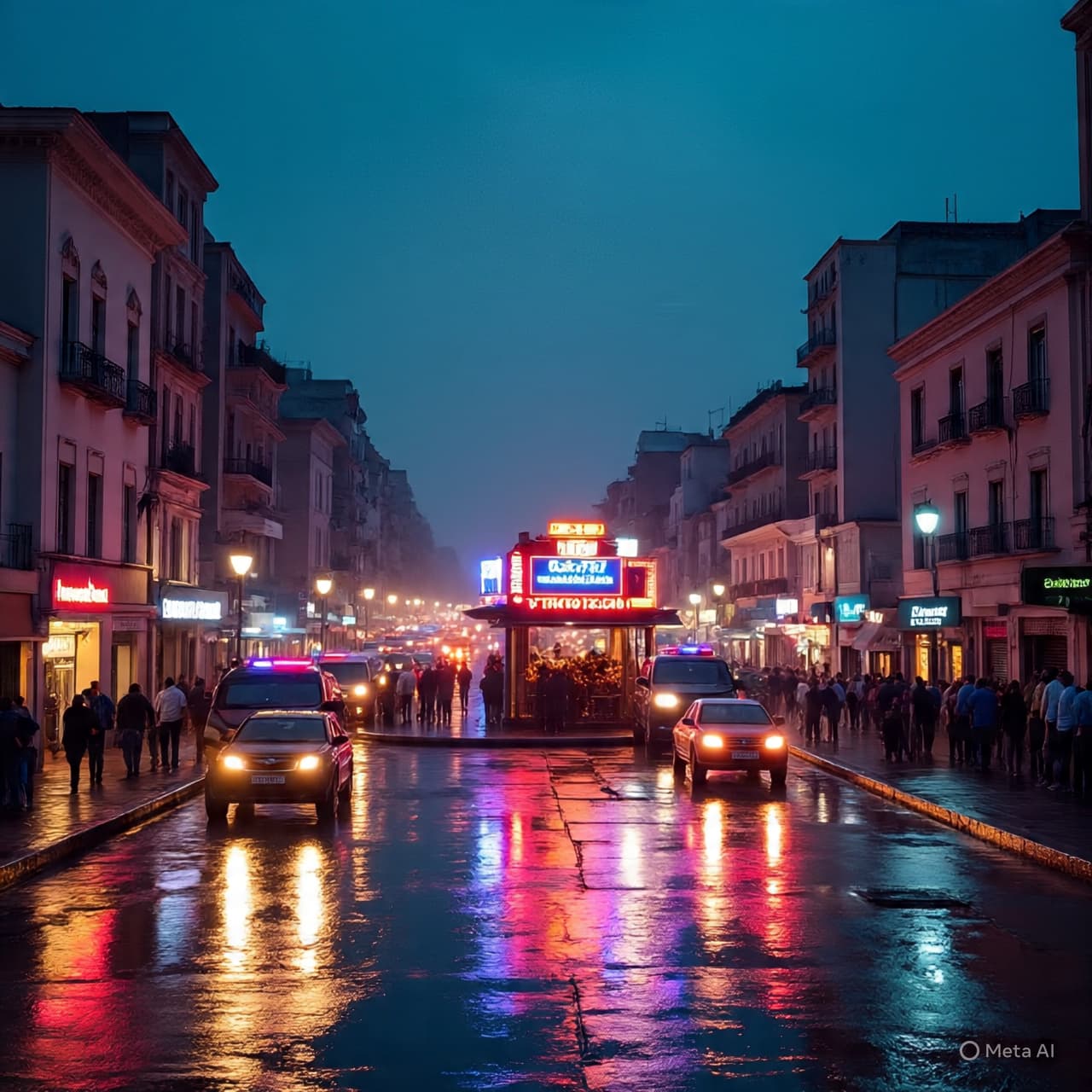
Night fades slowly along the northern coast of Peru, where the Pacific carries a quiet rhythm against the shore and cities wake gradually beneath pale morning light. In places like Trujillo, the hours before sunrise often belong to music and conversation drifting out of nightclubs and streets that hold onto the warmth of the night. It is a time when the city still breathes softly, suspended between celebration and dawn.
On one such early morning, that rhythm was broken.
At the Dalí nightclub in Trujillo, an explosion tore through the darkness just before daybreak, sending shockwaves through the building and scattering the fragile calm that had filled the room moments earlier. Music halted abruptly, witnesses later recalling that the sound felt almost like a system suddenly switched off—an instant when noise gave way to confusion. In the aftermath, injured people lay among shattered glass and debris as emergency responders rushed toward the scene.
Authorities reported that at least 33 people were wounded in the blast, among them three minors aged 16 and 17. Several victims suffered shrapnel injuries, and some required urgent surgery. Medical officials from the regional health network said at least five people were in serious condition, their injuries including severe trauma and amputations.
The explosion occurred in the predawn hours inside the nightclub, located in the province of Trujillo along Peru’s northern coast. Investigators began piecing together what had happened, though in the early hours following the blast, authorities had not yet identified who was responsible or confirmed a motive.
Yet the event did not unfold in isolation. The La Libertad region, where Trujillo stands as one of Peru’s largest coastal cities, has in recent years experienced a rising current of violence tied to organized crime. Extortion networks and illegal mining operations have expanded their reach across the region, leaving behind a trail of bombings and threats that ripple through communities and businesses alike.
Official figures show that in 2025 alone, the region recorded 286 explosions linked to criminal activity, with nearly half of them occurring within Trujillo itself. In many cases, explosive devices have been used to pressure businesses that refuse to comply with extortion demands from criminal groups operating locally and across neighboring countries.
Less than a month before the nightclub attack, another explosion in the same city damaged dozens of homes, though it caused no injuries. For residents, these incidents form a quiet but persistent backdrop to daily life—a reminder that beneath the ordinary rhythm of streets and neighborhoods, tensions sometimes gather unseen.
As daylight spread across Trujillo following the blast, hospitals filled with the injured while investigators examined the shattered remains of the nightclub interior. Witness videos captured the urgency of the moment: voices shouting warnings, people calling for help, and others trying to guide the wounded through the confusion that followed the explosion.
For now, the story remains unfinished. Authorities continue to investigate the source of the device and the network that might lie behind it. In the meantime, the city returns to its familiar rhythms—coastal wind, passing traffic, the slow gathering of another night—while carrying the quiet memory of a moment when music gave way to silence and the fragile balance of the night was suddenly broken.
AI Image Disclaimer Illustrations were created using AI tools and are not real photographs.
Sources Associated Press PBS NewsHour Al Jazeera Los Angeles Times The Guardian
Published by Banx Network. This article is part of the Banx decentralized media programme, powered by the BXE token on the XRP Ledger.