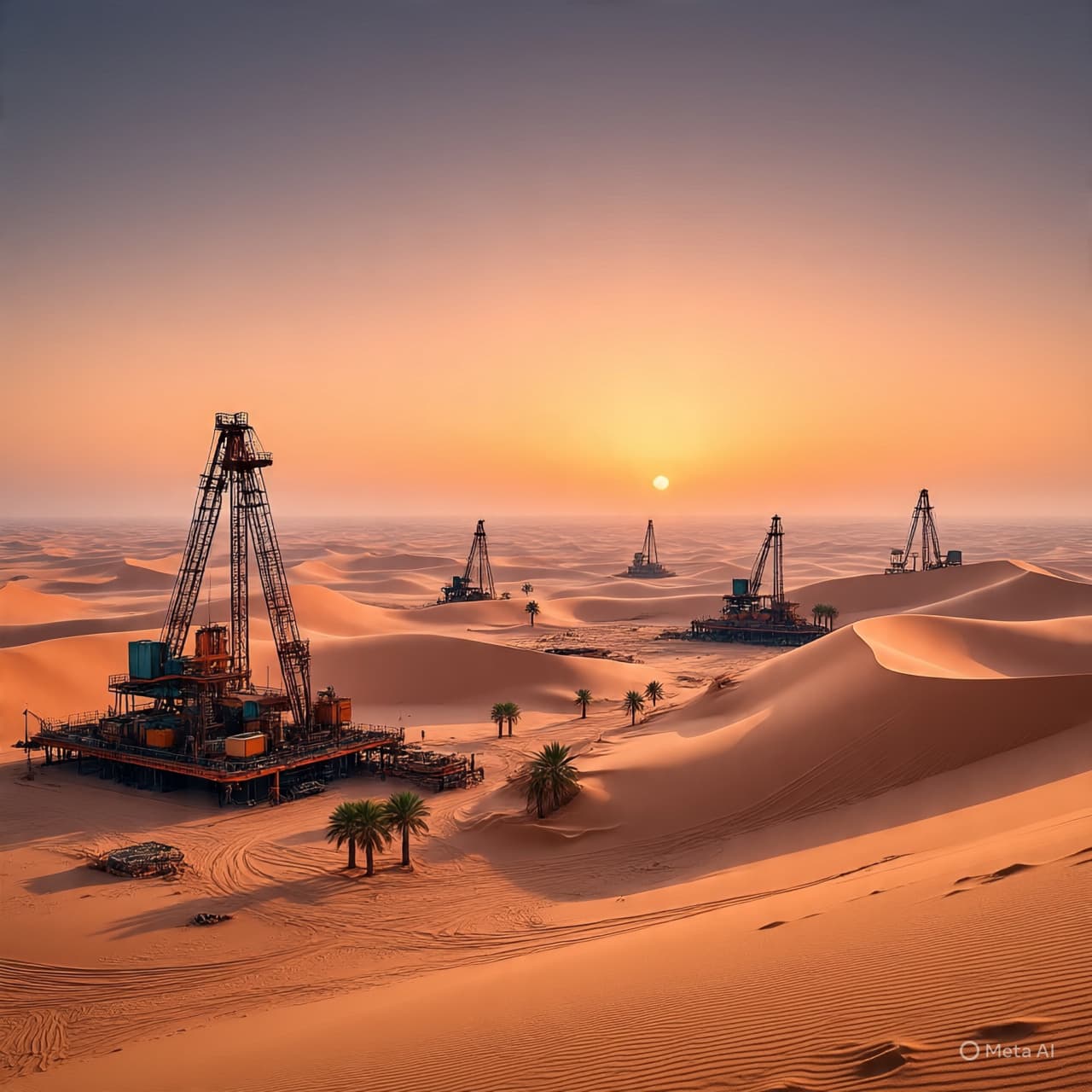
In the wide plains of southern Iraq, where oil infrastructure rises from desert horizons like skeletal cathedrals, energy has long shaped both destiny and diplomacy. The rhythm of pumps and pipelines carries not only crude, but ambition — national, corporate, and geopolitical.
According to reporting by The Wall Street Journal, Chevron and Iraq have entered exclusive negotiations over the development of a giant oil field. While specific contractual details have not been publicly disclosed, the talks signal a potentially significant step in Iraq’s effort to expand production capacity and attract foreign investment.
Iraq holds some of the world’s largest proven oil reserves, much of them concentrated in vast southern fields that have been developed in partnership with international energy companies. Yet translating geological wealth into sustained output has often required delicate negotiation — balancing technical expertise, revenue-sharing structures, and domestic political considerations.
Exclusive negotiations typically suggest that a government has selected a preferred partner for a defined period, allowing both sides to refine terms without competing bids. For Chevron, one of the largest U.S.-based energy producers, such a move could deepen its presence in a region central to global supply.
Energy partnerships in Iraq unfold within a broader context. The country remains a key member of OPEC, navigating production targets while seeking to maximize revenue for reconstruction and public services. Infrastructure constraints, security considerations, and regional politics continue to shape the pace of development.
For international oil majors, large-scale fields in Iraq represent both opportunity and complexity. The scale of reserves promises long-term output, yet investment frameworks must account for operational risk, contractual stability, and shifting global energy demand. As the world debates the trajectory of fossil fuels amid climate commitments, oil-producing nations continue to weigh near-term revenue needs against longer-term transitions.
Negotiations over a “giant” field suggest ambitions measured not in incremental barrels, but in sustained, high-volume production. Such projects often require billions in capital expenditure, advanced drilling technology, and coordination with state-owned entities.
Neither Chevron nor Iraqi officials have publicly detailed timelines or financial terms tied to the discussions. For now, the development remains in the negotiation phase — a quiet but consequential step that may shape output projections in the years ahead.
Across Iraq’s oil-rich terrain, flares burn steadily against the night sky. Beneath them lies a resource that has defined modern Iraq’s economy. Whether these exclusive talks culminate in a formal agreement will depend on terms yet to be finalized. But the conversations themselves underscore a familiar truth: in global energy markets, decisions made in negotiation rooms often echo far beyond the fields where oil is drawn from the earth.
Published by Banx Network. This article is part of the Banx decentralized media programme, powered by the BXE token on the XRP Ledger.