

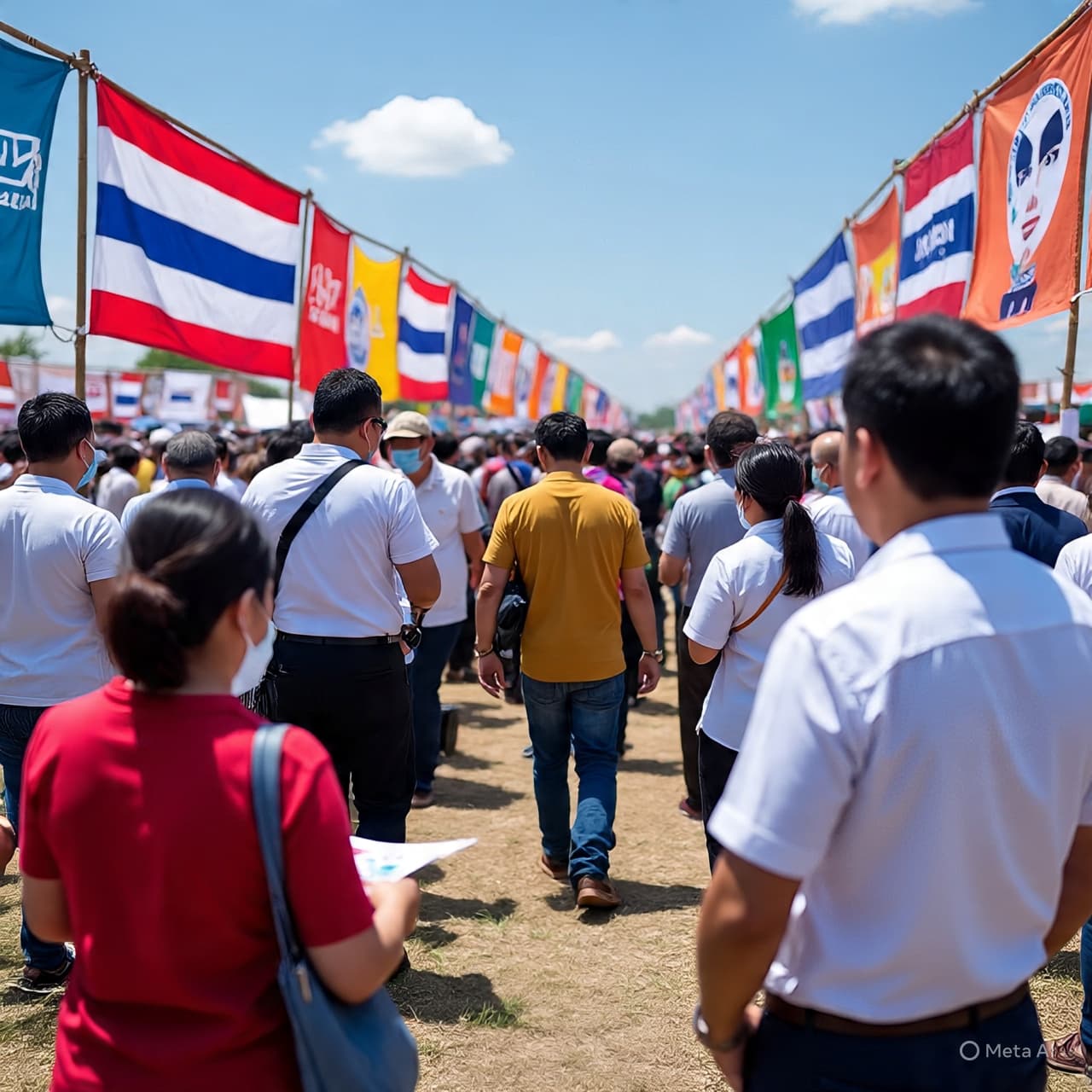
Key Highlights
- Upcoming Election:Thailand's general election is set for February 8, 2024.
- Shifting Dynamics:The Pheu Thai Party is trailing behind the reformist People's Party in polls.
- Voter Sentiment:Many voters are seeking alternatives to traditional political brands.
In the lead-up to Thailand's general election on February 8, 2024, the political landscape is undergoing significant transformations. The Pheu Thai Party, historically associated with the influential Shinawatra dynasty, is facing unprecedented challenges as it finds itself trailing behind the reform-oriented People's Party and other emerging contenders. This shift reflects a broader reexamination of political loyalties among the electorate, particularly among younger voters and those in urban areas.
The Shinawatra family has long been a dominant force in Thai politics, with Thaksin Shinawatra's legacy shaping the country's political discourse since the early 2000s. However, as the February election approaches, the Pheu Thai Party's polling numbers suggest a waning influence. With its founder currently imprisoned and the party struggling to connect with a new generation of voters, traditional allegiances are being tested. Many voters express a desire for fresh ideas and policies that resonate with their contemporary challenges, rather than the familiar names of the past.
This evolving political climate is particularly evident in urban centers, where the People's Party has gained traction. This reformist group is seen as a beacon of hope for those advocating for systemic change in Thailand. Unlike the Pheu Thai Party, which has historically relied on a strong grassroots network in rural areas, the People's Party is appealing to a demographic that prioritizes progressive policies over established political identities. This shift is not merely a rejection of the past but rather a nuanced response to the current socio-political landscape.
As the election date draws near, the implications of these shifting dynamics are profound. Voter preferences indicate a growing appetite for alternatives to the traditional political brands that have dominated Thai politics for decades. While the Pheu Thai Party has historically enjoyed robust support, the current sentiment suggests that many voters are looking for stability and experience, but within a framework that embraces reform and innovation.
The upcoming election is poised to be a pivotal moment for Thailand, as no single party is expected to secure an outright majority. This scenario could lead to complex coalition negotiations, shaping the future governance of the nation. As voters prepare to cast their ballots, the question remains: how will the new parliament reflect the evolving aspirations of the Thai people?
In conclusion, Thailand's political tides are shifting, and the February elections will serve as a critical juncture in determining the direction of the country's governance. The interplay between established political forces and emerging reformist movements will undoubtedly shape the future of Thai democracy.
Published by Banx Network. This article is part of the Banx decentralized media programme, powered by the BXE token on the XRP Ledger.




