In the hills that stretch along the border between Israel and Lebanon, distance can be deceptive.
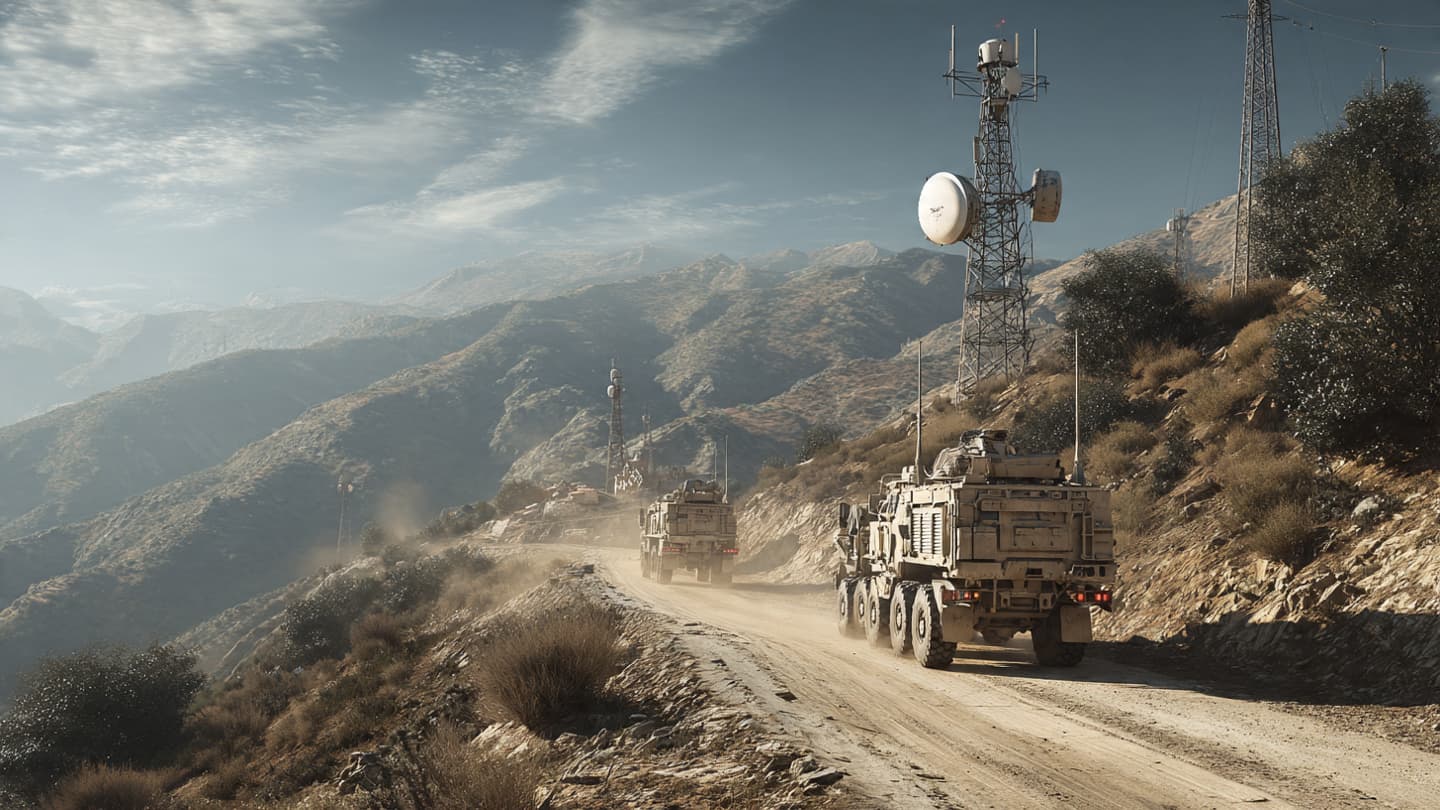
A road winding through rocky terrain may appear peaceful from afar. Olive trees sway in the wind. Villages rest beneath the slopes. Yet above this familiar landscape moves another world—one of surveillance aircraft, radar systems, military patrols, and unmanned vehicles crossing invisible lines in the sky. In such places, conflict is not always measured by armies advancing across fields. Sometimes it arrives through a single drone, silent until the moment it is not.
That reality resurfaced with reports that a Hezbollah drone struck a vehicle associated with a visit by Israeli Northern Command chief Major General Rafi Milo during a recent trip to southern Lebanon. According to Israeli media accounts, the drone attack targeted a convoy area during Milo’s presence in the region, highlighting the persistent risks facing military personnel operating near one of the Middle East’s most volatile frontiers.
The incident serves as a reminder of how warfare along the Israel-Lebanon border has evolved over recent years. Once defined primarily by artillery exchanges, fortified positions, and ground operations, the confrontation increasingly involves technologies capable of traveling long distances with precision. Drones have become among the most visible symbols of this transformation, extending the reach of both state and non-state actors across terrain that was once protected by geography alone.
For commanders responsible for northern Israel, the border has become a landscape of constant vigilance. The area has witnessed repeated exchanges of fire, surveillance operations, and military deployments linked to broader regional tensions. Since the outbreak of the Gaza war, hostilities between Israel and Hezbollah have periodically intensified, creating concerns that localized incidents could expand into a wider confrontation.
Military visits to forward positions are often intended to assess operational conditions firsthand. Commanders travel to review deployments, inspect infrastructure, and meet personnel stationed near active security zones. Such visits underscore leadership presence, but they also expose senior officers to many of the same risks faced by troops operating in contested environments.
The reported drone strike reflects a broader shift in the character of modern conflict. Small unmanned systems, once regarded primarily as reconnaissance tools, now occupy a central role in military strategy. They gather intelligence, monitor movements, and in some cases carry explosive payloads capable of reaching targets with remarkable accuracy. Their growing use has altered calculations for commanders and policymakers alike.
Yet technology alone does not define the significance of such events. The border region itself carries a long memory. Communities on both sides have lived for decades alongside cycles of escalation and uneasy calm. Generations have grown accustomed to the sound of aircraft overhead and the possibility that regional tensions may suddenly reshape ordinary life.
The roads traveled by military convoys often pass not far from farms, schools, and homes. Daily routines continue even as security concerns remain ever present. This coexistence of normalcy and uncertainty has become one of the defining characteristics of life in areas touched by prolonged geopolitical rivalry.
Observers note that incidents involving senior military figures attract particular attention because they reveal the extent to which modern threats can penetrate traditional layers of protection. A drone crossing into operational space demonstrates not only technical capability but also the evolving challenges facing defense systems tasked with monitoring increasingly complex environments.
At the same time, such events often carry symbolic significance beyond their immediate tactical impact. They become reminders that even heavily monitored frontiers remain vulnerable to unexpected developments. In an era of rapid technological adaptation, the balance between security and exposure is constantly being renegotiated.
As investigations and assessments continue, military planners on all sides will likely study the incident closely. Questions about detection, response times, operational procedures, and future safeguards inevitably follow any attack involving senior personnel. These evaluations occur quietly, often away from public view, yet they help shape future strategies.
Meanwhile, life along the northern frontier continues. Farmers tend fields near security fences. Vehicles move along mountain roads. Soldiers rotate through observation posts overlooking valleys that have witnessed decades of conflict and diplomacy alike. The landscape remains familiar, even as the tools of confrontation evolve.
The reported strike on a vehicle linked to General Milo’s visit may ultimately be remembered as a brief episode within a larger regional story. Yet it captures something essential about the present moment: the way modern conflict increasingly compresses distance, allowing events once separated by terrain and fortification to unfold within moments.
In the hills between Israel and Lebanon, the horizon still appears calm from afar. But beneath that horizon lies a reality shaped by vigilance, technology, and the enduring uncertainty of a border where even the quietest skies can suddenly become part of the story.
AI Image Disclaimer Illustrations were produced using AI-generated imagery and serve as visual interpretations of the topic rather than authentic photographs of the reported events.
Sources Reuters The Times of Israel Associated Press Israeli Defense Forces (IDF) Al Jazeera English
Published by Banx Network. This article is part of the Banx decentralized media programme, powered by the BXE token on the XRP Ledger.