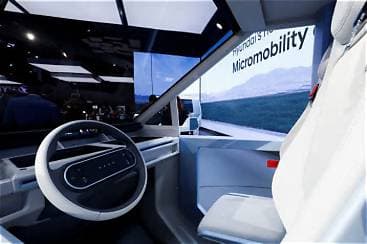
The earliest light of day settles across miles of pavement and silent factory floors, brushing against the echo of machines that have waited in the wings. In those quiet moments before the bustle begins, the world of electric vehicles feels almost contemplative — as if stilled by the sheer weight of possibility. Rivian, the maker of rugged, electrified trucks and SUVs, stands at such a threshold. Its figures and forecasts — numbers that hum with cautious optimism — suggest a shift in narrative, not abrupt but significant in its own steady arc.
Recent results from Rivian show a company that has stepped beyond a simple cadence of loss and adjustment into something that might be called inflection. In its latest financial period, the firm posted earnings that surpassed expectations, driven in part by gains in software and services, even as overall revenue dipped slightly from a year prior. Investors responded in kind, lifting the company’s share price as hopes rose that Rivian’s business model may be finding firmer footing. The language from the leadership echoed this sense of transition, with the chief executive describing the moment as a key inflection point where the company begins to demonstrate the longer‑term sustainability of its operations.
Underlying this narrative is a vehicle that Rivian and its supporters see as pivotal: the R2 SUV. Priced more accessibly than its predecessors, and designed to broaden the company’s appeal beyond premium buyers, the R2 is on track for customer deliveries in the second quarter of this year. This midsize model, assembled and validated in early production runs, is positioned to contribute meaningfully to Rivian’s projected increase in total deliveries for 2026 — guidance that calls for roughly 62,000 to 67,000 vehicles across its lineup. These figures suggest a rebound from last year’s volume and point to an expanded footprint that may bridge the gap between niche and mainstream in the EV market.
Yet, even as optimism grows, there is a texture of realism woven through the company’s own outlook. The launch of a new model, particularly one that aims to scale up production significantly, typically carries pressures on margin and capital. Rivian’s guidance reflects costs associated not only with R2 rollout but with broader investments in manufacturing capacity and technology partnerships. The company anticipates continued adjusted losses — a reminder that growth often unfolds unevenly, with early stages bearing the weight of expansion before the tailwinds of volume and efficiency can take hold.
In the broader context of electric vehicles, Rivian’s shift mirrors wider industry transitions. Many manufacturers are recalibrating strategies as federal incentives evolve and consumer demand settles into new patterns. Rivian’s embrace of a more affordable platform, its efforts to balance software growth with physical production, and its engagement with strategic alliances all suggest a company conscious of both opportunity and constraint. In these interwoven strains — of innovation, investment, and market dynamics — Rivian’s story unfolds not as an abrupt leap but as a thoughtful progression toward steadier ground.
In plain news language: Rivian Automotive reported better‑than‑expected earnings for the latest quarter, helped by gains from its software and services division. The company reiterated guidance for higher vehicle deliveries in 2026, driven partly by the upcoming launch of its more affordable R2 SUV model, which is expected to begin customer deliveries in the second quarter. Rivian’s management described the period as a key inflection point for the business, even as it continues to forecast adjusted losses during its expansion phase.
AI Image Disclaimer Visuals are AI‑generated and serve as conceptual representations.
Sources (Media Names Only) Reuters Yahoo News Finviz
Published by Banx Network. This article is part of the Banx decentralized media programme, powered by the BXE token on the XRP Ledger.