There is a certain invisibility to the modern supply chain.
A shirt hanging in a store, a solar panel mounted on a rooftop, a battery powering an electric vehicle—each arrives through a journey measured in shipping lanes, warehouses, customs forms, and factory shifts. The path is often so long and intricate that the people who touch a product at its beginning remain unseen by those who encounter it at the end.
Yet every so often, attention returns to those hidden origins. Questions emerge about where goods come from, who made them, and under what conditions they were produced. In those moments, global trade becomes more than a matter of economics. It becomes a reflection on labor, responsibility, and the challenges of governing an interconnected world.
That broader conversation has resurfaced following a new round of tariff measures championed by President Donald Trump, who has argued that tougher trade policies can help address concerns surrounding unfair competition and problematic labor practices in global supply chains. The measures arrive amid continuing debates over imports linked to regions where governments and human rights organizations have alleged the use of forced labor.
The appeal of tariffs is not difficult to understand. They are visible, direct, and politically tangible. By increasing the cost of imported goods, governments can apply pressure on trading partners while encouraging companies to reconsider sourcing decisions. Tariffs can alter commercial calculations, redirect investment, and signal dissatisfaction with existing practices.
Yet many experts argue that the challenge of forced labor extends far beyond the reach of any single tariff policy.
Modern supply chains stretch across multiple countries and industries. Raw materials may originate in one region, undergo processing in another, and be assembled elsewhere before reaching consumers. This complexity can make it difficult to identify labor conditions at every stage of production. Even when governments impose restrictions on certain products, businesses often face the challenge of tracing intricate networks of suppliers and subcontractors.
The issue has become especially significant in industries tied to strategic economic priorities. Solar panels, batteries, critical minerals, textiles, and electronics have all faced scrutiny in recent years. Governments in the United States, Europe, and elsewhere have introduced laws, import restrictions, and compliance requirements aimed at preventing products associated with forced labor from entering their markets.
Supporters of these efforts argue that economic pressure remains one of the most effective tools available for influencing corporate behavior and encouraging greater transparency. They point to growing investments in supply-chain monitoring, independent audits, and traceability systems as evidence that scrutiny can produce meaningful change.
At the same time, critics caution that tariffs alone may not address the underlying conditions that allow forced labor to persist. A company seeking to avoid one supplier may simply shift production elsewhere without fundamentally improving oversight. Products can be rerouted, components can change hands multiple times, and enforcement agencies often struggle to keep pace with global commerce.
The result is a challenge that resembles a river branching into countless channels. Blocking one route may alter the flow, but it does not necessarily change the source.
There is also a broader economic dimension. Businesses navigating new tariffs must balance compliance requirements with concerns about costs, competitiveness, and consumer demand. Governments, meanwhile, must weigh ethical objectives against broader trade relationships and strategic priorities. The conversation often reveals how closely questions of human rights and economic policy have become intertwined.
Beyond regulations and trade statistics lies a quieter reality: the lives of workers themselves. Discussions about tariffs and supply chains frequently unfold in conference rooms, legislative chambers, and financial markets, yet the people most directly affected often remain distant from those debates. Their experiences rarely appear in shipping manifests or customs records, even though they sit at the heart of the issue.
This tension helps explain why the problem continues to challenge policymakers across political divides. Forced labor is not simply a matter of market access or trade balances. It is woven into questions of governance, transparency, enforcement, and international cooperation. Addressing it requires coordination among governments, corporations, civil society organizations, and consumers alike.
As new tariff measures move through the machinery of global commerce, they will undoubtedly influence trade patterns and business decisions. Some supply chains may shift. Some imports may decline. New compliance systems may emerge.
Yet the broader challenge remains. The global economy has spent decades constructing networks designed for efficiency and scale. Rebuilding those networks around principles of transparency and labor accountability is a far more gradual undertaking.
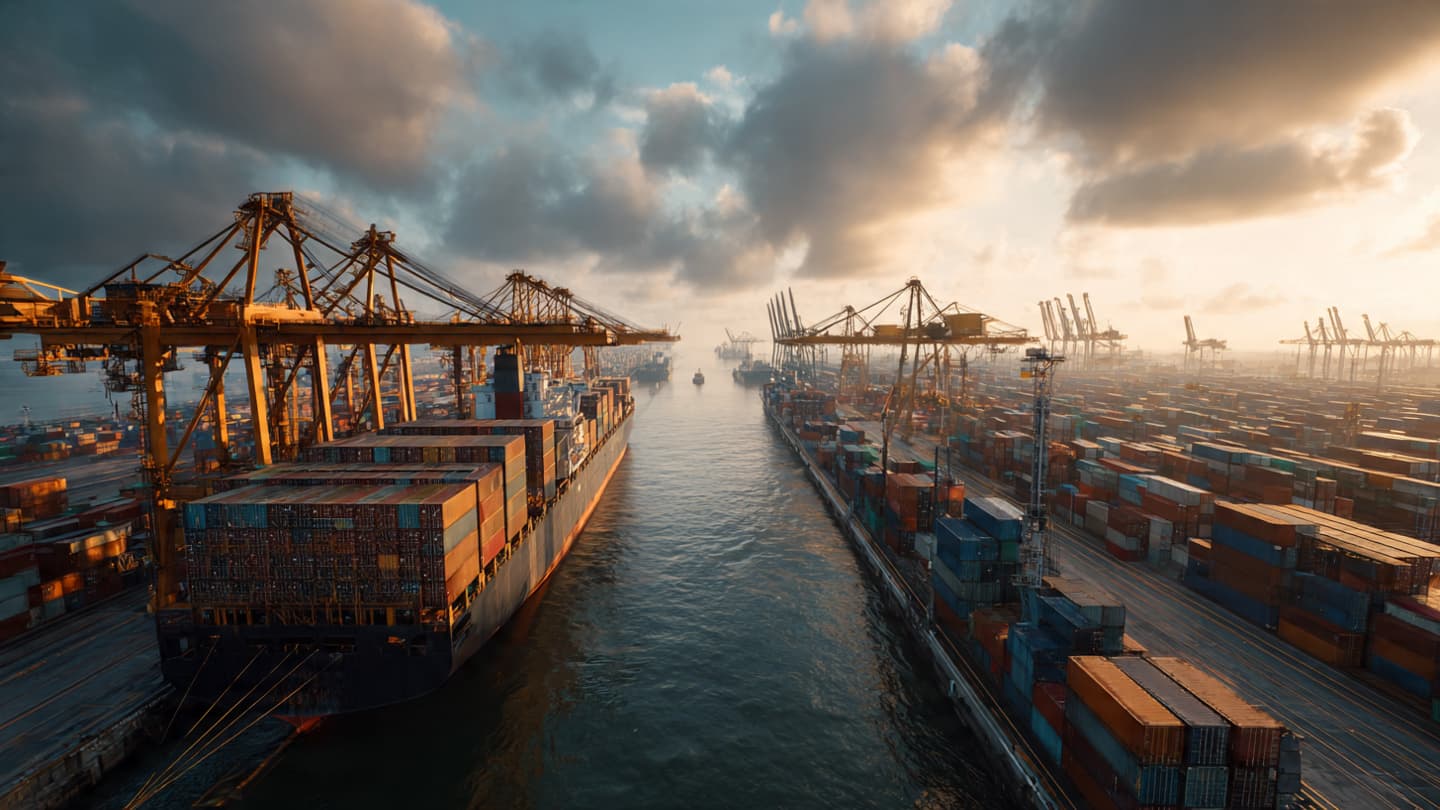
For now, ships continue crossing oceans, containers continue moving through ports, and products continue making their way toward distant markets. Beneath that familiar movement lies a question that tariffs alone may not fully resolve: how to ensure that the invisible hands behind the world's goods are seen not merely as contributors to commerce, but as participants deserving dignity, protection, and recognition within the global economy.
AI Image Disclaimer Visuals are AI-generated conceptual illustrations intended to support understanding of the topic and are not actual photographs of events or locations.
Sources Reuters International Labour Organization (ILO) U.S. Department of Labor Human Rights Watch Council on Foreign Relations (CFR)
Published by Banx Network. This article is part of the Banx decentralized media programme, powered by the BXE token on the XRP Ledger.