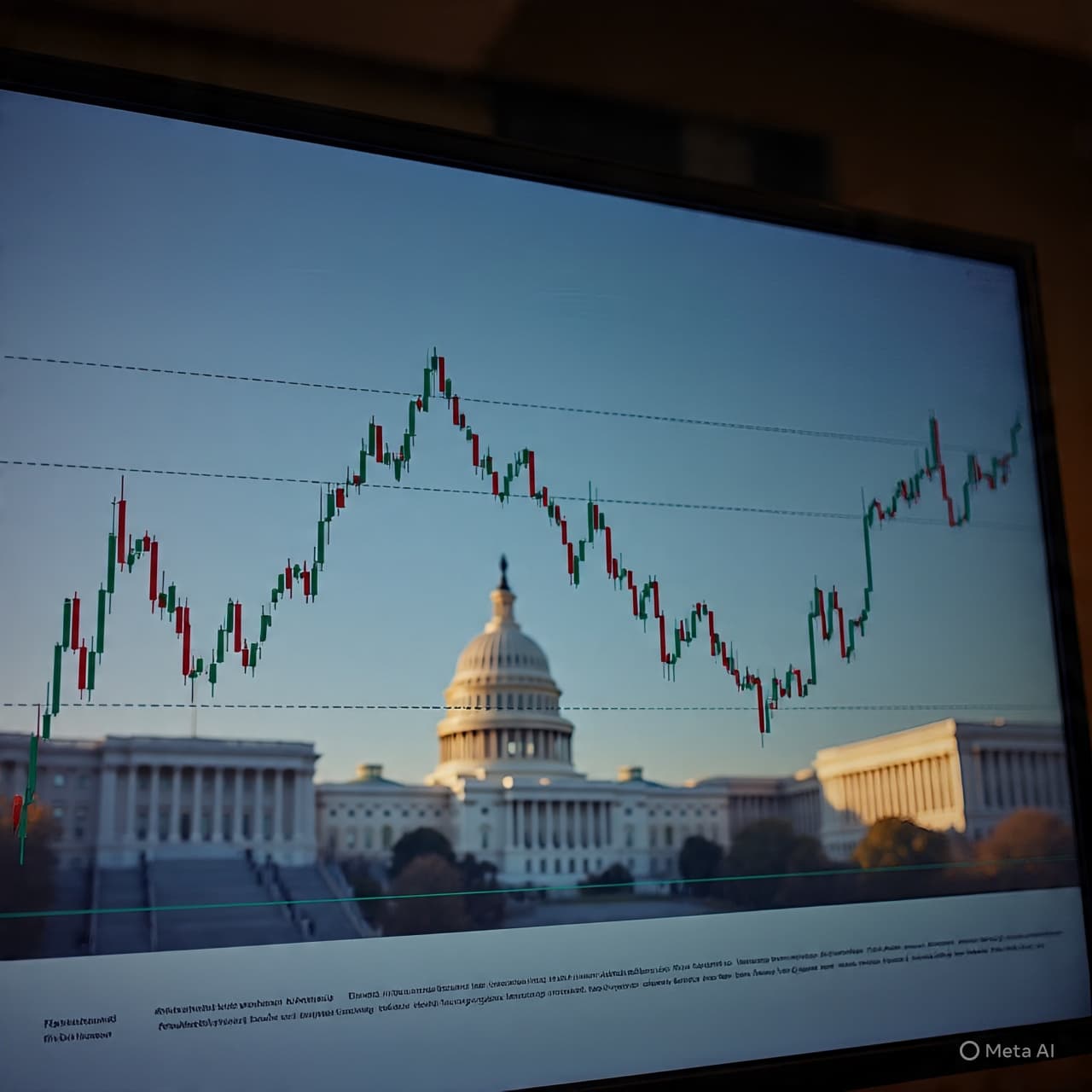
As 2025 draws to a close, U.S. Treasury yields are trending downward, reflecting the financial market’s response to recent Federal Reserve rate cuts. After months of elevated borrowing costs aimed at taming inflation, policymakers have signaled a more accommodative stance, prompting bond investors to recalibrate expectations for the final quarter of the year.
The decline in yields is most pronounced in short- and intermediate-term securities, where movements are closely tied to monetary policy decisions. Investors are interpreting the Fed’s actions as a commitment to balance economic growth with price stability, reducing the premium demanded for holding government debt. This has translated into rising bond prices and lower yields across multiple maturities.
Market analysts note that the shift is also influenced by broader economic signals. Inflation metrics have shown signs of moderation, while labor market indicators suggest continued resilience without overheating. Together, these factors reinforce expectations that interest rates may remain lower for an extended period, supporting Treasury performance and influencing investor strategies in equities, corporate debt, and other interest-sensitive assets.
For borrowers, lower yields imply reduced financing costs, while savers face the opposite trade-off: diminished returns on fixed-income holdings. This dynamic highlights the delicate interplay between monetary policy, market sentiment, and economic reality, where each decision by the Fed reverberates across financial instruments and the broader economy.
As the year closes, the bond market’s reaction underscores both the influence of central bank policy and the forward-looking nature of fixed-income investing. Treasury yields may have fallen, but the story they tell — of expectations, risk, and adaptation — remains central to understanding the evolving landscape of U.S. finance heading into 2026.
Published by Banx Network. This article is part of the Banx decentralized media programme, powered by the BXE token on the XRP Ledger.