
Key Highlights
- Confirmed Cases:Five confirmed hantavirus cases linked to the MV Hondius.
- International Response:Health authorities across multiple continents are tracing contacts.
- Unique Strain:The Andes variant shows limited human-to-human transmission.
The Atlantic can appear endlessly calm from a ship’s railing, especially in the pale hours before sunrise, when water and sky fold into one another and the horizon seems less like a boundary than a long exhale. On voyages that cross those distances, time often loosens. Meals arrive by bells and schedules, conversations drift through narrow corridors, and the ocean becomes its own weather of thought.
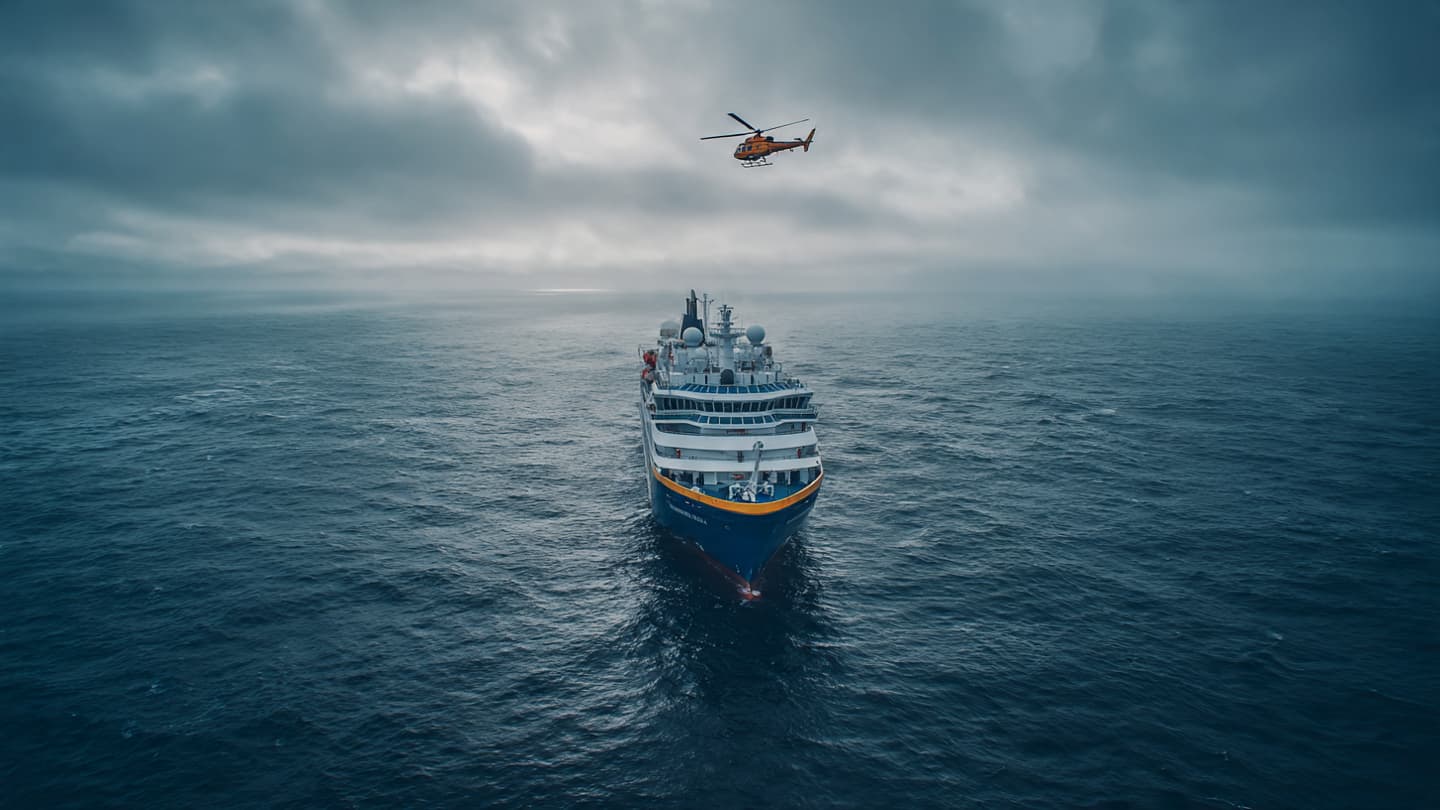
However, aboard the Dutch cruise ship MV Hondius, that rhythm has changed dramatically in recent days. Cabin doors have remained closed longer, and medical teams have moved quietly through hallways. Somewhere between the cold southern reaches of Argentina and the warmer waters approaching the Canary Islands, a rare illness has altered the meaning of the journey itself.
The World Health Organization (WHO) has reported that confirmed hantavirus cases connected to the vessel have risen to five, part of a broader cluster tied to the cruise ship that has already resulted in several deaths and an expanding international tracing effort. Health authorities across Europe, South Africa, and South America are now following passengers and crew members who disembarked earlier in the voyage, while laboratories continue to study the precise path the virus may have taken across the ship.
The strain identified is the Andes variant of hantavirus, a rare form found primarily in parts of Argentina and Chile. Unlike most hantaviruses, which are generally transmitted through contact with infected rodents or their droppings, the Andes strain has shown limited capacity for human-to-human transmission through prolonged close contact. This uncommon detail has given the outbreak a particularly uneasy gravity, not because officials believe it poses a pandemic-scale threat, but because the virus moves in ways that remain unfamiliar to much of the public.
Investigators believe the earliest infections may have occurred before passengers boarded the vessel, possibly during excursions in southern Argentina. From there, the story appears to have unfolded gradually, through fevers mistaken at first for ordinary travel illness, through fatigue and respiratory distress that deepened over days, and through emergency evacuations carried out across islands and distant coastlines.
The ship itself became a moving point on global maps. Cape Verde restricted docking while authorities assessed the situation. Medical evacuations transported critically ill passengers to hospitals in South Africa and Europe. Public health agencies from Switzerland to the Netherlands began contacting travelers, airline staff, and others who may have crossed paths with infected passengers during the long journey home.
Around 150 passengers and crew remained aboard as containment measures intensified. Isolation protocols were introduced, and monitoring continued cabin by cabin. WHO officials emphasized that the broader public risk remains low, noting that sustained transmission of the Andes strain is rare and usually linked to close, prolonged exposure. Even so, the image of a ship suspended between continents — carrying uncertainty alongside its passengers — has drawn memories of earlier years when illness and travel became inseparable in the public imagination.
Hantavirus itself is not new. In rural regions of the Americas, the disease has long existed at the edges of forests, fields, and rodent habitats, often emerging quietly after environmental changes disturb those natural boundaries. Symptoms can begin with fever, muscle pain, fatigue, or gastrointestinal illness before rapidly progressing in severe cases to pneumonia and respiratory failure. There is no specific antiviral cure, and treatment relies largely on supportive hospital care delivered early enough to steady the body through the most dangerous phase.
Yet beyond the clinical details, the story unfolding around the MV Hondius feels shaped by movement — by migration routes, tourism, wildlife excursions, ports, airports, and the fragile closeness that travel creates among strangers. A cruise ship, after all, is built around proximity: shared dining rooms, narrow passageways, evening conversations under wind and salt air. What once symbolizes leisure and escape can, under different circumstances, become a floating exercise in containment.
Now the vessel continues toward Spain’s Canary Islands, where authorities are coordinating further medical evaluations and repatriation plans. Some passengers remain under observation, while health agencies continue to compile data and monitor the situation closely.
Published by Banx Network. This article is part of the Banx decentralized media programme, powered by the BXE token on the XRP Ledger.



