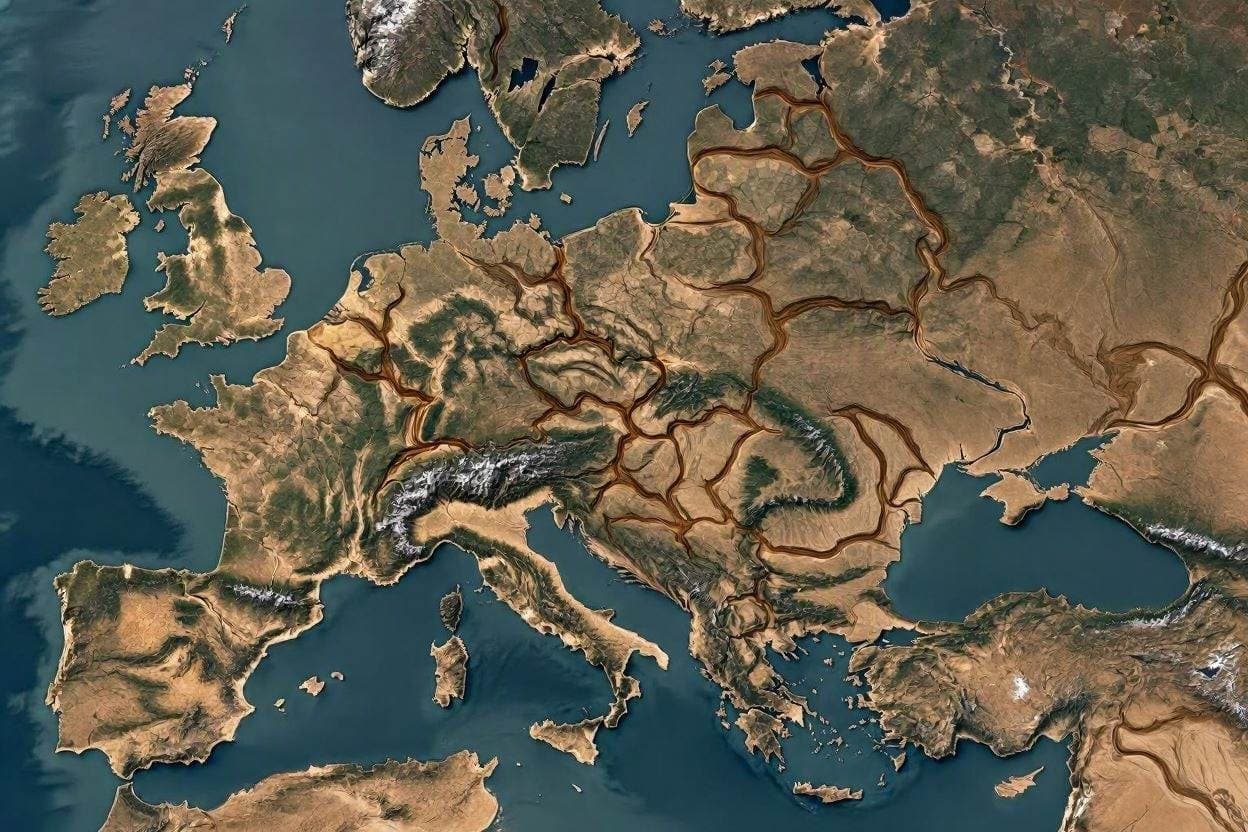
From the vantage point of space, Earth appears as a blue marble, abundant with water and life. Yet, recent satellite imagery reveals a troubling change in the continent of Europe. Major rivers, once mighty arteries of commerce and ecology, are shrinking to mere threads. The Danube, the Rhine, and other vital waterways have dropped to record-low levels, exposing riverbeds and halting shipping traffic. This visible transformation is a stark testament to the intensity of the current drought and the broader impacts of climate change.
The European Space Agency’s Copernicus Sentinel-2 satellites have captured images showing dramatically shrunken waterways weaving through parched landscapes. In Hungary, Bulgaria, and Germany, the contrast between normal water levels and current conditions is striking. Sandbanks that have been submerged for decades are now dry land, and historical artifacts, including World War II ships, are emerging from the mud. These images serve as undeniable evidence of a hydrological crisis that is reshaping the continent.
The causes are multifaceted, driven by prolonged heatwaves and a lack of rainfall. High temperatures increase evaporation rates, while reduced precipitation fails to replenish the water supply. This combination has created a deficit that rivers cannot overcome. The situation is exacerbated by high water demand for agriculture and industry, which further strains the already depleted resources.
The economic implications are significant. The Rhine and Danube are crucial for transporting goods across Europe. Low water levels restrict the load capacity of barges, leading to delays and increased costs for businesses. Energy production is also affected, as hydroelectric plants struggle to operate efficiently. The ripple effects extend to consumers, who may face higher prices for goods and energy.
Ecologically, the drying rivers pose a threat to biodiversity. Aquatic habitats are shrinking, putting pressure on fish and plant species. Water quality deteriorates as concentrations of pollutants increase in lower volumes. The long-term health of these ecosystems is at risk, requiring urgent attention and conservation efforts.
Governments and international bodies are responding with measures to manage the crisis. These include water rationing, restrictions on industrial use, and investments in infrastructure to improve efficiency. However, experts warn that adaptation alone is not enough. Addressing the root causes of climate change is essential to prevent such crises from becoming the norm.
The drying of Europe’s rivers is a visible sign of a changing climate. Satellite images provide a powerful perspective on the scale of the problem. As the continent grapples with the immediate impacts, the need for sustainable water management and climate action becomes ever more urgent.
AI Image Disclaimer: Visuals associated with this article are AI-generated to illustrate the themes of environmental change and satellite observation.
Sources: CNN European Space Agency The Guardian
Published by Banx Network. This article is part of the Banx decentralized media programme, powered by the BXE token on the XRP Ledger.