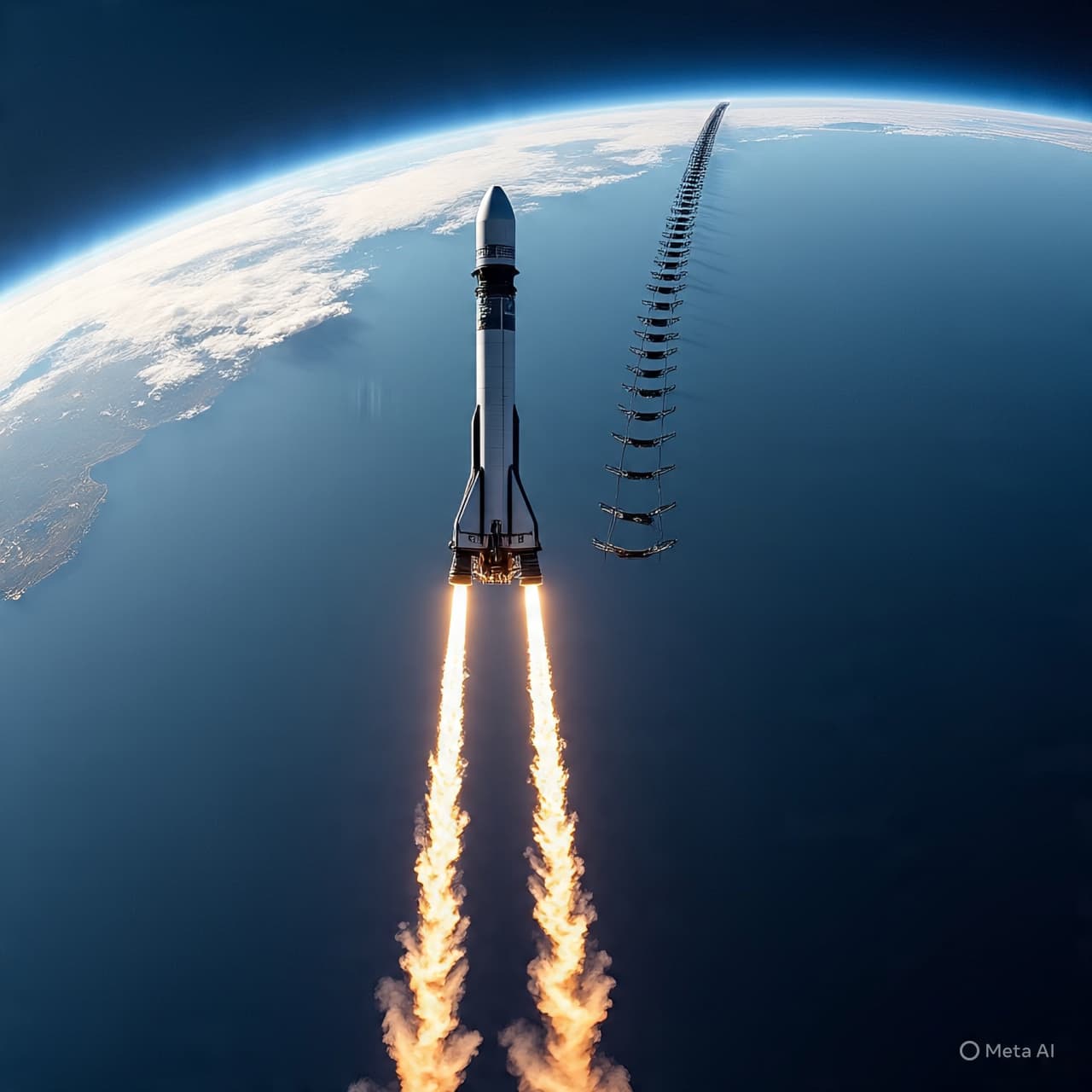
SpaceX Reports Falcon 9 Upper Stage Anomaly After Starlink Deployment Like a well‑rehearsed performance that hits an unexpected note, SpaceX’s latest Falcon 9 mission began with promise and precision — but encountered an unexpected twist after the main act. On Feb. 2, 2026, following the successful launch and deployment of 25 Starlink satellites, SpaceX announced that the rocket’s upper stage experienced an anomaly as it prepared for its deorbit burn. The mission itself completed its primary objective without issue, but the ending unfolded differently from plan.
The Falcon 9 lifted off from Vandenberg Space Force Base in California at 7:47 a.m. PST, lifting the latest block of Starlink broadband satellites into their intended low‑Earth orbit. The booster and second stage executed the planned burns to put all 25 satellites into space as intended — a testament to the vehicle’s reliability and routine success on similar missions.
However, as the upper stage prepared to perform its deorbit burn — a controlled maneuver designed to bring it safely back into Earth’s atmosphere after completing its job — SpaceX reported an “off‑nominal condition.” Details are still emerging as engineers and analysts review telemetry and system data to understand the root cause of the anomaly. SpaceX said the vehicle subsequently passivated safely, meaning residual energy and propellant were removed in line with safety protocols, and that satellite deployment was unaffected.
Isolated incidents have occurred in the past with Falcon 9 second stages — such as leaks or unplanned deorbit outcomes on earlier missions — but they remain unusual compared with the rocket’s long history of reliable performance. Analysts note that anomalies during the deorbit phase don’t impact the purpose of the launch itself but are important to assess for future mission safety and environmental considerations in orbit and upon reentry.
SpaceX has not grounded its Falcon 9 fleet, and upcoming launches appear to be proceeding while the company conducts detailed reviews. The focus now will be on understanding this specific upper stage behavior, identifying any corrective measures and ensuring continued confidence in one of the world’s most frequently flown rockets.
AI Image Disclaimer “Graphics are AI‑generated and intended for representation, not reality.”
📰 Sources Spaceflight Now Reddit (SpaceX community discussion) Wikipedia (Falcon 9 background and previous upper stage incidents)
Published by Banx Network. This article is part of the Banx decentralized media programme, powered by the BXE token on the XRP Ledger.