For decades, Indonesia’s natural resources have travelled outward from mines, plantations and industrial centers toward markets around the world. The country has supplied enormous quantities of commodities, yet the reference prices guiding those transactions have often been established elsewhere. Now, Indonesia is preparing another attempt to change that relationship.
The government plans to launch a new Strategic Minerals and Commodities Exchange, known as BMKS, with operations scheduled to begin on January 1, 2027. The broader objective is to create a domestic marketplace capable of establishing benchmark prices for strategic commodities and strengthening Indonesia’s position in international trade.
The planned exchange is expected to cover resources including nickel, palm oil, coal and gas, while Indonesia also remains a major global producer of commodities such as copper and bauxite. The scale of those resources provides the foundation for the government’s ambition to move from being primarily a price taker toward having greater influence over price formation.
The concept, however, depends on more than the physical volume of commodities Indonesia produces. A functioning exchange requires consistent trading activity, transparent mechanisms, reliable standards and enough buyers and sellers to create liquidity. Without those elements, a domestic benchmark may struggle to gain recognition beyond Indonesia’s borders.
That challenge is already visible in the country’s experience with commodity exchanges. The Jakarta Post has reported that previous efforts involving commodities such as crude palm oil and tin have struggled to develop enough liquidity to become globally influential price-setting platforms. The existing Indonesia Commodity & Derivatives Exchange has also operated for years without becoming a dominant international benchmark.
The new exchange will therefore enter a market where established international benchmarks already have deep networks of traders, financial institutions and global buyers. Reuters reported that analysts and industry participants have raised questions about whether mandatory participation could affect investor confidence, transparency and the attractiveness of Indonesian commodities.
Governance will be another important part of the structure. The planned exchange is expected to operate under the supervision of the Financial Services Authority, or OJK, following changes to Indonesia’s financial-sector framework. The government has also been developing institutional mechanisms to improve monitoring of commodity exports and transactions.
At the same time, Indonesia’s commodity strategy is becoming more closely connected with its broader economic transformation. Rather than simply exporting raw resources, the country has spent years developing downstream industries, particularly around nickel and other minerals. A domestic exchange could potentially add another layer to that strategy by bringing more trading and price-discovery activity into the country.
The road toward January 2027 is therefore likely to be measured not only by whether the exchange opens on schedule, but by what happens after the first transactions begin. Liquidity, credibility and international participation will determine whether Indonesia can turn its enormous physical resource base into lasting influence over the prices attached to those resources.
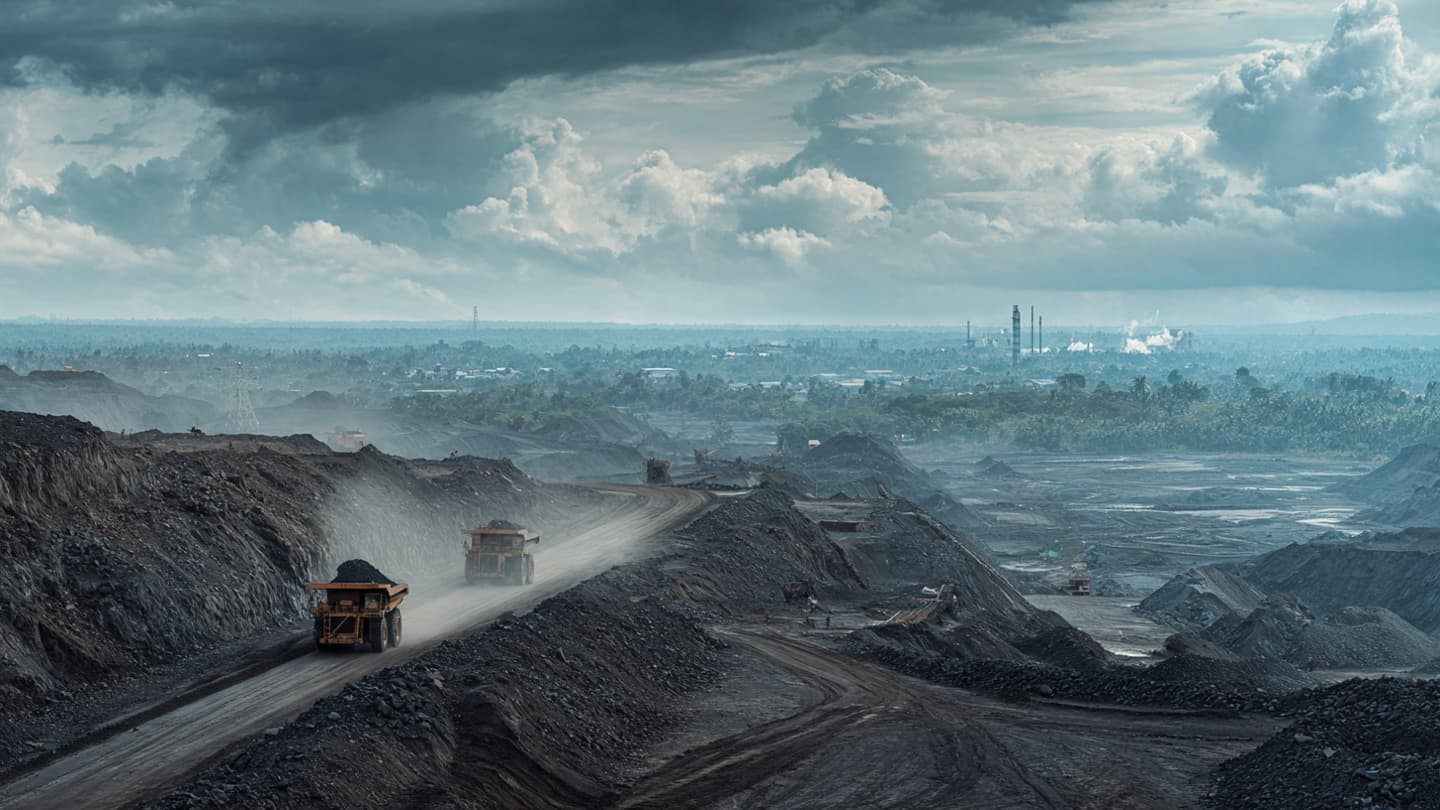
AI Image Disclaimer The images proposed for this article are AI-generated illustrations created to visually represent the subject matter. They should not be interpreted as authentic photographs or records of specific commodity-market events.
Sources Reuters The Jakarta Post Indonesia Commodity & Derivatives Exchange Financial Services Authority (OJK)
Published by Banx Network. This article is part of the Banx decentralized media programme, powered by the BXE token on the XRP Ledger.