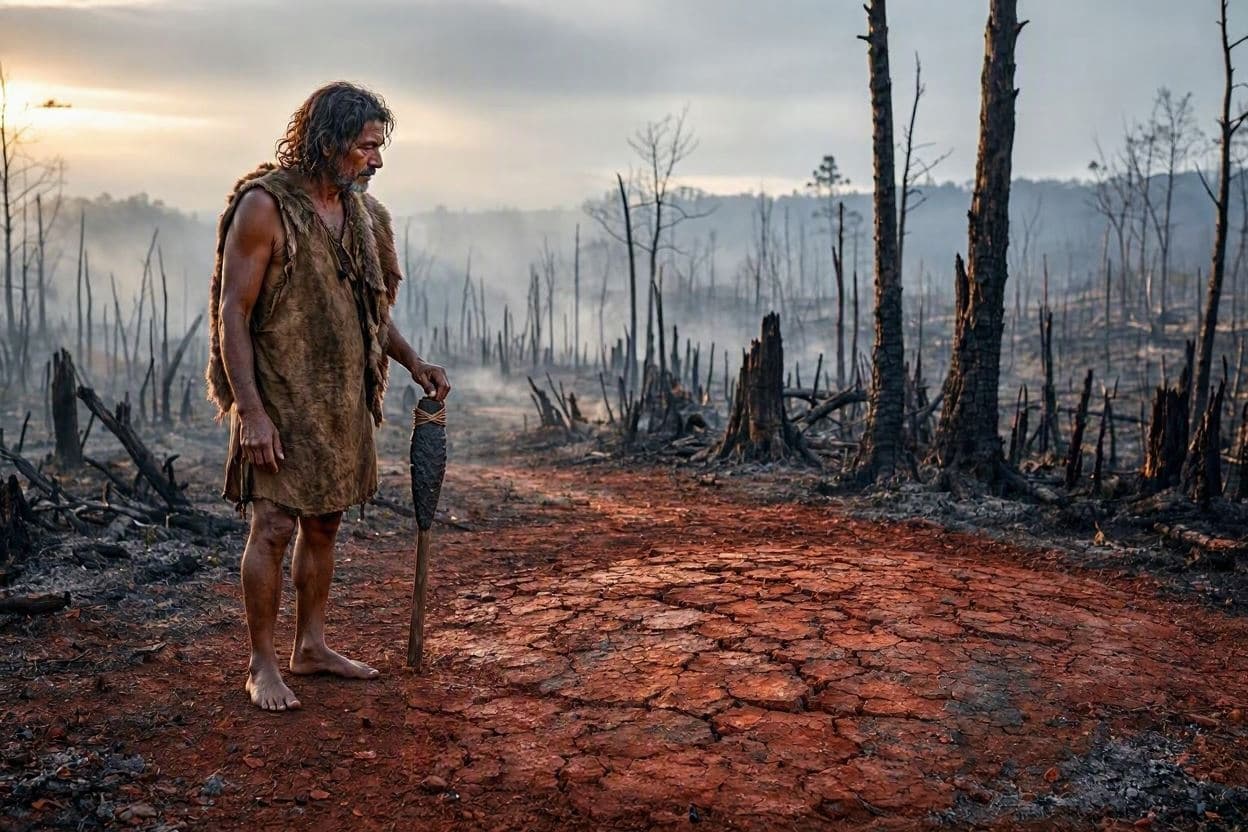
Human innovation is often born from necessity, but sometimes it emerges from accidental discovery amidst chaos. The invention of pottery, a cornerstone of civilized life, allowed our ancestors to store food, cook meals, and carry water. But what inspired the first person to shape clay and fire it? A compelling new theory suggests that wildfires may have played a crucial role. Observing how fire hardened mud or clay in nature could have provided the initial insight. This idea invites us to reflect on the intimate relationship between early humans and their environment, where disaster may have seeded creation.
Archaeological evidence places the emergence of pottery around 20,000 years ago, though some findings suggest even earlier dates. Before this, humans used baskets, gourds, and animal skins for storage. These materials were perishable and limited in function. Pottery offered a durable, heat-resistant alternative that revolutionized daily life. The question of how this technology was discovered has long puzzled historians, with theories ranging from deliberate experimentation to serendipitous accidents.
The wildfire hypothesis proposes that early humans witnessed natural fires burning through areas with clay-rich soil. The intense heat would have vitrified the clay, turning it into a hard, ceramic-like substance. Observing this transformation, curious individuals might have experimented with shaping clay and exposing it to controlled fire. This process of observation and imitation is a fundamental aspect of human learning, allowing knowledge to accumulate over generations.
Support for this theory comes from ethnographic studies of indigenous cultures that use fire-hardened clay for various purposes. Additionally, experimental archaeology has shown that simple open fires can successfully fire clay objects, although kilns later improved the quality and consistency. The leap from noticing hardened mud to intentionally creating vessels is significant, but it is a plausible cognitive step for intelligent, observant humans.
Pottery changed society in profound ways. It allowed for the storage of surplus food, which supported population growth and settlement. Cooking in pots made nutrients more accessible and reduced the risk of disease by killing pathogens. These advancements contributed to the development of complex societies, trade networks, and cultural expressions. The humble pot was thus a catalyst for civilization.
Critics argue that the connection between wildfires and pottery is speculative, as direct evidence is hard to find. Clay does not always survive in the archaeological record, and distinguishing between naturally fired clay and human-made pottery can be challenging. However, the plausibility of the mechanism makes it a worthy area of investigation. It encourages researchers to look at environmental contexts when studying technological innovations.
The role of fire in human evolution is well-documented, from cooking food to providing warmth and protection. Adding pottery to this list emphasizes the multifaceted impact of fire on our development. It was not just a tool for survival but a source of inspiration for material culture. Understanding this link deepens our appreciation for the ingenuity of our ancestors.
As we continue to uncover the past, each discovery adds nuance to our understanding of human history. The story of pottery is not just about objects; it is about the human capacity to learn from the world around us. Whether through wildfire or deliberate trial and error, the result was a technology that endured for millennia. It remains a testament to human creativity.
Today, pottery is both a functional craft and an art form, connecting us to those ancient innovators. Holding a clay vessel is a tactile link to the past, reminding us of the simple yet profound discoveries that shaped our lives. The spark of invention may have come from fire, but the flame of curiosity kept it alive.
The theory that wildfires inspired the invention of pottery highlights the role of environmental observation in human innovation. It underscores the transformative power of fire in early society. Let us honor the ingenuity of our ancestors.
AI Image Disclaimer: Please be aware that images used in this context are AI-generated visualizations for illustrative purposes.
Sources: Archaeology Magazine Scientific American Journal of Archaeological Science
Published by Banx Network. This article is part of the Banx decentralized media programme, powered by the BXE token on the XRP Ledger.